
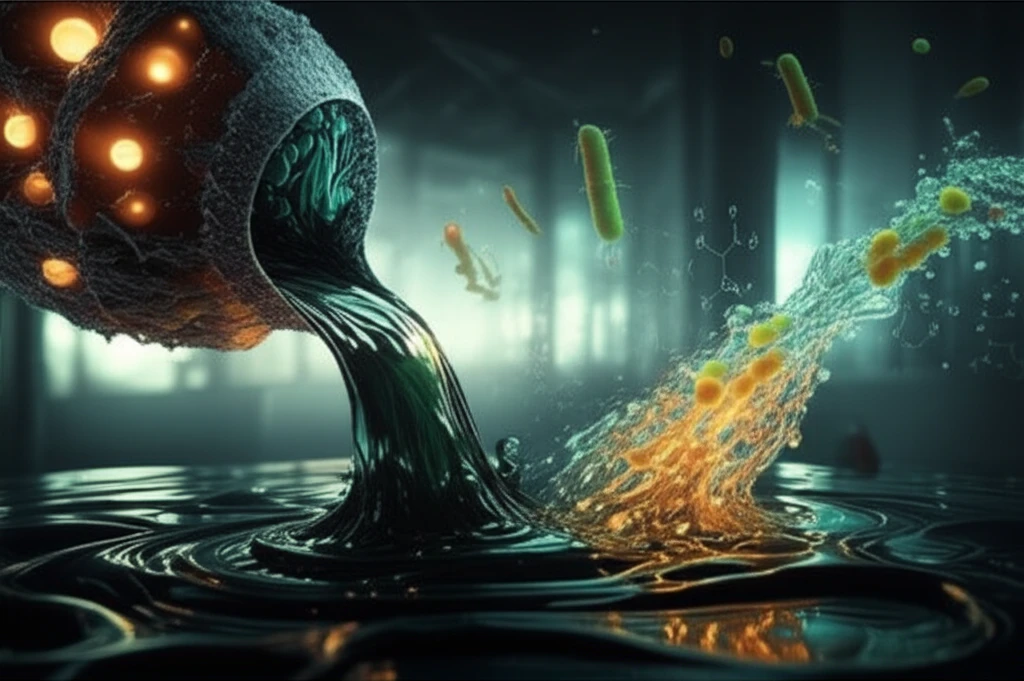
Unlocking Green Chemicals: Can Bacteria Turn Waste into Valuable Bio-products?

"Discover how scientists are harnessing the power of Clostridium bacteria to convert glycerol, a biodiesel waste product, into valuable industrial chemicals like 1,3-propanediol."
The quest for sustainable alternatives to traditional chemical production is driving innovation in biotechnology. One promising avenue involves harnessing the metabolic capabilities of microorganisms to convert renewable biomass into valuable chemicals and fuels. This approach not only reduces our reliance on fossil fuels but also offers a way to valorize waste streams, turning environmental liabilities into economic opportunities.
Among the diverse array of microorganisms with industrial potential, Clostridium species stand out for their ability to metabolize a wide range of organic molecules. These bacteria can break down carbohydrates, organic acids, alcohols, and even aromatic compounds, producing solvents, acids, and other valuable compounds in the process. Their versatility makes them attractive candidates for the production of bio-based chemicals.
This article delves into a recent study that explores the potential of Clostridium bifermentans, a bacterium isolated from natural environments, to produce 1,3-propanediol (1,3-PD) from glycerol. Glycerol, a byproduct of biodiesel production, represents an abundant and inexpensive feedstock for bioconversion. The research highlights the bacterium's ability to synthesize 1,3-PD under microaerophilic conditions, a significant advantage for industrial applications.
The Power of Clostridium: Turning Glycerol into 1,3-Propanediol
Researchers sought to isolate non-pathogenic Clostridium strains capable of producing 1,3-PD, a valuable chemical intermediate used in the production of polymers, cosmetics, lubricants, and medicines. They collected samples from diverse natural environments, including animal excrements, composts, silages, and industrial wastes, and screened them for Clostridium species with the desired metabolic capabilities.
- Microaerophilic Advantage: The ability to produce 1,3-PD in microaerophilic conditions (low oxygen) is a major advantage, reducing the need for strictly anaerobic (oxygen-free) environments, which are costly to maintain at industrial scales.
- Metabolic Byproducts: Besides 1,3-PD, the Clostridium bifermentans strains also produced other metabolites, including organic acids (lactic, formic, acetic, and succinic) and ethanol, indicating a complex metabolic pathway.
- Strain Variability: While all C. bifermentans isolates produced 1,3-PD, they exhibited significant dissimilarity in their morphological and physiological properties, highlighting the biodiversity within this species.
The Future of Bioconversion: A Sustainable Path Forward
This research underscores the potential of Clostridium bifermentans as a valuable biocatalyst for the production of 1,3-PD from glycerol. Its ability to thrive and produce 1,3-PD under microaerophilic conditions makes it an attractive candidate for industrial applications, offering a more sustainable and cost-effective route to this important chemical building block.
The study also highlights the importance of exploring natural environments for novel microorganisms with unique metabolic capabilities. The biodiversity within Clostridium species, as evidenced by the variations in morphology, physiology, and metabolite production, suggests that there are many more untapped resources waiting to be discovered.
Further research is ongoing to optimize the 1,3-PD production process using Clostridium bifermentans, including strain improvement and process optimization. The ultimate goal is to develop a commercially viable bioconversion technology that can contribute to a more sustainable chemical industry and reduce our reliance on fossil fuels. Given the growing demand for green chemicals and the abundance of glycerol as a waste product, the future looks promising for this innovative approach.