
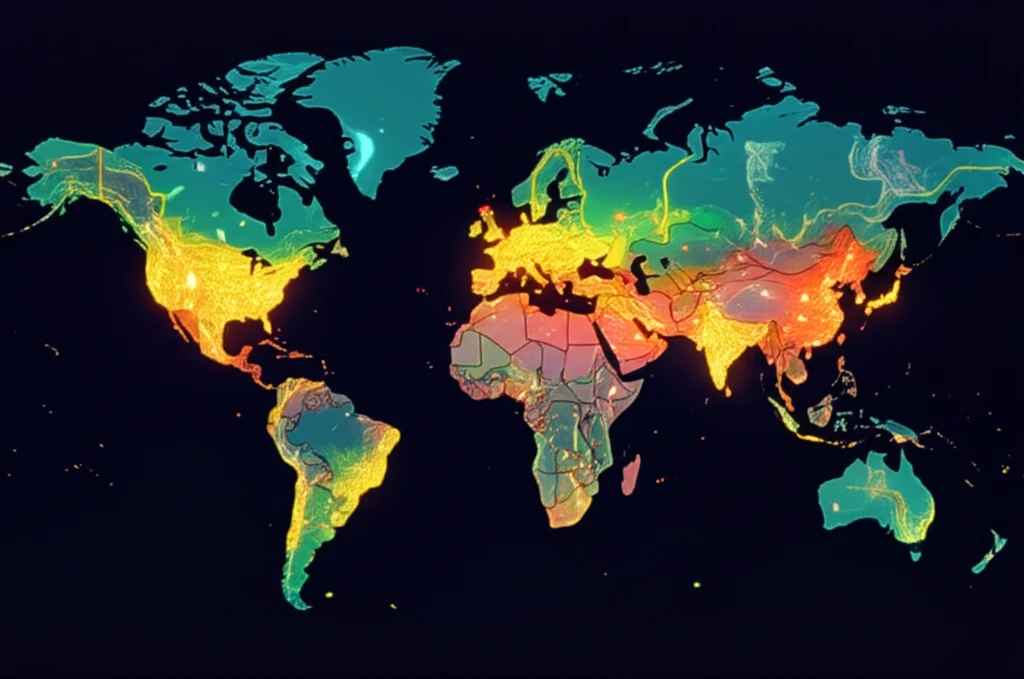
Global Natural Gas Production and Distribution

Unlocking Global Energy Trends: A Deep Dive into Natural Gas Production

"Explore the dynamics of natural gas production worldwide: regional insights, key players, and future outlook."


Natural gas is a cornerstone of the global energy landscape. Understanding its production trends is vital for anyone involved in energy, economics, or environmental policy. As demand fluctuates and new technologies emerge, keeping abreast of these trends is more crucial than ever.

This article examines global natural gas production, drawing on the most recent data to provide a clear picture of current outputs and regional contributions. We'll delve into key statistics, regional summaries, and the performance of major players in the industry.

Whether you're an industry professional, a policymaker, or simply interested in global energy dynamics, this analysis offers valuable insights into the evolving world of natural gas production.

Where Does the World's Natural Gas Come From?

Global Natural Gas Production and Distribution

The global distribution of natural gas production is diverse, with certain regions leading the way. A comprehensive view can be seen by breaking down the global production into main regions.

Here’s a breakdown of natural gas production by key regions:

  • North America: including the U.S. and Canada, consistently leads in production.
  • CIS (Commonwealth of Independent States): Russia is a dominant force in Eurasia's natural gas production.
  • Middle East: Saudi Arabia, Qatar, and Iran are key producers, significantly influencing global supply.
  • Asia-Pacific: This region includes major players like China and Australia, contributing to a substantial portion of global output.
  • Europe: Norway and the Netherlands, while their production has been declining, still play notable roles.
Each region faces unique challenges and opportunities, from technological advancements in extraction to geopolitical factors influencing production levels.

What's Next for Natural Gas?

The future of natural gas production is shaped by a combination of factors, including technological innovation, environmental policies, and shifts in global demand. As the world transitions to cleaner energy sources, natural gas will likely continue to play a significant, albeit evolving, role. Monitoring production trends and adapting to new challenges will be essential for stakeholders across the energy sector.

About this Article -

This article was crafted using a human-AI hybrid and collaborative approach. AI assisted our team with initial drafting, research insights, identifying key questions, and image generation. Our human editors guided topic selection, defined the angle, structured the content, ensured factual accuracy and relevance, refined the tone, and conducted thorough editing to deliver helpful, high-quality information.See our About page for more information.

Everything You Need To Know

1

What are the main regions contributing to global natural gas production?

The primary regions driving global natural gas production include North America (led by the U.S. and Canada), the CIS (dominated by Russia), the Middle East (with Saudi Arabia, Qatar, and Iran), Asia-Pacific (including China and Australia), and Europe (primarily Norway and the Netherlands). Each region's production levels are influenced by specific factors, like technological advances and geopolitical dynamics.

2

How does the CIS region, particularly Russia, influence global natural gas supply?

Russia, as a dominant force within the CIS (Commonwealth of Independent States), significantly impacts global natural gas supply. Its substantial production capacity and vast reserves make it a key player in the international energy market. Russia's production levels and export policies have considerable implications for global supply dynamics and pricing.

3

Which countries in the Middle East are key players in natural gas production and what's their role?

Saudi Arabia, Qatar, and Iran are the key producers in the Middle East. Their substantial natural gas reserves and production volumes critically influence the global supply, impacting both regional energy markets and international trade. These countries' production capacities are vital for meeting global demand and establishing energy security.

4

What is the future outlook for natural gas, considering the global shift towards cleaner energy sources?

The future of natural gas is shaped by technological innovations, evolving environmental policies, and shifts in global demand. Despite the transition to cleaner energy sources, natural gas will likely continue to play a significant role, albeit an evolving one. The industry must adapt to new challenges and opportunities to monitor production trends and sustainability efforts.

5

Why is it important to understand natural gas production trends for those involved in energy, economics, or environmental policy?

Understanding natural gas production trends is crucial due to its cornerstone role in the global energy landscape. For professionals, policymakers, and anyone interested in global energy dynamics, keeping abreast of these trends is vital. Fluctuations in demand, the emergence of new technologies, and the impacts of environmental policies make this understanding essential for informed decision-making and strategic planning within the energy sector and related fields.

Newsletter Subscribe

Subscribe to get the latest articles and insights directly in your inbox.