
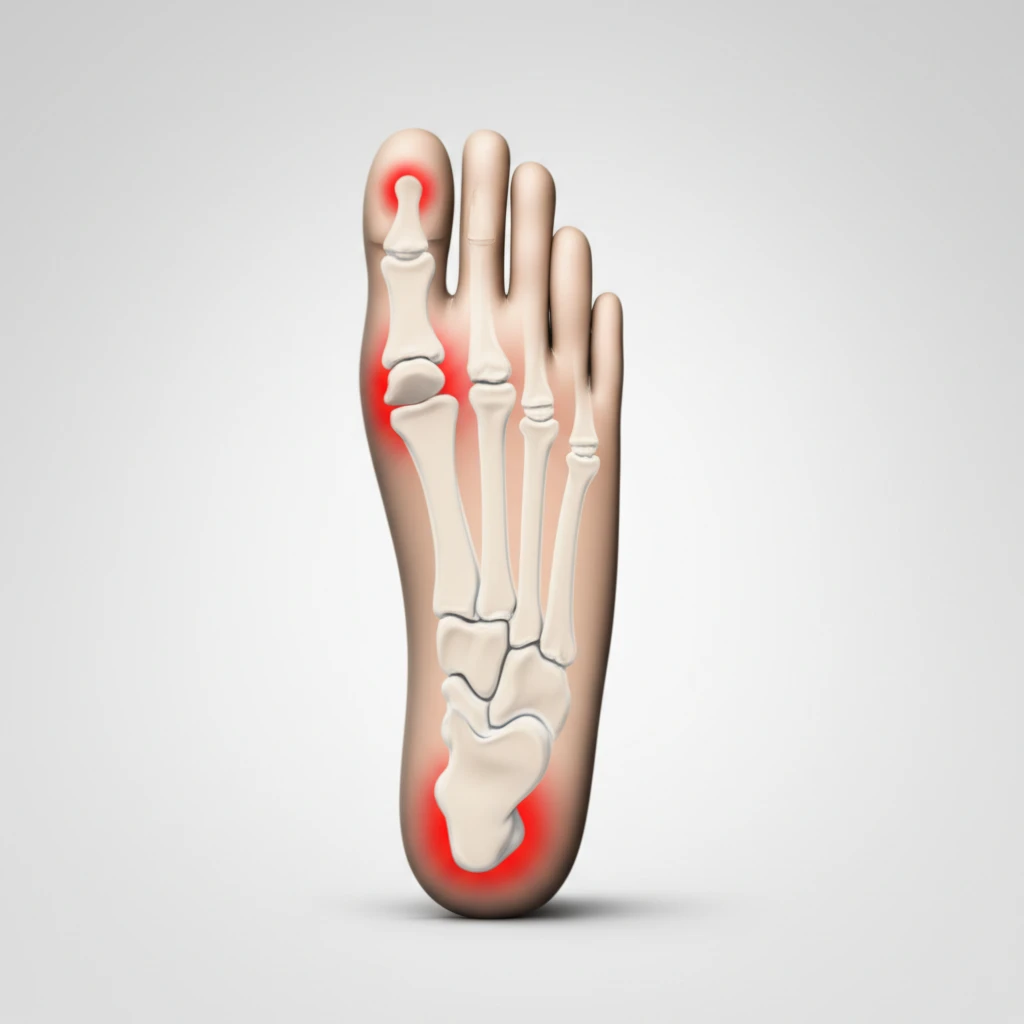
Surreal illustration of rheumatoid arthritis foot pain

Unlocking Foot Pain Relief: What Rheumatoid Arthritis Gait Studies Really Tell Us

"New research challenges common assumptions about foot pressure and walking difficulties in rheumatoid arthritis patients, highlighting the complexity of finding effective solutions."


For individuals living with rheumatoid arthritis (RA), foot pain is a frequent and significant challenge. Studies reveal that the feet are the initial site of joint symptoms for approximately 35.4% of patients, and a staggering 90.3% experience foot pain lasting more than a day. This persistent discomfort affects daily life and highlights the need for effective management strategies.

Podiatry, including properly fitted shoes and orthotics, is often recommended to alleviate RA-related foot issues. Yet, there is a lack of clear consensus on how best to assess foot problems in these patients. While tools like force plates and dynamic pressure measurements exist, guidance on their optimal use and how to tailor treatments based on their findings remains elusive.

Many studies have investigated foot pressure in RA patients, but the connection between foot pressure distribution and experienced foot pain has not been clearly established. Research also indicates inconsistencies in how foot specialists perceive areas of high pressure, with a tendency to underestimate pressure under the big toe and overestimate it under the metatarsal heads. All of these factors point to the need for more objective and reliable methods of foot assessment in RA.

Static Foot Pressure: Why It Might Not Be the Key Culprit in RA Gait Issues

Surreal illustration of rheumatoid arthritis foot pain

A new study aimed to determine whether there is a link between peak plantar pressure (the maximum pressure exerted on the sole of the foot during standing) and functional assessments in RA patients. Researchers also investigated correlations between static foot pressure measurements and other clinical data, such as pain levels and overall disease activity.

The study involved a group of 51 patients with rheumatoid arthritis. Researchers collected data, including: Functional assessments: Patients completed questionnaires like the Foot Function Index (FFI), a visual analog scale (VAS) for pain, the Health Assessment Questionnaire (HAQ), and the McMaster Toronto Arthritis (MACTAR) patient preference questionnaire. Podo-barometric data: Plantar pressure was measured using a force plate, recording peak pressure, contact area, and pressure distribution across the foot.

  • Peak plantar pressure: The maximum pressure under each foot.
  • Surface area: The total area of contact between the foot and the ground.
  • Pressure distribution: The percentage of pressure on the forefoot versus the rearfoot.
The study found that peak plantar pressure did not correlate with functional assessments (FFI, VAS, HAQ, MACTAR), walking ability, disease activity, or the number of painful or inflamed joints in the foot. This suggests that static peak pressure alone may not be a reliable indicator of gait abnormalities or foot pain in RA. The static component of the study could be a reason for the disconnect; dynamic evaluations might yield different results, with other factors such as inflammation affecting pain perception.

Beyond Static Pressure: A New Direction for RA Foot Care

While measuring static peak pressure might seem straightforward, it may not fully capture the complexities of foot pain and gait issues in RA. Further research is needed to explore dynamic pressure measurements, the impact of inflammation, and individual pain thresholds. By adopting a comprehensive approach, clinicians can move closer to providing effective and personalized foot care solutions for people living with rheumatoid arthritis.

About this Article -

This article was crafted using a human-AI hybrid and collaborative approach. AI assisted our team with initial drafting, research insights, identifying key questions, and image generation. Our human editors guided topic selection, defined the angle, structured the content, ensured factual accuracy and relevance, refined the tone, and conducted thorough editing to deliver helpful, high-quality information.See our About page for more information.

Everything You Need To Know

1

What percentage of Rheumatoid Arthritis patients experience foot pain as an initial symptom?

Approximately 35.4% of Rheumatoid Arthritis (RA) patients experience foot symptoms as the initial site of joint problems, while a staggering 90.3% report foot pain lasting longer than a day. This high prevalence underscores the need for effective management strategies and the importance of early intervention in addressing foot-related issues in RA.

2

How does static foot pressure relate to gait issues and functional assessments in Rheumatoid Arthritis?

Research suggests a weak or absent correlation between static foot pressure and functional assessments, such as those measured by the Foot Function Index (FFI), the visual analog scale (VAS) for pain, the Health Assessment Questionnaire (HAQ), and the McMaster Toronto Arthritis (MACTAR) patient preference questionnaire. This implies that simply measuring peak plantar pressure, surface area, and pressure distribution during standing might not accurately reflect gait abnormalities or foot pain experienced by RA patients. The disconnect between static pressure and functional outcomes highlights the need to explore dynamic pressure measurements and other factors.

3

What are the primary podo-barometric data points that were evaluated in the study, and how are they used?

The study primarily focused on three main podo-barometric data points: peak plantar pressure (the maximum pressure under each foot), surface area (the total contact between the foot and the ground), and pressure distribution (the percentage of pressure on the forefoot versus the rearfoot). These data points are measured using a force plate. Analyzing these factors helps researchers understand how pressure is distributed across the foot during standing, though the study suggests the information does not correlate well with pain or functionality scores in patients with RA.

4

What are the limitations of using static foot pressure measurements in Rheumatoid Arthritis?

The limitations of relying solely on static foot pressure measurements include the potential to overlook the dynamic nature of foot function and the impact of inflammation on pain perception. The lack of correlation between static peak plantar pressure and functional assessments (FFI, VAS, HAQ, MACTAR) indicates that this method may not fully capture the complexities of foot pain and gait issues in Rheumatoid Arthritis. Additionally, inconsistencies in how foot specialists perceive areas of high pressure, such as underestimation under the big toe and overestimation under the metatarsal heads, further limit the reliability of static measurements.

5

Beyond static pressure, what other factors are crucial for a comprehensive understanding of foot pain and gait in Rheumatoid Arthritis, as suggested by the research?

The research suggests that a more comprehensive approach is needed, moving beyond static peak plantar pressure. This involves exploring dynamic pressure measurements, which capture the changes in pressure during walking. The impact of inflammation and individual pain thresholds are also crucial factors to consider. This comprehensive approach allows clinicians to develop effective and personalized foot care solutions for individuals with Rheumatoid Arthritis.

Newsletter Subscribe

Subscribe to get the latest articles and insights directly in your inbox.