
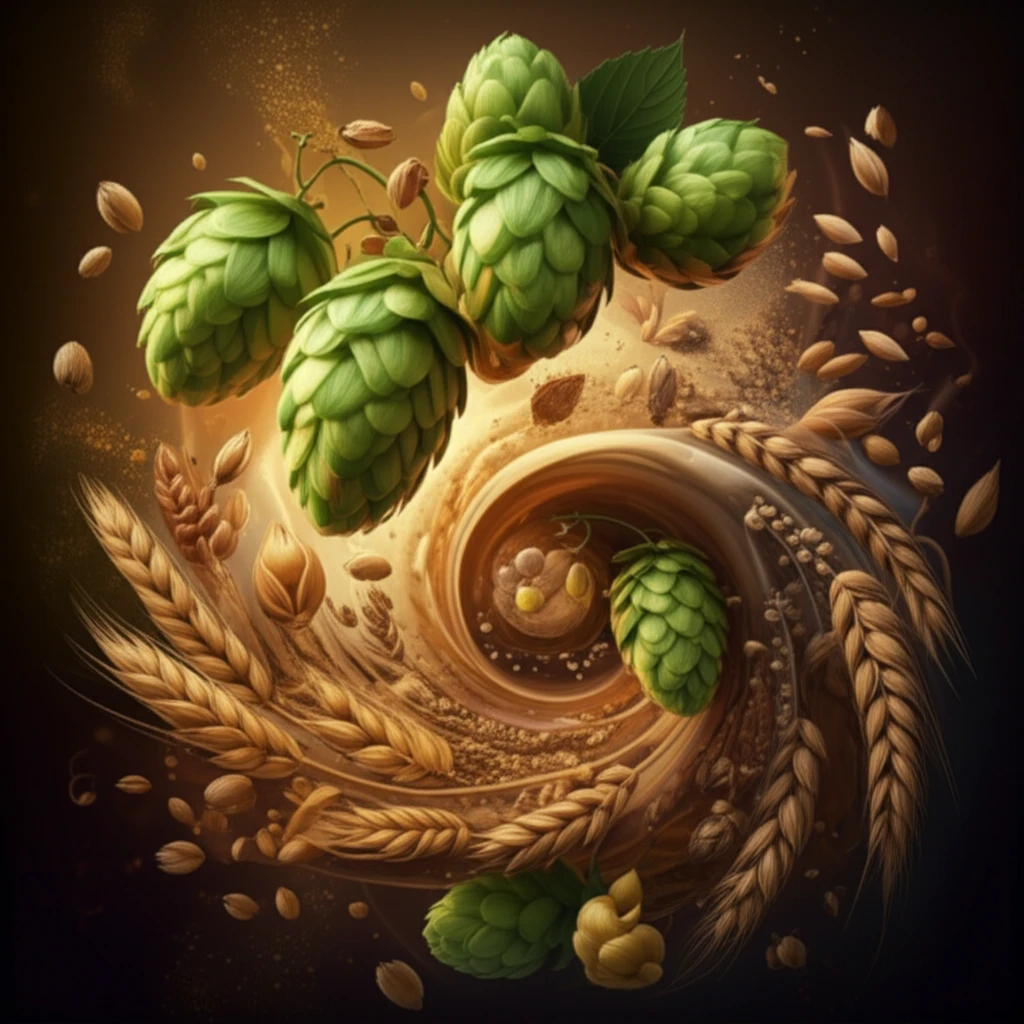
Surreal illustration of beer ingredients forming an aromatic cloud.

Unlocking Flavor: The Science of Beer Aroma

"Dive into the molecular biology behind fruity and floral aromas in beer, and how brewers are mastering them."


Aroma is everything when it comes to enjoying a beer. The complex interplay of fruity and floral notes transforms a simple beverage into an experience. Brewers are constantly striving to enhance these desirable aromas, which come from the ingredients themselves and the magic of fermentation.

While grains like barley, corn, and rice form the base, they often lack the vibrant fruity profiles found in nature. That's where hops and, crucially, yeast come in. These ingredients, and the brewer's skill in using them, determine whether your beer boasts notes of banana, rose, or something more subtle.

Hundreds of aroma compounds have been identified in beer. This article dives into the science behind these flavors, focusing on the most impactful compounds and how brewers can influence their presence. We'll explore everything from higher alcohols and esters to the more elusive thiols and terpenes, revealing the secrets to crafting truly aromatic beers.

The Key Aroma Players: From Esters to Terpenes

Surreal illustration of beer ingredients forming an aromatic cloud.

Sensory perception is key to understanding aroma, and OAVs (Odor Activity Values) are essential for quantifying aroma. The most important aroma compounds are classified based on their chemical groups and biosynthesis pathways:

Yeast and hops are major contributors to aromas in beer. For yeast, higher alcohols and esters are discussed, with the focus being on the complex regulation of the alcohol acetyl transferase ATF1 gene. The release of polyfunctional thiols and monoterpenoids from cysteine- and glutathione-S-conjugated compounds and glucosides is also discussed.

  • Higher Alcohols and Esters: These contribute fruity and solvent-like characteristics. Isoamyl acetate is a key "banana" aroma, while ethyl acetate can provide a "solvent-like" note if not controlled.
  • Polyfunctional Thiols: Contribute to the tropical and fruity flavors. Key examples include 3-sulfanyl-4-methyl-pentan-1-ol, lending “exotic fruit” and “grapefruit” notes.
  • Lactones and Furanones: These create peachy and apricot-like notes, with lactones like γ-decalactone being especially important.
  • Terpenoids: Derived from hops, these contribute floral, citrus, and woody aromas. Key examples include β-linalool (

Brewing the Future: Mastering Flavor Production

While significant progress has been made, a deeper understanding of plant-derived precursors and the genes responsible for their conversion remains crucial. Further research into the biosynthetic pathways and transport mechanisms will empower brewers to fine-tune beer flavor.

Harnessing non-conventional yeast species and optimizing fermentation conditions offer exciting avenues for innovation. By carefully selecting yeast strains and controlling parameters like temperature and oxygen levels, brewers can unlock a wider spectrum of flavors and create truly unique beers.

The future of brewing lies in combining scientific knowledge with artisanal skill. By understanding the molecular dance of aroma compounds, brewers can craft beers that not only taste delicious but also tell a compelling story of science, nature, and human ingenuity.

About this Article -

This article was crafted using a human-AI hybrid and collaborative approach. AI assisted our team with initial drafting, research insights, identifying key questions, and image generation. Our human editors guided topic selection, defined the angle, structured the content, ensured factual accuracy and relevance, refined the tone, and conducted thorough editing to deliver helpful, high-quality information.See our About page for more information.

This article is based on research published under:

DOI-LINK: 10.1093/femsre/fuy041, Alternate LINK

Title: The Molecular Biology Of Fruity And Floral Aromas In Beer And Other Alcoholic Beverages

Subject: Infectious Diseases

Journal: FEMS Microbiology Reviews

Publisher: Oxford University Press (OUP)

Authors: Sylvester Holt, Marta H Miks, Bruna Trindade De Carvalho, Maria R Foulquié-Moreno, Johan M Thevelein

Published: 2018-11-15

Everything You Need To Know

1

What are the key aroma compounds that contribute to the flavor of beer?

The primary aroma contributors in beer are higher alcohols, esters, polyfunctional thiols, lactones, furanones, and terpenoids. Higher alcohols and esters, produced by yeast, contribute fruity and solvent-like notes, such as isoamyl acetate, responsible for a banana aroma. Polyfunctional thiols contribute tropical and fruity flavors like 3-sulfanyl-4-methyl-pentan-1-ol, which offers grapefruit notes. Lactones and furanones provide peachy and apricot-like notes, with γ-decalactone being a key lactone. Terpenoids, derived from hops, contribute floral, citrus, and woody aromas like β-linalool.

2

Why are Odor Activity Values (OAVs) important in brewing?

Odor Activity Values (OAVs) are important because they are essential for quantifying aroma. They represent the sensory perception of the various aroma compounds present in beer, allowing brewers to understand which compounds have the most significant impact on the beer's overall aroma profile. By measuring OAVs, brewers can fine-tune their processes to enhance desired aromas and minimize undesirable ones, leading to a more controlled and consistent flavor outcome. Understanding OAVs is especially important when attempting to balance complex aroma profiles derived from multiple ingredients.

3

What role does yeast play in the development of beer aroma, and how is the ATF1 gene involved?

Yeast plays a major role in beer aroma through the production of higher alcohols and esters during fermentation. The alcohol acetyl transferase ATF1 gene is crucial to this process, regulating the production of esters like isoamyl acetate. By controlling fermentation conditions and selecting specific yeast strains, brewers can influence the types and amounts of these aroma compounds, resulting in distinct flavor profiles. Furthermore, the release of polyfunctional thiols, important for tropical fruit notes, is also influenced by yeast activity.

4

What are the remaining challenges in mastering beer flavor production?

While significant progress has been made in understanding beer aroma, the article highlights that a deeper understanding of plant-derived precursors and the genes responsible for their conversion is still needed. Further research into the biosynthetic pathways and transport mechanisms is required to empower brewers to have even more precise control over beer flavor. This includes exploring how precursors in grains and hops are transformed during the brewing process and identifying the specific enzymes and genetic factors involved.

5

How do hops contribute to the aroma of beer, and what are some examples of aroma compounds they provide?

Hops contribute to beer aroma primarily through terpenoids, which impart floral, citrus, and woody notes. Terpenoids such as β-linalool are key aroma compounds derived from hops. However, hops also contain precursors that can be transformed during fermentation to create other desirable aromas, including certain thiols. The specific hop variety, the timing of hop additions during brewing, and the interaction with yeast all impact the final aroma profile of the beer. The release of monoterpenoids from glucosides also adds to the aromatic complexity.

Newsletter Subscribe

Subscribe to get the latest articles and insights directly in your inbox.