
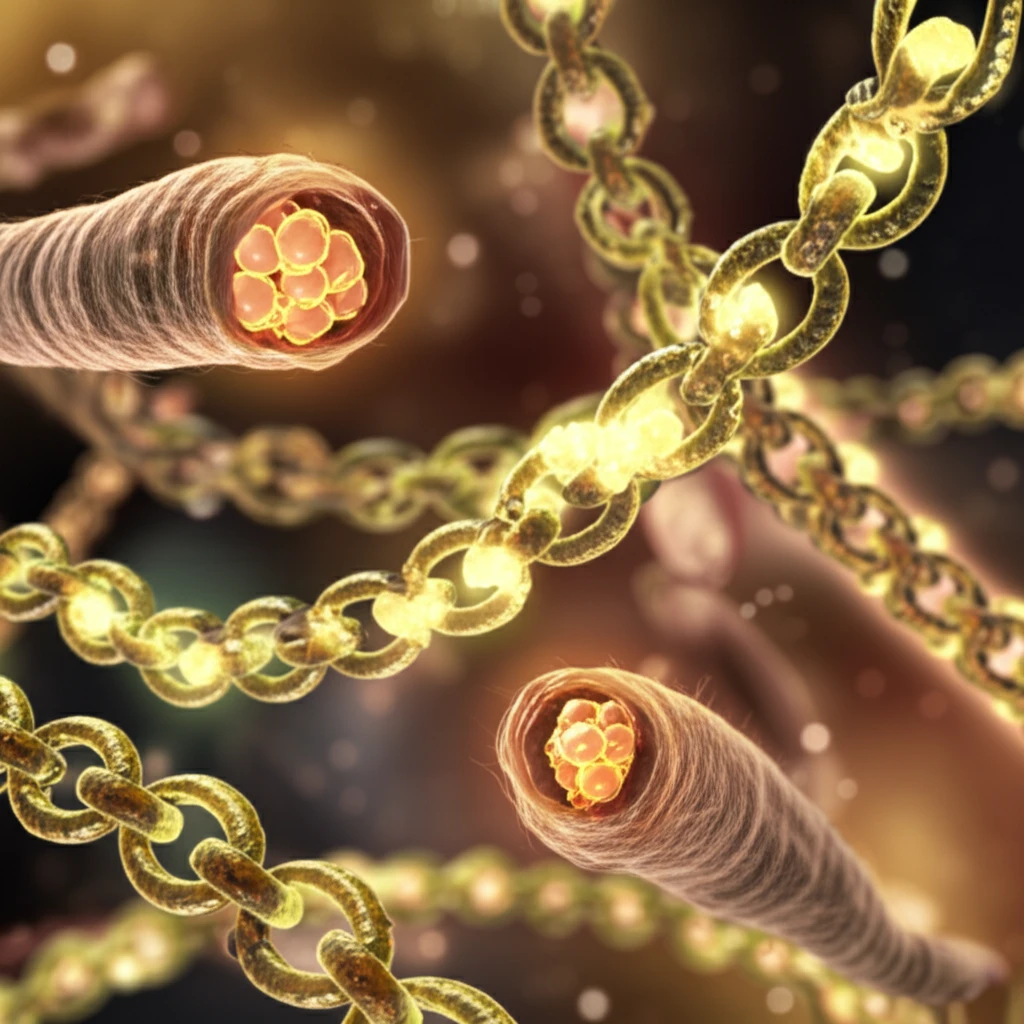
Microscopic view of Schistosoma japonicum worms with glowing eggs, highlighting the importance of glutathione.

Unlocking Fertility: How a Key Protein Impacts Schistosomiasis

"Scientists explore the crucial role of glutathione S-transferase (GST) in the reproductive success of Schistosoma japonicum, offering new targets for disease control."


Schistosomiasis japonica, a parasitic disease caused by the Schistosoma japonicum worm, remains a significant public health challenge in many parts of the world. The disease's life cycle is complex, involving various stages from eggs to adult worms that reside in the blood vessels of humans and animals. A key factor in the spread and persistence of schistosomiasis is the reproductive capacity of these parasitic worms.

Eggs laid by female worms are the primary cause of the disease's pathology, leading to organ damage and severe health complications. Understanding the mechanisms that regulate the worm's fertility is therefore crucial in developing effective control and treatment strategies. Researchers are constantly seeking new targets within the parasite's biology to disrupt its life cycle and reduce its impact on human health.

Recent research has focused on the role of glutathione S-transferase (GST), an enzyme involved in detoxification and stress response, in the reproductive processes of Schistosoma japonicum. This article explores the findings of a study that investigates how GST influences the worm's fecundity, offering insights into potential new avenues for therapeutic intervention.

GST: A Fertility Factor in Schistosoma Japonicum?

Microscopic view of Schistosoma japonicum worms with glowing eggs, highlighting the importance of glutathione.

The study examined the expression and function of GST in different developmental stages of the Schistosoma japonicum parasite. The researchers found that GST mRNA levels were significantly higher in schistosomula (the stage that infects the host) and in eggs, suggesting a crucial role for the enzyme in these stages.

To further investigate the role of GST, the researchers used RNA interference (RNAi) to reduce GST expression in the worms. The results were striking:

  • Reduced egg production: Worms with reduced GST expression laid significantly fewer eggs compared to the control group.
  • Abnormal egg morphology: The eggs produced by GST-deficient worms were often smaller and darker in color, indicating developmental problems.
  • Significant silencing: GST knockdown with RNA interference in S. japonicum worms resulted in a silencing rate higher than 80%.
These findings strongly suggest that GST plays a vital role in the reproductive success of Schistosoma japonicum. By influencing both the quantity and quality of eggs, GST appears to be a key factor in the parasite's ability to proliferate and sustain infection.

Targeting GST: A New Strategy for Combating Schistosomiasis

The discovery that GST is crucial for the fertility of Schistosoma japonicum opens up new possibilities for developing targeted therapies. By specifically inhibiting GST, it may be possible to reduce the worm's reproductive capacity, thereby limiting the spread of the disease and reducing its severity.

Researchers are now exploring various strategies to target GST, including the development of specific inhibitors and the use of vaccines that elicit an immune response against the enzyme. These approaches hold promise for creating novel interventions that can complement existing treatments and contribute to the global effort to eliminate schistosomiasis.

Further research is needed to fully understand the intricacies of GST's role in the parasite's biology and to optimize the design of targeted therapies. However, the findings of this study represent a significant step forward in our understanding of schistosomiasis and offer hope for more effective control strategies in the future.

About this Article -

This article was crafted using a human-AI hybrid and collaborative approach. AI assisted our team with initial drafting, research insights, identifying key questions, and image generation. Our human editors guided topic selection, defined the angle, structured the content, ensured factual accuracy and relevance, refined the tone, and conducted thorough editing to deliver helpful, high-quality information.See our About page for more information.

This article is based on research published under:

DOI-LINK: 10.1016/j.actatropica.2018.12.027, Alternate LINK

Title: Glutathione S-Transferase Influences The Fecundity Of Schistosoma Japonicum

Subject: Infectious Diseases

Journal: Acta Tropica

Publisher: Elsevier BV

Authors: Chun-Lian Tang, Hong-Hua Zhou, Ya-Wen Zhu, Jin Huang, Guo-Bo Wang

Published: 2019-03-01

Everything You Need To Know

1

Why is Glutathione S-transferase (GST) important for Schistosoma japonicum?

Glutathione S-transferase (GST) is vital for Schistosoma japonicum because it significantly impacts the worm's ability to reproduce. The study showed that when GST expression was reduced using RNA interference, the worms laid significantly fewer eggs, and the eggs produced were often abnormal, being smaller and darker, indicating developmental issues. This demonstrates that GST influences both the quantity and quality of eggs, which are critical for the parasite's proliferation and the continuation of the infection.

2

When is Glutathione S-transferase (GST) mRNA expressed most in Schistosoma japonicum?

The study found that levels of GST mRNA were significantly higher in schistosomula (the infective stage) and in eggs of Schistosoma japonicum. This suggests that Glutathione S-transferase plays a crucial role during the host infection and reproduction phases. The higher expression during these stages indicates that GST is essential for the parasite to establish itself in the host and to ensure successful reproduction, which are key to the parasite's life cycle and the spread of schistosomiasis.

3

How did researchers reduce Glutathione S-transferase (GST) expression in Schistosoma japonicum?

Researchers used RNA interference (RNAi) to reduce the expression of Glutathione S-transferase (GST) in Schistosoma japonicum worms. This technique allows scientists to selectively silence specific genes, in this case, the GST gene, to observe the effect of its reduced activity on the parasite's biology. The results of the RNAi experiments demonstrated a direct link between GST expression and the reproductive capacity of the worms.

4

How could targeting Glutathione S-transferase (GST) help combat schistosomiasis?

Targeting Glutathione S-transferase (GST) in Schistosoma japonicum could lead to new therapies that reduce the worm's reproductive capacity. By inhibiting GST, the worms would likely produce fewer and less viable eggs, limiting the spread of schistosomiasis and reducing the severity of the disease. This approach offers a targeted way to disrupt the parasite's life cycle, potentially complementing or enhancing existing treatment strategies.

5

What questions remain about the role of Glutathione S-transferase (GST) in Schistosoma japonicum?

While the study highlights the importance of Glutathione S-transferase (GST) in the reproduction of Schistosoma japonicum, it doesn't delve into the specifics of how GST interacts with other molecular pathways within the worm. Future research could explore these interactions to provide a more comprehensive understanding of the reproductive process. Additionally, the study primarily focuses on the effects of GST on egg production and morphology. Further investigation could examine the impact of GST on other aspects of the worm's life cycle, such as its ability to infect hosts, evade the immune system, or develop resistance to existing drugs. Understanding these broader effects could lead to even more effective and targeted intervention strategies.

Newsletter Subscribe

Subscribe to get the latest articles and insights directly in your inbox.