
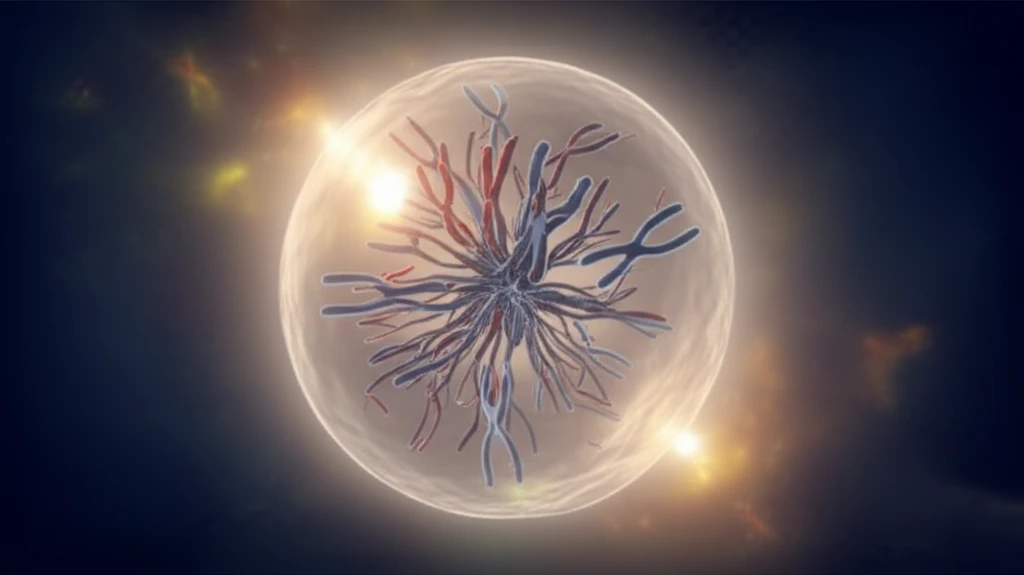
Microscopic view of an egg cell with spindle disruption, representing challenges in fertility.

Unlocking Fertility: Can We Improve Egg Quality?

"New research sheds light on a crucial enzyme's role in egg maturation, offering potential pathways for enhancing fertility treatments."


For many, the journey to parenthood isn't always straightforward. Fertility issues affect millions worldwide, and a significant factor often lies in the quality of the egg, or oocyte. Understanding the complex processes that govern egg maturation is crucial for developing effective fertility treatments.

Histone deacetylases (HDACs) are a family of enzymes involved in a wide array of biological processes, including cell growth, differentiation, and development. These enzymes act as key regulators in cells. Recent studies have begun to explore their specific roles within oocytes, the female reproductive cells that, upon fertilization, develop into an embryo.

Now, a new study focuses on HDAC3 and its impact on the delicate process of oocyte maturation, using a porcine (pig) model. While seemingly distant from human biology, porcine oocytes share remarkable similarities with human eggs, making them a valuable research tool. This article explores the findings of this research, what it could mean for fertility treatments, and why understanding egg quality is crucial for reproductive health.

HDAC3: The Conductor of Egg Maturation?

Microscopic view of an egg cell with spindle disruption, representing challenges in fertility.

The study used a selective HDAC3 inhibitor called RGFP966 to investigate the effects of suppressing HDAC3 activity in porcine oocytes. Researchers observed several key changes during the oocyte maturation process:

The cumulus cells, which surround and support the developing oocyte, failed to expand properly when HDAC3 was inhibited. Cumulus expansion is crucial because it allows for proper communication and exchange of nutrients between the oocyte and its surrounding environment.

  • Meiotic Progression Arrest: The oocytes struggled to progress through meiosis, the specialized cell division process that halves the number of chromosomes in the egg, preparing it for fertilization.
  • Spindle Abnormalities: HDAC3 appears to play a vital role in spindle formation. The spindle is a structure made of microtubules that precisely segregates chromosomes during cell division. In oocytes treated with the HDAC3 inhibitor, spindle formation was often disrupted, leading to misaligned chromosomes.
  • Tubulin Hyperacetylation: The researchers found that inhibiting HDAC3 led to increased acetylation of α-tubulin, a protein that forms microtubules. This hyperacetylation can destabilize microtubules, further contributing to spindle defects.
These findings suggest that HDAC3 activity is essential for several critical steps in oocyte maturation: proper cumulus cell function, accurate chromosome segregation, and the maintenance of microtubule stability. Disrupting HDAC3 throws a wrench in these processes, potentially compromising the oocyte's ability to be fertilized and develop into a healthy embryo.

From Pig Eggs to Human Fertility: What's Next?

While this study was conducted using porcine oocytes, the similarities between pig and human eggs suggest that HDAC3 may play a comparable role in human fertility. This opens up new avenues for research into the causes of infertility and potential therapeutic interventions.

The study highlights the importance of HDAC3 in maintaining microtubule stability within the oocyte. Future research could focus on developing strategies to modulate HDAC3 activity or to directly stabilize microtubules, potentially improving egg quality and increasing the chances of successful fertilization.

Ultimately, a deeper understanding of the molecular mechanisms that govern oocyte maturation will pave the way for more effective and personalized fertility treatments, bringing hope to individuals and couples struggling to conceive.

About this Article -

This article was crafted using a human-AI hybrid and collaborative approach. AI assisted our team with initial drafting, research insights, identifying key questions, and image generation. Our human editors guided topic selection, defined the angle, structured the content, ensured factual accuracy and relevance, refined the tone, and conducted thorough editing to deliver helpful, high-quality information.See our About page for more information.

This article is based on research published under:

DOI-LINK: 10.1002/jcp.27687, Alternate LINK

Title: Hdac3 Inhibition Disrupts The Assembly Of Meiotic Apparatus During Porcine Oocyte Maturation

Subject: Cell Biology

Journal: Journal of Cellular Physiology

Publisher: Wiley

Authors: Ling Gu, Xiaoyan Li, Xiaohui Liu, Min Gao, Yongfu He, Bo Xiong, Honglin Liu

Published: 2018-10-30

Everything You Need To Know

1

What are HDACs, and why are they important in the context of egg quality and fertility?

Histone deacetylases, or HDACs, are a family of enzymes involved in cell growth, differentiation, and development. They regulate various biological processes within cells. Recent studies, including the one mentioned, are exploring the specific roles of HDACs, especially HDAC3, within oocytes, which are the female reproductive cells critical for fertilization and embryo development. Understanding how HDACs function in oocytes could provide insights into improving egg quality and fertility treatments.

2

How did researchers investigate the role of HDAC3 in egg maturation, and what specific tool was used?

The study used a selective HDAC3 inhibitor, RGFP966, on porcine oocytes (pig eggs) to observe the effects of suppressed HDAC3 activity. Researchers monitored changes during oocyte maturation, specifically looking at cumulus cell expansion, meiotic progression, spindle formation, and tubulin acetylation. By inhibiting HDAC3, they aimed to understand its role in these critical processes necessary for successful egg development and fertilization.

3

What happened when HDAC3 was inhibited in porcine oocytes, and what do these changes indicate about its function?

Inhibiting HDAC3 in porcine oocytes led to several key issues: Cumulus cells failed to expand properly, hindering nutrient exchange with the oocyte. The oocytes struggled to complete meiosis, which is necessary to halve the number of chromosomes. Spindle formation was disrupted, leading to misaligned chromosomes due to the hyperacetylation of α-tubulin. These findings suggest that HDAC3 is essential for cumulus cell function, chromosome segregation, and microtubule stability during oocyte maturation.

4

Why were pig eggs used in the study, and what do they have to do with human fertility?

The research used porcine oocytes because they share similarities with human eggs, making them a valuable model for studying human fertility challenges. Observing the effects of HDAC3 inhibition on pig eggs can provide insights into how HDAC3 functions in human eggs. This comparative approach helps researchers identify potential therapeutic targets for improving egg quality and fertility treatments in humans.

5

What are the potential implications of this research for future fertility treatments, and what are the next steps?

This research opens possibilities for new treatments to address infertility. Understanding HDAC3's role in egg maturation could lead to therapies that enhance egg quality by targeting HDAC3 or related pathways. Future research might focus on developing drugs that modulate HDAC3 activity in human oocytes, potentially improving the chances of successful fertilization and healthy embryo development. Further studies are needed to translate these findings into clinical applications.

Newsletter Subscribe

Subscribe to get the latest articles and insights directly in your inbox.