
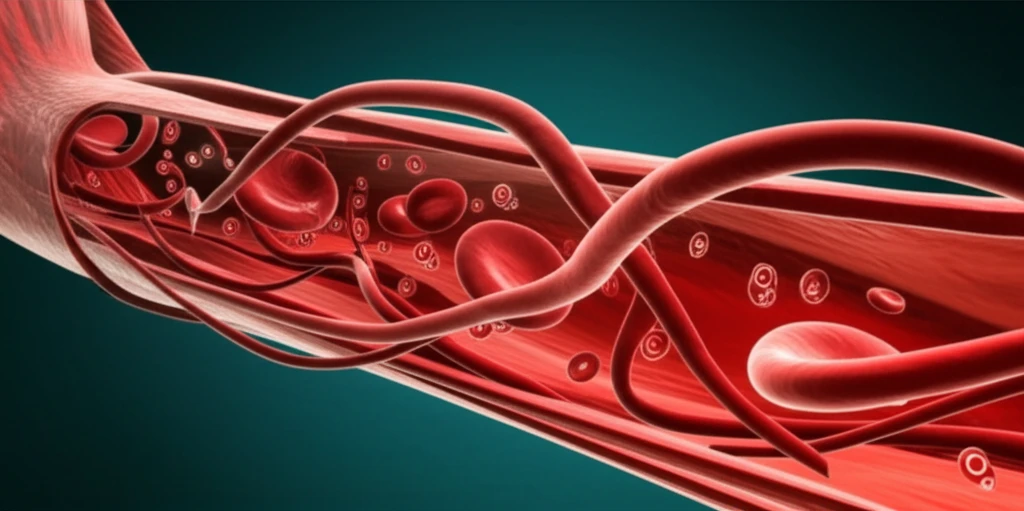
Illustration of oxygen extraction in muscles during exercise.

Unlocking Exercise Capacity: How Oxygen Extraction Can Help CKD Patients

"New research sheds light on the critical role of peripheral oxygen extraction in improving exercise capacity for those with chronic kidney disease."


Chronic Kidney Disease (CKD) often leads to a diminished capacity for physical activity, significantly impacting the quality of life for those affected. The primary culprit behind this limitation is a reduction in maximal aerobic capacity (VO2max), which measures the body's ability to use oxygen during exercise. While it's known that VO2max is compromised in CKD patients, the precise mechanisms causing this reduction have remained unclear – until now.

Traditionally, VO2max is viewed as an integrated function of the respiratory, cardiovascular, and musculoskeletal systems. To effectively improve exercise capacity in CKD, it's crucial to understand whether the limitations stem from impaired pulmonary function, reduced cardiac output, or issues with oxygen extraction in the muscles.

Recent research has investigated these components to determine where the primary limitations lie. By identifying the specific bottlenecks, healthcare professionals can develop targeted interventions to enhance exercise capacity and overall well-being for individuals living with CKD.

The Role of Oxygen Extraction in CKD Exercise Capacity

Illustration of oxygen extraction in muscles during exercise.

A study involving 70 male non-diabetic CKD patients (stages 2-5, pre-dialysis) without primary cardiac disease, sought to identify the factors limiting exercise capacity. The study compared patients in different stages of CKD (2-3a, 3b-4, and 5). During specialized cardiopulmonary exercise tests, researchers measured peak cardiac output (Qt) non-invasively, VO2max, and calculated peripheral O2 extraction [C(a-v) O2] using Fick's equation. The results highlighted the critical role of peripheral O2 extraction in determining exercise capacity.

The study revealed that while pulmonary function (assessed by minute ventilation, VE, and ventilatory efficiency, VE/VCO2) was generally normal across the groups, the increase in VO2max from rest to peak exercise was significantly different among the CKD stages. Specifically, VO2max increased by 10.49-fold in CKD 2-3a, 8.26-fold in CKD 3b-4, and 8.04-fold in CKD 5. These results indicate a declining trend in exercise capacity as CKD progresses.

  • VO2max: Peak oxygen consumption, indicating aerobic capacity.
  • Qt: Peak cardiac output, measuring the heart's pumping efficiency.
  • C(a-v) O2: Peripheral oxygen extraction, showing how efficiently muscles use oxygen.
  • VE: Minute ventilation, reflecting lung function.
  • VE/VCO2: Ventilatory efficiency, indicating how well the lungs eliminate carbon dioxide.
Multivariate analysis identified peripheral O2 extraction (C(a-v)O2) as the strongest independent predictor of VO2 reserve (VO2max - VO2rest), indicating that the ability of muscles to extract and use oxygen is a primary determinant of exercise capacity in CKD patients. Additional factors included heart rate reserve, stroke volume reserve, and hemoglobin levels, all significantly contributing to VO2 reserve. This underscores that interventions should focus on enhancing oxygen delivery and utilization at the muscle level to improve exercise capacity in CKD.

Practical Implications and Future Directions

This research underscores the importance of targeted interventions to improve peripheral O2 extraction in CKD patients. Exercise rehabilitation programs should focus on strategies to enhance muscle oxygen utilization, potentially through specific exercises or therapies that promote vascular function and muscle health.

The findings also highlight the need for a comprehensive assessment of exercise capacity in CKD, considering not only traditional measures like VO2max but also the efficiency of peripheral O2 extraction. This can refine pre-operative assessments and tailor exercise rehabilitation programs to individual patient needs, ultimately improving outcomes and quality of life.

Future research should explore the potential of novel therapies and interventions to improve peripheral O2 extraction in CKD patients. Investigating the effects of pharmacological agents, nutritional strategies, and advanced exercise techniques could provide new avenues for enhancing exercise capacity and overall health in this population.

About this Article -

This article was crafted using a human-AI hybrid and collaborative approach. AI assisted our team with initial drafting, research insights, identifying key questions, and image generation. Our human editors guided topic selection, defined the angle, structured the content, ensured factual accuracy and relevance, refined the tone, and conducted thorough editing to deliver helpful, high-quality information.See our About page for more information.

Everything You Need To Know

1

Why is exercise capacity often reduced in people with Chronic Kidney Disease?

Chronic Kidney Disease (CKD) often reduces the body's ability to use oxygen during exercise, which is measured as VO2max. This diminished VO2max directly affects the ability to perform physical activities, thus impacting overall quality of life for individuals with CKD. The study emphasizes that understanding and addressing the limitations in VO2max is crucial for developing effective interventions to improve exercise capacity.

2

What does VO2max measure, and why is it important?

VO2max represents the peak oxygen consumption, indicating the highest amount of oxygen your body can utilize during intense exercise. It serves as a key measure of aerobic capacity, reflecting the efficiency of the respiratory, cardiovascular, and musculoskeletal systems working together. In the context of CKD, a lower VO2max suggests a reduced ability to perform physical activities, highlighting the need to address the underlying factors that limit oxygen utilization.

3

What is peripheral O2 extraction, and why is it important for exercise?

Peripheral O2 extraction, denoted as C(a-v) O2, refers to how efficiently muscles extract and use oxygen from the blood. This process is vital for producing energy during exercise. The study found that peripheral O2 extraction is the strongest predictor of exercise capacity in CKD patients. When muscles cannot efficiently extract oxygen, exercise capacity decreases, underscoring the importance of interventions that improve muscle oxygen utilization.

4

What measurements were used in the study to assess exercise capacity?

The study used several measurements to evaluate the factors limiting exercise capacity in CKD patients. These included VO2max, Qt (peak cardiac output), C(a-v) O2 (peripheral oxygen extraction), VE (minute ventilation), and VE/VCO2 (ventilatory efficiency). These measurements were taken during cardiopulmonary exercise tests. By analyzing these metrics, researchers aimed to pinpoint the specific areas where exercise capacity was compromised, allowing for targeted interventions.

5

What are some practical implications of the study's findings for CKD patients?

The research suggests that improving peripheral O2 extraction is a key strategy to enhance exercise capacity in CKD patients. This could be achieved through exercise rehabilitation programs designed to boost muscle oxygen utilization. Strategies might include specific exercises or therapies that support better vascular function and promote muscle health. These interventions aim to increase VO2max and, consequently, improve the quality of life for individuals with CKD by allowing them to engage in more physical activity.

Newsletter Subscribe

Subscribe to get the latest articles and insights directly in your inbox.