
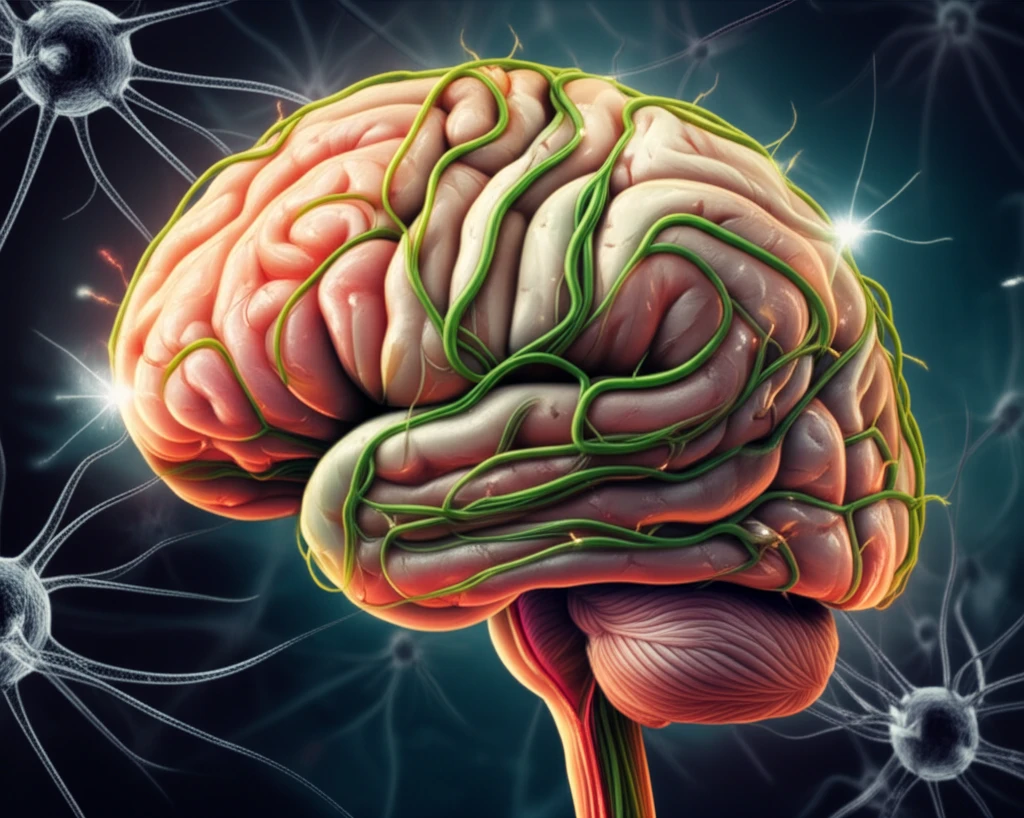
Surreal brain with vines and capillaries, representing epileptic activity.

Unlocking Epilepsy: Can Brain Tissue Analysis Lead to Better Treatments?

"A proteomic study reveals key vascular and glial changes in epileptic neocortex, offering new hope for refractory epilepsy patients."


Epilepsy, a prevalent neurological disorder, remains shrouded in molecular mystery. While some brain regions readily produce epileptic discharges, others remain unaffected. This disparity puzzles researchers and clinicians alike. For patients with refractory epilepsy, those who don't respond to conventional antiseizure medications, surgical removal of problematic brain regions offers a beacon of hope. The tissue extracted during these surgeries becomes an invaluable resource, a molecular window into the heart of human epilepsy.

Historically, studying resected tissues has been challenging due to their inherent heterogeneity and the difficulty in obtaining suitable control samples. Comparing epileptic tissue to tissue from non-epileptic individuals introduces confounding variables such as age, gender, and varying medication histories. To address these limitations, the Systems Biology of Epilepsy Project (SBEP) was launched, pioneering a novel approach to studying human epilepsy. This project focuses on neocortical tissues identified by in vivo recordings of electrical activity, specifically quantifying the frequency of interictal spikes – electrical potentials between seizures.

The SBEP approach allows for direct comparisons within the same patient, contrasting high-spiking epileptic regions with nearby low-spiking control tissue. This powerful design minimizes individual biological variation and medication effects, highlighting changes directly associated with epileptic activity. By focusing on tissues with abnormal electrophysiology, researchers can differentiate between proteomic changes specific to epilepsy and secondary responses like inflammation or gliosis. This article delves into a proteomic study employing 2-D differential in gel electrophoresis (2D-DIGE) on six pairs of high and low spiking human neocortical tissues, seeking common proteomic signatures of abnormal epileptic activity.

Decoding the Proteomic Landscape of Epilepsy: What Did the Study Find?

Surreal brain with vines and capillaries, representing epileptic activity.

Researchers analyzed tissues from six patients undergoing cortical resections for intractable seizures. These patients were part of the System Biology of Epilepsy Project. The study involved a two-stage procedure: days of subdural electroencephalography (EEG) recordings, followed by the excision of epileptic foci and surrounding tissue. Pairs of 1 cm³ blocks of tissue, precisely localized to high and low spiking regions from each patient, were subdivided for histology, genomics, and proteomics.

Differential proteomics analysis was performed after subcellular fractionation and differential fluorescent labeling of High and Low Spiking sample pairs. The 2D DIGE method provided improved sample comparison, protein resolution, sensitivity, and increased dynamic range. More than 4,400 protein spots were analyzed across independent data sets from the three subcellular fractions. A t-test (p<0.05, FC > 1.25) revealed 34 spots that changed between High and Low Spiking samples. Mass spectroscopy identified 31 of these spots, originating from 18 gene products.

  • Eight gene products were upregulated in high spiking regions: SNCA, STMN1, UGP2, DSP, CA1, PRDX2, SYN2, and DPYSL2.
  • Ten were downregulated: GFAP, HNRNPK, CPNE6, CRYAB, GNAO1, PHYHIP, HNRPDL, ALDH2, GAPDH, and LASP1.
  • Variable spots (FC > 1.25, upregulated or downregulated in high spiking tissue in at least half the patients) were also selected.
  • A data set of 397 Spots of Interest (SOI) was created.
This comprehensive approach identified key proteins and pathways linked to epileptic activity. Hierarchical clustering further refined the analysis, predicting histological changes based on protein spot expression patterns. This sophisticated methodology allowed researchers to move beyond simple protein identification, uncovering potential cellular and molecular mechanisms underlying epilepsy. A protein displaying a spot train of isoforms with a similar expression pattern led to picking of only the most intense isoform spots. More than 90% of the 397 SOIs were identified as arising from 146 gene products.

The Future of Epilepsy Treatment: What Does This Mean for Patients?

This study marks a significant step towards understanding the complex molecular mechanisms driving epilepsy. By correlating proteomic changes with electrical brain activity, researchers have identified potential therapeutic targets and diagnostic markers. The findings highlight the importance of vascular and glial changes in epileptic neocortex, suggesting new avenues for treatment development. Further research is needed to validate these findings and translate them into clinical applications, but the potential for improved outcomes for epilepsy patients is undeniable. The decrease in astrocyte markers and increase in vascularity in high spiking regions, along with the strong correlation between spike frequency and GFAP levels, suggests causality between astrocytic reduction and abnormal electrophysiology. This study suggests that brain regions with increased astrocytes may have less epileptic firing, challenging current understanding of epilepsy in conditions such as hippocampal epilepsy.

About this Article -

This article was crafted using a human-AI hybrid and collaborative approach. AI assisted our team with initial drafting, research insights, identifying key questions, and image generation. Our human editors guided topic selection, defined the angle, structured the content, ensured factual accuracy and relevance, refined the tone, and conducted thorough editing to deliver helpful, high-quality information.See our About page for more information.

Everything You Need To Know

1

What is the Systems Biology of Epilepsy Project (SBEP) and how did it help to study epilepsy?

The Systems Biology of Epilepsy Project (SBEP) is a research initiative focused on understanding the molecular basis of epilepsy. It employed a novel approach to study human epilepsy, specifically by analyzing neocortical tissues. The key innovation of SBEP was to compare high-spiking epileptic regions with nearby low-spiking control tissue from the same patient. This method minimizes individual biological variation and medication effects, highlighting changes directly associated with epileptic activity, unlike previous studies that compared tissues from different individuals with different conditions. This approach allowed researchers to focus on proteomic changes specific to epilepsy rather than secondary responses like inflammation or gliosis, providing a more accurate understanding of the disease mechanisms.

2

What are the implications of the proteomic study's findings on the role of astrocytes and vascular changes in epilepsy?

The study revealed that in high-spiking regions, there was a decrease in astrocyte markers and an increase in vascularity. Specifically, the decrease in GFAP (an astrocyte marker) in high-spiking regions, along with a strong correlation between spike frequency and GFAP levels, suggests a link between astrocytic reduction and abnormal electrophysiology. These findings challenge current understanding of epilepsy, especially in conditions such as hippocampal epilepsy, and suggest that brain regions with increased astrocytes may have less epileptic firing. The increased vascularity suggests that there may be changes to blood vessels which has implications for potential treatments.

3

How did the researchers use 2D-DIGE in their proteomic analysis, and what were the benefits of this approach?

The study utilized 2-D differential in gel electrophoresis (2D-DIGE) for proteomic analysis of the high and low spiking human neocortical tissues. This method involved differential fluorescent labeling of the samples and allowed for improved sample comparison, protein resolution, sensitivity, and increased dynamic range. Researchers were able to analyze more than 4,400 protein spots across independent datasets and identify 34 spots that significantly changed between high and low spiking samples. The 2D-DIGE method provided a more detailed and accurate picture of protein expression differences, leading to more precise identification of the proteins associated with epileptic activity, when compared to other methods.

4

Which specific proteins were found to be altered in high-spiking regions, and what might these changes imply?

The study identified several proteins that were either upregulated or downregulated in high-spiking regions. Upregulated gene products included SNCA, STMN1, UGP2, DSP, CA1, PRDX2, SYN2, and DPYSL2. Downregulated gene products included GFAP, HNRNPK, CPNE6, CRYAB, GNAO1, PHYHIP, HNRPDL, ALDH2, GAPDH, and LASP1. The upregulation of certain proteins like SNCA (alpha-synuclein) could be linked to neurodegeneration, while changes in other proteins may be associated with altered neuronal function and signaling pathways. The downregulation of GFAP, an astrocyte marker, supports the findings regarding astrocytic changes. These alterations suggest specific cellular and molecular pathways that are disrupted in epileptic tissues, providing potential targets for future therapeutic interventions.

5

How can the results of this proteomic study translate into improved treatments for epilepsy patients?

The findings of this proteomic study offer several pathways toward improved treatments for epilepsy. By identifying specific proteins and pathways linked to epileptic activity, researchers have identified potential therapeutic targets. The identified changes in astrocyte markers, along with the strong correlation between spike frequency and GFAP levels, suggest that targeting astrocytic function may modulate seizure activity. Furthermore, the insights into vascular changes in the epileptic neocortex may lead to therapies that address these vascular modifications. The study also highlights the importance of understanding the molecular mechanisms underlying epilepsy. Further research is needed to validate these findings and translate them into clinical applications, but the potential for improved outcomes for epilepsy patients is undeniable. The identified protein biomarkers may also be utilized for diagnostic purposes in the future.

Newsletter Subscribe

Subscribe to get the latest articles and insights directly in your inbox.