
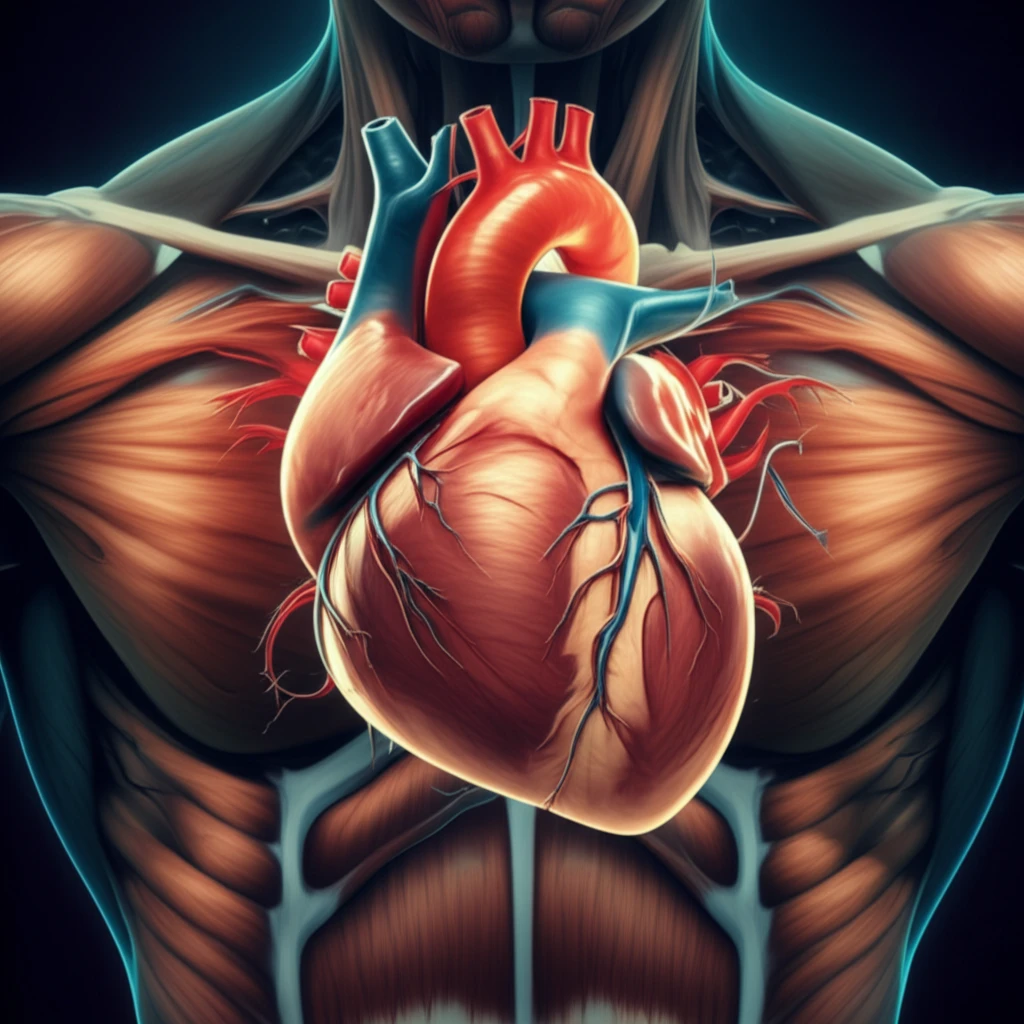
Digital illustration of oxygen flow in the body, highlighting heart and muscle activity.

Unlocking Energy: How Oxygen Levels Can Predict Health in Barth Syndrome

"Discover the groundbreaking research on oxygen uptake (VO2peak) in Barth syndrome, offering new hope for monitoring and improving the lives of those affected."


Barth syndrome (BTHS) is a rare, genetic condition that primarily affects males. It's characterized by a range of health challenges, including heart problems, muscle weakness, and developmental delays. Because it's so rare—affecting approximately one in 300,000 births—understanding how to best monitor and manage the condition is an ongoing effort.

One key area of focus is how well the body uses oxygen during exercise. This is measured by what's known as peak oxygen uptake, or VO2peak. Reduced VO2peak levels have been observed in individuals with BTHS; however, little is known about how VO2peak changes over time, especially from childhood through adulthood.

Now, new research is shedding light on this important aspect of Barth syndrome. A recent study published in PLOS One investigates VO2peak levels across different age groups, providing valuable insights into the stability and predictability of this measure. This article dives into the details of this study, explaining what it means for individuals with BTHS and their families.

VO2peak: A Stable Indicator Across the Lifespan?

Digital illustration of oxygen flow in the body, highlighting heart and muscle activity.

The PLOS One study aimed to track VO2peak from childhood to young adulthood in individuals with BTHS. Researchers used both cross-sectional and longitudinal data, meaning they looked at different age groups at one point in time and also followed individuals over several years. This comprehensive approach provided a more complete picture of how VO2peak evolves.

The study involved 33 participants for the cross-sectional analysis, divided into three groups: children, adolescents, and young adults. A smaller group of 12 participants underwent longitudinal analysis, with exercise tests repeated over a period of two to nine years. All participants underwent maximal exercise testing on a cycle ergometer, a stationary bike that measures exercise performance.

Key findings from the study include:
  • VO2peak, when adjusted for body weight and fat-free mass, remained relatively stable across all age groups (children, adolescents, and young adults).
  • Longitudinal data showed that VO2peak did not significantly change over a mean time of approximately five years in late adolescents and young adults.
  • A model that included both cardiac (heart-related) and skeletal muscle variables best predicted VO2peak.
These results suggest that VO2peak, particularly when considered in relation to body composition, is a consistent measure in individuals with BTHS from childhood to young adulthood. This stability makes it a potentially valuable tool for monitoring the disease and assessing the effectiveness of interventions.

What This Means for Individuals with Barth Syndrome

The stability of VO2peak as an indicator has important implications for clinical trials and treatment strategies. Because it remains consistent over time, VO2peak can be used to accurately assess the impact of new therapies aimed at improving cardiac and skeletal muscle function. This could lead to more effective interventions and improved quality of life for those living with BTHS.

About this Article -

This article was crafted using a human-AI hybrid and collaborative approach. AI assisted our team with initial drafting, research insights, identifying key questions, and image generation. Our human editors guided topic selection, defined the angle, structured the content, ensured factual accuracy and relevance, refined the tone, and conducted thorough editing to deliver helpful, high-quality information.See our About page for more information.

This article is based on research published under:

DOI-LINK: 10.1371/journal.pone.0197776, Alternate LINK

Title: Peak Oxygen Uptake (Vo2Peak) Across Childhood, Adolescence And Young Adulthood In Barth Syndrome: Data From Cross-Sectional And Longitudinal Studies

Subject: Multidisciplinary

Journal: PLOS ONE

Publisher: Public Library of Science (PLoS)

Authors: William Todd Cade, Kathryn L. Bohnert, Dominic N. Reeds, Linda R. Peterson, Adam J. Bittel, Adil Bashir, Barry J. Byrne, Carolyn L. Taylor

Published: 2018-05-24

Everything You Need To Know

1

What is Barth syndrome?

Barth syndrome (BTHS) is a rare genetic condition primarily affecting males, characterized by heart problems, muscle weakness, and developmental delays. The rarity of BTHS, impacting approximately one in 300,000 births, makes understanding and managing it a continuous effort.

2

What is VO2peak, and why is it important in this context?

VO2peak, or peak oxygen uptake, measures how efficiently the body uses oxygen during exercise. In the context of Barth syndrome (BTHS), reduced VO2peak levels have been observed. The significance lies in VO2peak's potential as a stable indicator for monitoring the progression of BTHS and evaluating the effectiveness of treatments aimed at improving cardiac and skeletal muscle function. Its consistency from childhood to young adulthood makes it a valuable tool.

3

What were the key findings of the study regarding VO2peak?

The study's main findings indicate that VO2peak, when adjusted for body weight and fat-free mass, remains relatively stable across different age groups (children, adolescents, and young adults) with Barth syndrome (BTHS). Longitudinal data confirms this stability, showing that VO2peak does not significantly change over time. This stability is crucial because it provides a reliable measure to assess the impact of therapies and interventions.

4

What research methods were used to study VO2peak?

The research used both cross-sectional and longitudinal data. Cross-sectional analysis involved looking at different age groups (children, adolescents, and young adults) at a single point in time. Longitudinal analysis followed a smaller group of individuals over several years. Participants underwent maximal exercise testing on a cycle ergometer to measure their VO2peak. This comprehensive approach provided a complete picture of how VO2peak evolves in individuals with Barth syndrome (BTHS).

5

What are the implications of these findings for treating Barth syndrome?

The stability of VO2peak has significant implications for clinical trials and treatment strategies for Barth syndrome (BTHS). Because VO2peak remains consistent over time, it can be used to accurately assess the impact of new therapies aimed at improving cardiac and skeletal muscle function. This can lead to more effective interventions, potentially improving the quality of life for individuals living with BTHS. Furthermore, a model that included both cardiac (heart-related) and skeletal muscle variables best predicted VO2peak, pointing to the interconnectedness of these systems in the disease.

Newsletter Subscribe

Subscribe to get the latest articles and insights directly in your inbox.