
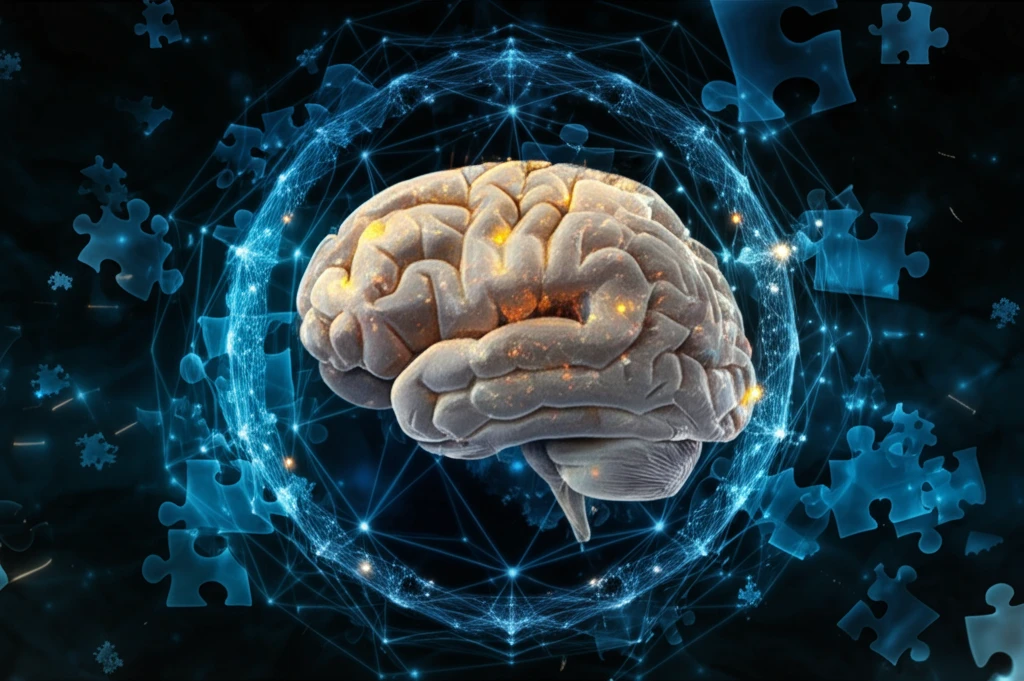
Interconnected brains forming a knowledge network.

Unlocking Collective Genius: How Understanding Group Knowledge Can Transform Your Team

"Beyond Brainstorming: Discover the hidden power of distributed knowledge and how it can revolutionize team performance, problem-solving, and innovation."


In today's fast-paced and interconnected world, the ability to harness collective intelligence is more critical than ever. While traditional approaches to teamwork often focus on aggregating individual contributions, a deeper understanding of how knowledge is distributed and processed within a group can unlock remarkable potential for innovation and problem-solving. This is where the concept of "distributed knowledge" comes into play.

Imagine a team where each member possesses unique insights and perspectives. The challenge lies in effectively integrating these diverse pieces of information to form a comprehensive understanding. Distributed knowledge explores how individuals, with varying levels of reasoning abilities, can communicate and share their knowledge to achieve a collective understanding that surpasses the capabilities of any single member.

This article delves into the fascinating research on distributed knowledge, drawing insights from the academic paper "Group Knowledge and Individual Introspection." We'll break down complex concepts into accessible insights, revealing practical strategies you can use to foster collaboration, enhance team performance, and unlock the collective genius within your organization. Get ready to move beyond traditional brainstorming and discover a new era of collaborative intelligence.

What is Distributed Knowledge and Why Does It Matter?

Interconnected brains forming a knowledge network.

At its core, distributed knowledge refers to the information and understanding that emerges when individuals with private knowledge freely communicate and share their insights. It acknowledges that expertise is rarely concentrated in one person and that true understanding often requires integrating diverse perspectives. Think of it as a mosaic, where each individual holds a unique tile, and the complete picture only becomes visible when the tiles are assembled.

The real-world implications of understanding distributed knowledge are vast. In business, it can lead to more effective decision-making, improved product development, and enhanced problem-solving. In scientific research, it can foster collaboration and accelerate discoveries. Even in everyday life, understanding how knowledge is distributed can improve communication and collaboration within families and communities.

  • Enhanced Problem-Solving: Teams can tackle complex challenges by pooling diverse perspectives.
  • Increased Innovation: Exposure to different viewpoints sparks creativity and leads to novel solutions.
  • Improved Decision-Making: Collective intelligence reduces biases and leads to more informed choices.
  • Stronger Team Cohesion: Collaborative knowledge sharing fosters trust and strengthens team bonds.
However, simply bringing people together doesn't guarantee the effective sharing and integration of knowledge. The key lies in understanding how individuals reason, process information, and revise their understanding based on new input. This is where the concepts of reasoning abilities and revision types become crucial.

Embracing the Power of Collective Genius

Understanding and harnessing distributed knowledge is not just a theoretical exercise; it's a practical strategy for creating more effective, innovative, and resilient teams. By recognizing the unique reasoning styles of team members, fostering open communication, and actively encouraging the sharing of diverse perspectives, you can unlock the collective genius within your organization and achieve remarkable results. Start today by fostering a culture of curiosity, collaboration, and continuous learning, and watch your team thrive in ways you never thought possible.

About this Article -

This article was crafted using a human-AI hybrid and collaborative approach. AI assisted our team with initial drafting, research insights, identifying key questions, and image generation. Our human editors guided topic selection, defined the angle, structured the content, ensured factual accuracy and relevance, refined the tone, and conducted thorough editing to deliver helpful, high-quality information.See our About page for more information.

Everything You Need To Know

1

What is distributed knowledge and how does it differ from traditional teamwork?

Distributed knowledge is the concept where information and understanding emerge when individuals with private knowledge share their insights. Unlike traditional teamwork, which often focuses on aggregating individual contributions, distributed knowledge emphasizes integrating diverse perspectives to form a comprehensive understanding. It recognizes that expertise is rarely concentrated in one person and that true understanding requires the contributions of many, like a mosaic where each person holds a unique tile contributing to the complete picture.

2

How can understanding individual reasoning styles improve team performance in relation to distributed knowledge?

Understanding individual reasoning styles is crucial for effectively harnessing distributed knowledge. Because each team member has a unique way of processing information and forming conclusions, recognizing these differences can foster better communication and collaboration. By acknowledging that team members may use different approaches to understanding, teams can tailor their communication strategies, avoid misunderstandings, and ensure that all perspectives are considered, leading to enhanced problem-solving, increased innovation, and improved decision-making. It requires open communication and actively encouraging the sharing of diverse perspectives.

3

What are the real-world benefits of applying distributed knowledge in a business setting?

In a business setting, applying the principles of distributed knowledge offers several significant advantages. It can lead to more effective decision-making by reducing biases and incorporating a wider range of perspectives. Improved product development is another benefit, as teams can leverage diverse insights to create more innovative and user-centric solutions. Enhanced problem-solving capabilities arise from the ability to tackle complex challenges by pooling a variety of viewpoints. These factors contribute to a more competitive, adaptable, and successful organization.

4

What are some practical strategies for fostering distributed knowledge within a team?

Fostering distributed knowledge involves several practical strategies. Encourage open communication and create an environment where team members feel comfortable sharing their insights and perspectives. Actively seek out and value diverse viewpoints, ensuring that all voices are heard. Recognize and appreciate the unique reasoning styles of team members, tailoring communication to suit different approaches. Promote continuous learning and provide opportunities for team members to expand their knowledge base. By creating a culture of curiosity and collaboration, teams can unlock collective genius and achieve remarkable results.

5

How does distributed knowledge contribute to stronger team cohesion and overall team success?

Distributed knowledge strengthens team cohesion by fostering trust and encouraging collaboration. When team members share their insights and perspectives, they build a sense of mutual respect and understanding. This shared understanding creates stronger bonds, making the team more resilient and effective. Ultimately, understanding and harnessing distributed knowledge leads to improved problem-solving, increased innovation, and enhanced decision-making, all of which contribute to overall team success. Stronger team cohesion, in turn, supports these outcomes, creating a positive feedback loop that drives continuous improvement and achievement.

Newsletter Subscribe

Subscribe to get the latest articles and insights directly in your inbox.