
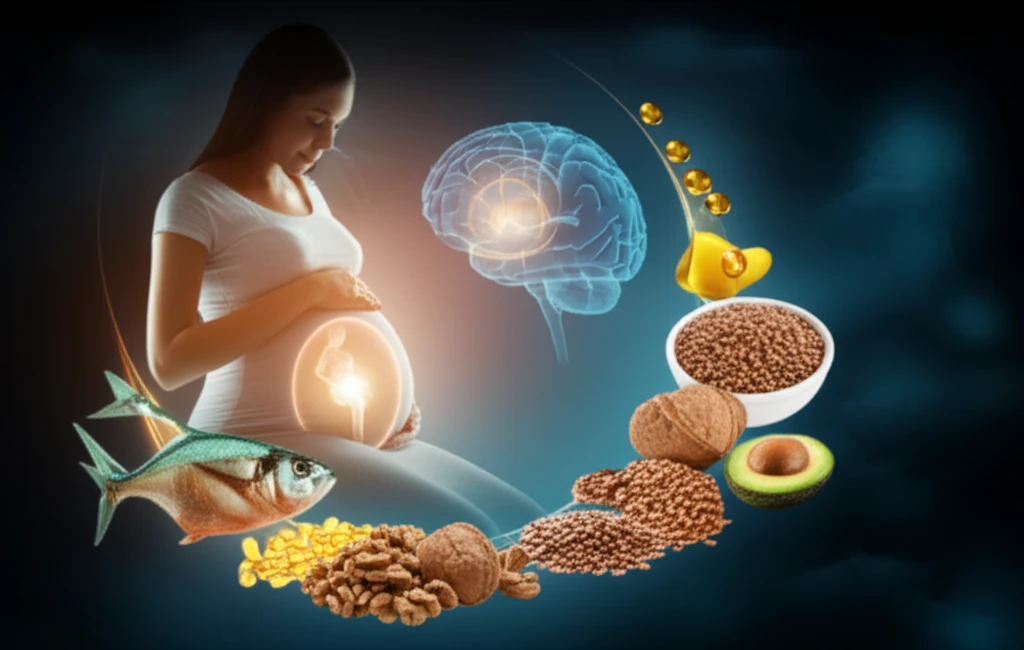
Pregnant woman with protective shield and omega-3 foods, symbolizing healthy prenatal nutrition and protection from infections.

Unlocking Childhood Development: The Impact of Prenatal Nutrition and Congenital Infections

"A Deep Dive into Research on Fatty Acids, Toxoplasmosis, and Neonatal Infections"


The journey of childhood development is profoundly shaped by factors encountered even before birth. Recent research sheds light on the critical roles of prenatal nutrition, specifically maternal fatty acid intake, and the impact of congenital infections, such as toxoplasmosis and neonatal sepsis, on a child's cognitive and physical well-being.

This article synthesizes key findings from several studies, providing accessible insights into how these prenatal and early postnatal factors can influence a child's development. We will explore the significance of maternal dietary choices, the complexities of managing congenital infections, and the long-term implications for children's health.

Our goal is to translate complex research into actionable knowledge, empowering parents and caregivers with a better understanding of how to support optimal child development from the earliest stages. By examining the latest scientific evidence, we aim to provide clarity and guidance on navigating these crucial aspects of early childhood health.

Fueling the Brain: The Role of Maternal Fatty Acids

Pregnant woman with protective shield and omega-3 foods, symbolizing healthy prenatal nutrition and protection from infections.

A study within the EDEN mother-child cohort investigated the link between maternal intake of polyunsaturated fatty acids (PUFAs) during pregnancy and subsequent cognitive development in children. PUFAs, particularly n-3 fatty acids, are essential for brain development, and prenatal exposure hinges on maternal dietary intake.

The research, involving 1066 children, assessed cognitive development at age 3 using the Ages and Stages Questionnaire (ASQ). Maternal lipid intake during pregnancy was evaluated via food frequency questionnaires. The study revealed intriguing associations between specific fatty acids and ASQ scores:

  • Positive associations with n-3 PUFAs (a-linolenic, eicosapentaenoic, and docosapentaenoic acids).
  • Negative associations with linoleic acid and the n-6/n-3 ratio.
  • After adjustments for confounders like maternal education, a higher n-3 PUFAs intake and a lower n-6/n-3 ratio correlated with better cognitive development.
These findings underscore the importance of maternal dietary choices during pregnancy, suggesting that a diet rich in n-3 PUFAs may positively influence a child's cognitive trajectory. The study highlights the potential benefits of optimizing prenatal nutrition to support healthy brain development.

Empowering Healthier Futures: A Synthesis of Knowledge

The studies reviewed offer valuable insights into the intricate interplay between prenatal exposures and child development. From the impact of maternal fatty acid intake on cognitive function to the complexities of managing congenital infections, the research underscores the importance of early interventions and informed decision-making.

By understanding the potential risks associated with neonatal infections and the benefits of optimizing maternal nutrition, healthcare professionals and caregivers can work together to create supportive environments for children's growth and development. Early detection, timely treatment, and targeted nutritional guidance can significantly impact long-term outcomes.

Ultimately, these findings call for continued research and collaborative efforts to improve prenatal care, manage congenital infections effectively, and empower families with the knowledge they need to nurture healthy, thriving children. Investing in early childhood health is an investment in a brighter future for all.

About this Article -

This article was crafted using a human-AI hybrid and collaborative approach. AI assisted our team with initial drafting, research insights, identifying key questions, and image generation. Our human editors guided topic selection, defined the angle, structured the content, ensured factual accuracy and relevance, refined the tone, and conducted thorough editing to deliver helpful, high-quality information.See our About page for more information.

Everything You Need To Know

1

Why are n-3 fatty acids important during pregnancy for a child's development?

Maternal intake of polyunsaturated fatty acids, specifically n-3 fatty acids like a-linolenic, eicosapentaenoic, and docosapentaenoic acids, during pregnancy is crucial for the development of a child's cognitive functions. These fatty acids are essential for brain development, and the child's prenatal exposure is dependent on the mother's dietary intake. Higher intake of n-3 PUFAs and a lower n-6/n-3 ratio have been associated with better cognitive development in children.

2

Besides nutrition, what role do congenital infections play in childhood development, and what are some examples?

Congenital infections, such as toxoplasmosis and neonatal sepsis, can significantly impact a child's development. While the text focuses more on prenatal nutrition, it acknowledges the complexities of managing these infections. Early detection and intervention are crucial to mitigating the long-term effects of these infections on a child's cognitive and physical well-being. Future studies could provide comprehensive information on how to manage and treat congenital infections.

3

What is the Ages and Stages Questionnaire (ASQ), and how was it used in the EDEN study?

The Ages and Stages Questionnaire (ASQ) is used to assess cognitive development in children. The EDEN mother-child cohort study utilized ASQ at age 3 to evaluate the cognitive development of children in relation to maternal lipid intake during pregnancy. ASQ provides insights into areas such as communication, gross motor, fine motor, problem-solving, and personal-social skills.

4

What are 'confounders,' and why was it necessary to adjust for them, such as maternal education, in the study on fatty acids?

The study adjusted for confounders like maternal education to isolate the specific impact of maternal fatty acid intake on child development. Confounders are external factors that could influence the relationship between prenatal nutrition and cognitive outcomes. By adjusting for these, researchers aimed to provide a clearer understanding of the direct effects of n-3 PUFAs and the n-6/n-3 ratio on a child's cognitive trajectory.

5

Can you elaborate on the design and significance of the EDEN mother-child cohort study regarding maternal nutrition and child development?

The EDEN mother-child cohort study, involving 1066 children, examined the relationship between maternal intake of polyunsaturated fatty acids (PUFAs) during pregnancy and the subsequent cognitive development of their children. This study highlighted the importance of maternal dietary choices, specifically the intake of n-3 fatty acids, in promoting healthy brain development. The implications suggest that dietary interventions during pregnancy could have long-term benefits for a child's cognitive abilities. Future research could include more diverse cohorts and look into the long term impacts of fatty acid intake.

Newsletter Subscribe

Subscribe to get the latest articles and insights directly in your inbox.