
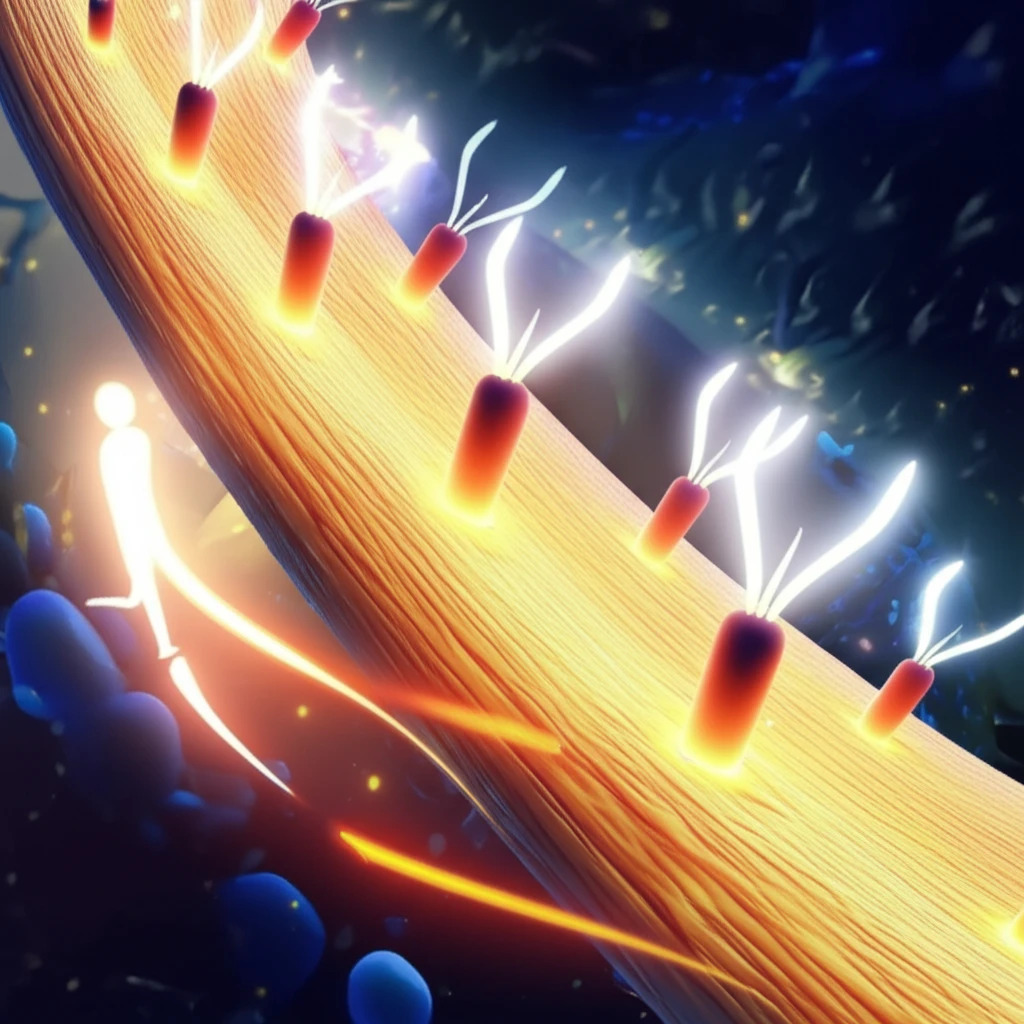
Digital illustration of Meckelin protein guiding basal bodies.

Unlocking Cellular Secrets: How Meckelin Guides Basal Body Orientation

"New research sheds light on the crucial role of Meckelin (MKS3) in the precise organization of basal bodies, vital components for cellular function and ciliogenesis."


Cells are highly organized structures, and their proper function relies on the precise arrangement of various components. Among these, basal bodies play a critical role, particularly in the formation of cilia – hair-like structures essential for a wide range of biological processes. Recent research has illuminated the critical role of a protein called Meckelin (MKS3) in guiding the orientation of these basal bodies.

Meckelin's importance is highlighted by its involvement in ciliogenesis (the formation of cilia) and ciliary gating (the regulation of what enters and exits cilia). Interestingly, Meckelin appears to have similar functions across different organisms, including Paramecium tetraurelia. Studies have shown that when Meckelin is disrupted, cells experience a loss of cilia and a disorganization of basal bodies.

This article will explore how Meckelin guides newly formed basal bodies to their correct location along the striated rootlet (SR) of the parent basal body. We'll delve into the consequences of Meckelin deficiency and highlight the potential implications of this research for understanding and addressing diseases related to ciliary dysfunction.

Meckelin's Guiding Hand: Directing Basal Body Placement

Digital illustration of Meckelin protein guiding basal bodies.

The research reveals that Meckelin acts as a guide, ensuring that new basal bodies migrate to the anterior region of the cell along the striated rootlet (SR) of the parent basal body. When Meckelin is absent, basal bodies lose their connection with the parent's SR, resulting in misorientation. Without Meckelin's guidance, these new basal bodies wander off course, and their striated rootlets fail to project correctly toward the anterior, impacting cellular organization.

To understand which proteins are involved, the researchers tagged 13 potential striated rootlet (SR) components and examined their location. Nine of these were found to be associated with the SR, although their distribution wasn't always uniform, indicating a complex organizational structure.

  • SF Assemblin Domains: Sequences with SF assemblin domains (similar to those found in Chlamydomonas rootlet proteins) were found to code for proteins located within the Paramecium SRs.
  • Rootlet Specificity: Proteins lacking these SF assemblin domains were notably absent from the rootlets, suggesting their importance in rootlet structure or function.
  • MKS3 Interaction: The study also found that a tagged version of Meckelin (zMKS3) interacted sufficiently with epitope-tagged striated rootlet proteins, allowing them to be pulled down with a GST-fusion of the 252 C-terminal residues of the Paramecium MKS3.
This interaction suggests that Meckelin physically associates with other rootlet proteins, contributing to its role in guiding basal body orientation.

Implications and Future Directions

This research provides critical insights into the mechanisms governing basal body orientation and the role of Meckelin in this process. Understanding how Meckelin guides basal body placement has significant implications for understanding diseases related to ciliary dysfunction, known as ciliopathies.

Ciliopathies are a diverse group of disorders affecting various organs and systems, often resulting from defects in cilia structure or function. By unraveling the molecular mechanisms underlying basal body organization, researchers can potentially develop targeted therapies to address these debilitating conditions.

Further research is needed to fully elucidate the interactions between Meckelin and other rootlet proteins. A more detailed understanding of these interactions could lead to new strategies for preventing or correcting the misorientation of basal bodies in ciliopathies, offering hope for improved treatments and outcomes.

About this Article -

This article was crafted using a human-AI hybrid and collaborative approach. AI assisted our team with initial drafting, research insights, identifying key questions, and image generation. Our human editors guided topic selection, defined the angle, structured the content, ensured factual accuracy and relevance, refined the tone, and conducted thorough editing to deliver helpful, high-quality information.See our About page for more information.

This article is based on research published under:

DOI-LINK: 10.1186/2046-2530-4-s1-p67, Alternate LINK

Title: Meckelin Guides Orientation Of Basal Bodies Along The Striated Rootlet

Subject: Cell Biology

Journal: Cilia

Publisher: Springer Science and Business Media LLC

Authors: T Picariello, M Valentine, A Nabi, J Yano, J Van Houten

Published: 2015-07-13

Everything You Need To Know

1

What is the significance of Meckelin (MKS3) in cells?

Meckelin (MKS3) plays a vital role in directing the correct positioning of basal bodies. Basal bodies are crucial for forming cilia, which are essential for many biological processes. The absence or malfunction of Meckelin leads to the misorientation of basal bodies, disrupting cellular organization and function. This understanding is significant because it provides insights into how cells maintain their structure and function, which has implications for treating diseases related to cilia.

2

What is the role of basal bodies in the context of cellular function?

Basal bodies are essential cellular structures involved in ciliogenesis, the process of forming cilia. Cilia are hair-like structures that perform critical functions, such as cell motility and sensory reception. These structures are essential for various biological processes. The precise orientation of basal bodies is crucial for the proper functioning of cilia and, consequently, the overall health of the cell.

3

How is the study of Meckelin (MKS3) related to ciliopathies?

Ciliopathies are diseases that arise from defects in cilia. Since Meckelin (MKS3) is crucial for the correct orientation of basal bodies, which are essential for cilia formation and function, understanding its role is highly relevant to ciliopathies. When Meckelin is disrupted, it leads to the disorganization of basal bodies, causing problems in cilia function. This research enhances our understanding of cilia-related diseases, potentially leading to new diagnostic and treatment strategies for these diseases.

4

How does Meckelin (MKS3) guide basal body placement?

Meckelin (MKS3) guides the newly formed basal bodies to their correct location along the striated rootlet (SR) of the parent basal body. It acts as a guide, ensuring these components are correctly oriented. This proper orientation is critical for the cell's overall organization and function. The research suggests Meckelin physically associates with other rootlet proteins, contributing to its role in guiding basal body orientation.

5

What are the important findings related to SF assemblin domains and rootlet specificity?

The SF assemblin domains and the rootlet specificity are significant findings. Sequences with SF assemblin domains were found in proteins located within the Paramecium SRs, and proteins lacking these domains were absent from the rootlets. This suggests that these SF assemblin domains are crucial for rootlet structure or function. The study also revealed that a tagged version of Meckelin interacted with epitope-tagged striated rootlet proteins, supporting Meckelin's role in guiding basal body orientation.

Newsletter Subscribe

Subscribe to get the latest articles and insights directly in your inbox.