
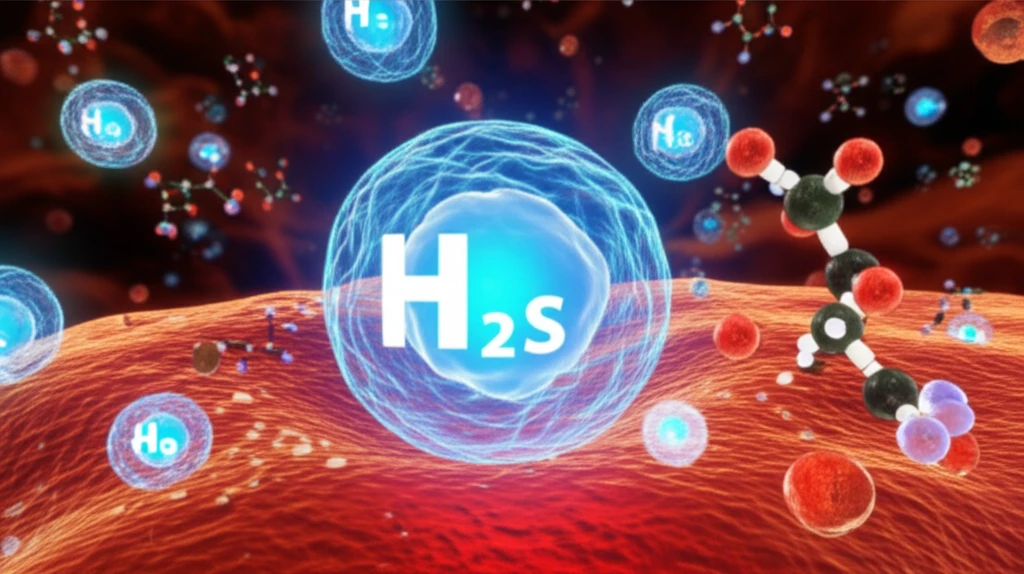
Unlocking Cancer's Secrets: How a Tiny Molecule Could Change Everything

"Exploring the revolutionary role of Hydrogen Sulfide (H2S) and its connection to cancer treatment, offering hope for future therapies."
Cancer, a disease that touches the lives of millions worldwide, is a formidable foe, constantly evolving and challenging medical science. But within the complex landscape of cancer biology, researchers are unearthing new insights that offer a glimmer of hope. One such breakthrough involves a humble gas: Hydrogen Sulfide (H2S).
You might recognize H2S as the gas that gives rotten eggs their characteristic odor. However, within the human body, H2S plays a surprising role as a biological messenger, or 'gasotransmitter'. It's involved in various physiological processes. Recent research has revealed a fascinating link between H2S and cancer cells.
This article will explore the emerging role of H2S in cancer, focusing on the 3-mercaptopyruvate sulfurtransferase (3-MST) pathway. We'll examine how H2S is produced in cancer cells, its potential impact on tumor growth, and the exciting possibilities this research opens for innovative cancer treatments. We will uncover the potential of this molecule to revolutionize cancer treatment.
The H2S Pathway: A Deep Dive into Cancer Biology
Hydrogen Sulfide (H2S), a gasotransmitter, isn't just a simple molecule; it's a key player in many biological processes. Produced by various enzymes, including 3-mercaptopyruvate sulfurtransferase (3-MST), H2S has been found to have diverse effects on cells, from promoting vasodilation to reducing inflammation.
- H2S as a Signaling Molecule: H2S interacts with a wide variety of molecules, initiating various signaling pathways.
- Post-Translational Modification: H2S can also trigger a process known as sulfhydration.
- The Role of 3-MST: The enzyme 3-MST is particularly interesting due to its unique properties, including its localization in the mitochondria.
- Tumor Microenvironment: The role of 3-MST in the tumor microenvironment, and its interaction with various cell types.
The Future of H2S in Cancer Therapy
The research into H2S and its role in cancer is still in its early stages, but the potential is undeniable. As scientists continue to unravel the complexities of the 3-MST pathway and H2S signaling, the door opens for innovative cancer treatments. While there's still much to explore, the promise of H2S-based therapies offers a ray of hope in the ongoing battle against cancer. The future of cancer treatment may well depend on these tiny but powerful molecules.