
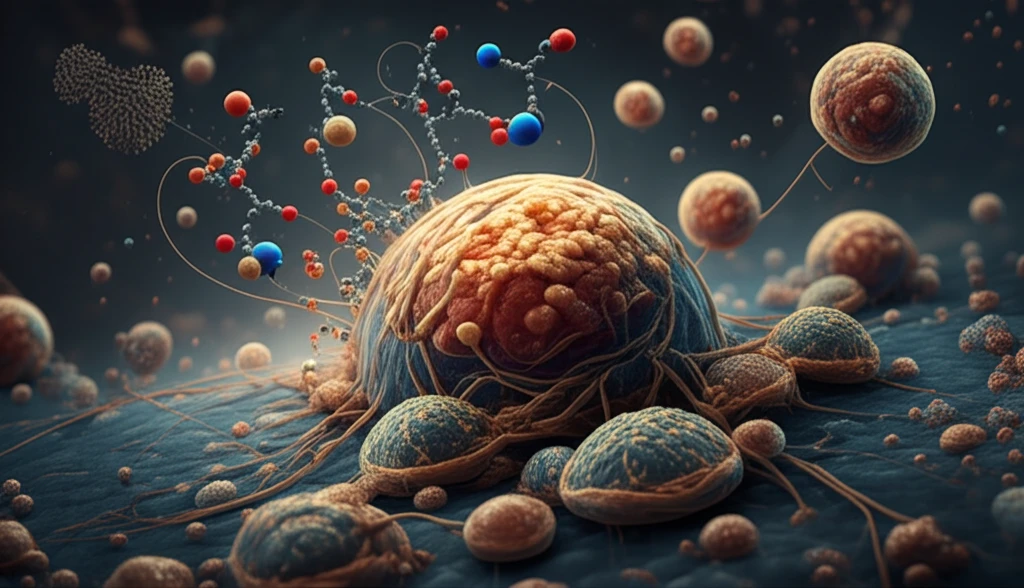
Disrupted cancer cell metabolism

Unlocking Cancer's Energy Secrets: How Novel Inhibitors Could Revolutionize Treatment

"Scientists identify promising new compounds targeting a key metabolic vulnerability in cancer cells, offering a beacon of hope for more effective therapies."


Cancer cells, unlike normal cells, exhibit a peculiar preference for energy production even when oxygen is plentiful—a phenomenon known as the Warburg effect. This unusual behavior involves a shift toward aerobic glycolysis, where cancer cells process glucose into energy in a way that's less efficient but highly advantageous for their rapid growth and proliferation.

At the heart of this metabolic deviation lies an enzyme called pyruvate dehydrogenase kinase 1 (PDK1). PDK1 plays a pivotal role in regulating the activity of pyruvate dehydrogenase (PDH), a crucial enzyme that directs the breakdown of pyruvate, a product of glucose metabolism. By inhibiting PDH, PDK1 effectively reduces the flow of pyruvate into the mitochondria for oxidative phosphorylation—the energy-generating powerhouse of the cell—pushing it instead toward lactate fermentation.

This redirection of energy production provides cancer cells with several benefits. It allows them to synthesize macromolecules needed for rapid growth, creates an acidic environment that promotes invasion and metastasis, and reduces their reliance on mitochondrial respiration, which can be a source of reactive oxygen species that could damage the cells. Targeting PDK1, therefore, represents a promising strategy for disrupting cancer's unique metabolic adaptations.

Why is Targeting PDK1 a Hot Topic in Cancer Research?

Disrupted cancer cell metabolism

Researchers have long sought to exploit the Warburg effect as a therapeutic target. By disrupting cancer cells' ability to efficiently produce energy, scientists hope to create an unfavorable environment that hinders their growth and survival. PDK1, as a key regulator of this metabolic shift, has emerged as a prime target for drug development.

Several factors make PDK1 an attractive target:
  • Overexpression in Cancer: PDK1 is found to be overexpressed in a wide variety of human cancers, including gastric cancer, myeloma, renal cell carcinoma, and melanoma. This suggests that PDK1 plays a critical role in the development and progression of these cancers.
  • Reversing the Warburg Effect: Inhibiting PDK1 can reactivate PDH, restoring mitochondrial respiration and reducing the reliance on glycolysis. This metabolic shift can deprive cancer cells of the energy and building blocks they need to thrive.
  • Potential for Selectivity: While normal cells also utilize PDK1, cancer cells often exhibit a greater dependence on this enzyme due to their altered metabolic state. This offers the potential to develop PDK1 inhibitors that selectively target cancer cells while sparing healthy tissues.

Overexpression in Cancer: PDK1 is found to be overexpressed in a wide variety of human cancers, including gastric cancer, myeloma, renal cell carcinoma, and melanoma. This suggests that PDK1 plays a critical role in the development and progression of these cancers. Reversing the Warburg Effect: Inhibiting PDK1 can reactivate PDH, restoring mitochondrial respiration and reducing the reliance on glycolysis. This metabolic shift can deprive cancer cells of the energy and building blocks they need to thrive. Potential for Selectivity: While normal cells also utilize PDK1, cancer cells often exhibit a greater dependence on this enzyme due to their altered metabolic state. This offers the potential to develop PDK1 inhibitors that selectively target cancer cells while sparing healthy tissues.
While some PDK1 inhibitors have been investigated in clinical trials, many have shown limited efficacy or significant side effects. This has spurred researchers to search for novel inhibitors with improved potency, selectivity, and safety profiles. The study highlights the efforts to identify new small molecules that can effectively inhibit PDK1 and disrupt cancer metabolism.

The Road Ahead: Promise and Future Directions

The identification of these novel PDK1 inhibitors represents a significant step forward in the quest to target cancer metabolism. While further research is needed to optimize these compounds and evaluate their efficacy in preclinical and clinical studies, they offer a promising new avenue for developing more effective and less toxic cancer therapies. By continuing to unravel the intricacies of cancer metabolism, scientists can pave the way for innovative treatments that exploit cancer's unique vulnerabilities.

About this Article -

This article was crafted using a human-AI hybrid and collaborative approach. AI assisted our team with initial drafting, research insights, identifying key questions, and image generation. Our human editors guided topic selection, defined the angle, structured the content, ensured factual accuracy and relevance, refined the tone, and conducted thorough editing to deliver helpful, high-quality information.See our About page for more information.

This article is based on research published under:

DOI-LINK: 10.1021/acscombsci.8b00104, Alternate LINK

Title: Identification Of Novel Pyruvate Dehydrogenase Kinase 1 (Pdk1) Inhibitors By Kinase Activity-Based High-Throughput Screening For Anticancer Therapeutics

Subject: General Chemistry

Journal: ACS Combinatorial Science

Publisher: American Chemical Society (ACS)

Authors: Wen Zhang, Xiaohui Hu, Harapriya Chakravarty, Zheng Yang, Kin Yip Tam

Published: 2018-10-16

Everything You Need To Know

1

What is the Warburg effect and why is it relevant to cancer treatment?

The Warburg effect is a metabolic shift observed in cancer cells, where they favor aerobic glycolysis—a less efficient way of producing energy from glucose—even when oxygen is available. This contrasts with normal cells, which primarily use oxidative phosphorylation in the mitochondria for energy generation. This shift is highly advantageous for cancer cells as it supports rapid growth, creates an acidic environment for invasion, and reduces reliance on mitochondrial respiration. Understanding and targeting the Warburg effect, therefore, is a key strategy in cancer treatment development.

2

How does PDK1 contribute to the Warburg effect in cancer cells?

PDK1, an enzyme, is a critical regulator within the Warburg effect. It inhibits the activity of pyruvate dehydrogenase (PDH), which is responsible for directing pyruvate into the mitochondria for energy production via oxidative phosphorylation. By inhibiting PDH, PDK1 redirects pyruvate toward lactate fermentation, the pathway used in aerobic glycolysis. This redirection supports the unique metabolic needs of cancer cells, allowing them to thrive and proliferate, making PDK1 a prime target for therapeutic intervention.

3

Why are researchers focusing on developing PDK1 inhibitors to treat cancer?

Researchers are targeting PDK1 because it's a key player in cancer's altered energy metabolism, offering several advantages. PDK1 is often overexpressed in various cancers, indicating its importance in cancer progression. Inhibiting PDK1 can reverse the Warburg effect, pushing cancer cells back toward more efficient energy production and potentially starving them. Moreover, because cancer cells often rely more on PDK1 than normal cells, there's a potential for selective targeting, reducing harm to healthy tissues. This strategy offers a promising avenue for more effective and less toxic cancer therapies.

4

What are the potential benefits of inhibiting PDK1 in cancer cells?

Inhibiting PDK1 offers several potential benefits in cancer treatment. It can reactivate PDH, leading to a shift from glycolysis to mitochondrial respiration, thereby depriving cancer cells of the energy and building blocks required for their rapid growth. This metabolic shift can also reduce the acidic environment cancer cells create, which promotes invasion and metastasis. Moreover, because PDK1 inhibitors could potentially target cancer cells more selectively than normal cells, it could lead to reduced side effects compared to existing treatments. The ultimate goal is to hinder cancer cells' ability to thrive, thereby improving treatment outcomes.

5

What are the challenges and future directions in developing effective PDK1 inhibitors for cancer therapy?

While promising, the development of effective PDK1 inhibitors faces several challenges. Some existing inhibitors have shown limited efficacy or significant side effects in clinical trials. Researchers are therefore focused on identifying novel inhibitors with improved potency, selectivity, and safety profiles. Future research directions involve optimizing these new compounds through preclinical and clinical studies to evaluate their efficacy. Further exploration of cancer metabolism will be essential for identifying innovative treatments that exploit the unique vulnerabilities of cancer cells, improving treatment outcomes and paving the way for more effective cancer therapies.

Newsletter Subscribe

Subscribe to get the latest articles and insights directly in your inbox.