
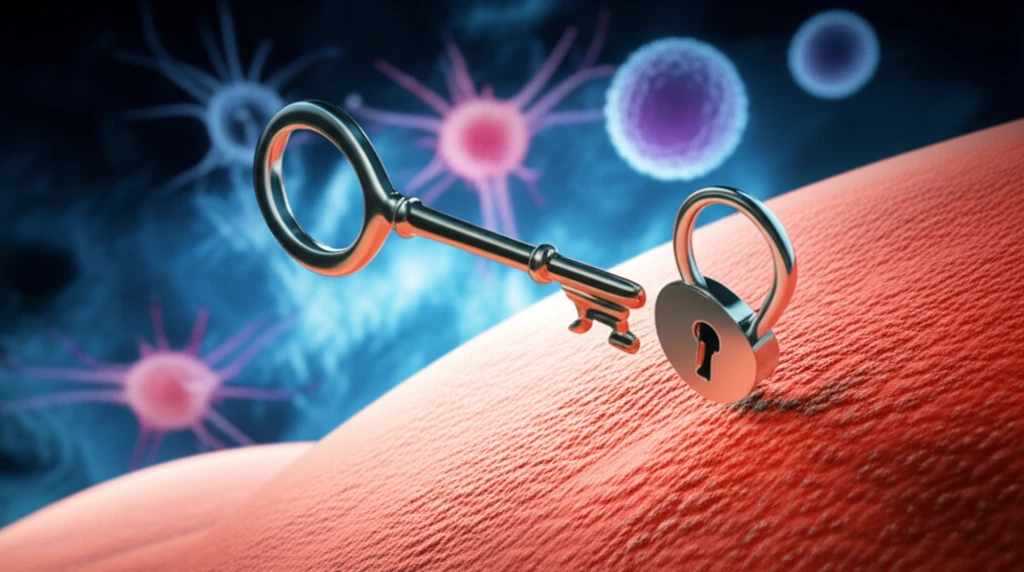
HDAC6 inhibitors unlocking CD20 expression on cancer cells

Unlocking Cancer Treatment: How HDAC6 Inhibitors Can Boost Immunotherapy

"New research reveals that inhibiting HDAC6 enhances the effectiveness of anti-CD20 monoclonal antibodies, offering a promising strategy to improve cancer immunotherapy."


Immunotherapy has revolutionized cancer treatment, but resistance remains a significant hurdle. One promising area of research focuses on improving the effectiveness of monoclonal antibodies, a key component of many immunotherapeutic regimens. A recent study published in 'Blood' sheds light on a novel approach to enhance the efficacy of anti-CD20 monoclonal antibodies, commonly used in treating B-cell lymphomas and leukemias.

The study, led by researchers from the Medical University of Warsaw, Poland, and collaborators from around the globe, explores the role of HDAC6 (histone deacetylase 6) inhibition in upregulating CD20 levels on cancer cells. CD20 is a protein found on the surface of B-cells, and it serves as a target for monoclonal antibodies like rituximab. By increasing CD20 levels, researchers aimed to make cancer cells more susceptible to antibody-mediated destruction.

This innovative research provides a compelling rationale for combining HDAC6 inhibitors with anti-CD20 monoclonal antibodies. As clinical trials continue and further research expands our understanding, this approach may soon offer a new and improved strategy for cancer immunotherapy.

Why HDAC6 Inhibition Matters: Boosting CD20 Levels and Antibody Efficacy

HDAC6 inhibitors unlocking CD20 expression on cancer cells

The study's central finding revolves around the ability of HDAC6 inhibitors to increase CD20 levels on cancer cells. This is crucial because the amount of CD20 on a cell's surface directly impacts how well monoclonal antibodies can bind and trigger cell death. When CD20 levels are low, cancer cells become resistant to antibody therapy, diminishing its effectiveness. Researchers discovered that by inhibiting HDAC6, they could significantly increase CD20 expression, thereby resensitizing cancer cells to anti-CD20 monoclonal antibodies.

To validate their findings, the research team conducted a series of in vitro and in vivo experiments. These included:

  • In vitro studies: Using established B-cell tumor cell lines and primary malignant cells, researchers demonstrated that HDAC6 inhibition significantly increased CD20 levels. They used both pharmacological inhibitors and genetic approaches to confirm this effect.
  • CDC Assays: The researchers evaluated the impact of HDAC6 inhibition on complement-dependent cytotoxicity (CDC), a critical mechanism through which anti-CD20 antibodies kill cancer cells. The HDAC6 inhibitors significantly increased the efficacy of both rituximab and ofatumumab in CDC assays.
  • In vivo experiments: Mice treated with rituximab and an HDAC6 inhibitor showed improved survival compared to mice treated with rituximab alone. This provided further evidence that HDAC6 inhibition enhances the anti-tumor efficacy of anti-CD20 antibodies.
The research team discovered that HDAC6 inhibition enhances CD20 protein synthesis without altering gene expression. This was a surprising finding, suggesting that HDAC6 plays a role in the post-transcriptional regulation of CD20. Further experiments revealed that HDAC6 inhibition increases the amount of CD20 mRNA associated with polysomes, the cellular machinery responsible for protein synthesis. This indicates that HDAC6 inhibition promotes the translation of CD20 mRNA into protein.

A Promising Future for HDAC6 Inhibitors in Cancer Therapy

The study's findings suggest that HDAC6 inhibition holds significant promise for improving cancer immunotherapy. By increasing CD20 levels and enhancing the efficacy of anti-CD20 monoclonal antibodies, this approach has the potential to overcome resistance and improve treatment outcomes for patients with B-cell lymphomas and leukemias. As clinical trials continue, the integration of HDAC6 inhibitors into cancer treatment regimens may represent a major step forward in the fight against cancer.

About this Article -

This article was crafted using a human-AI hybrid and collaborative approach. AI assisted our team with initial drafting, research insights, identifying key questions, and image generation. Our human editors guided topic selection, defined the angle, structured the content, ensured factual accuracy and relevance, refined the tone, and conducted thorough editing to deliver helpful, high-quality information.See our About page for more information.

Everything You Need To Know

1

What is HDAC6 and why is inhibiting it relevant to cancer treatment?

HDAC6, or histone deacetylase 6, is an enzyme that plays a role in regulating the amount of CD20 protein on cancer cells. Inhibiting HDAC6 has been shown to increase CD20 levels, which is important because it makes cancer cells more vulnerable to destruction by monoclonal antibodies. This inhibition does not alter gene expression, but rather enhances CD20 protein synthesis.

2

What are anti-CD20 monoclonal antibodies and how are they used in cancer treatment?

Anti-CD20 monoclonal antibodies, such as rituximab, are a type of immunotherapy commonly used to treat B-cell lymphomas and leukemias. These antibodies target the CD20 protein found on the surface of B-cells, marking them for destruction. The effectiveness of these antibodies depends on the amount of CD20 present on the cancer cells. When CD20 levels are low, cancer cells become resistant to the therapy.

3

How does combining HDAC6 inhibitors with anti-CD20 monoclonal antibodies enhance cancer treatment?

The combination of HDAC6 inhibitors and anti-CD20 monoclonal antibodies works by increasing the amount of CD20 on cancer cells. HDAC6 inhibition boosts CD20 levels, making cancer cells more susceptible to the effects of anti-CD20 monoclonal antibodies like rituximab. This combined approach has the potential to overcome resistance to antibody therapy and improve treatment outcomes.

4

What kind of experiments were conducted to validate the effectiveness of HDAC6 inhibitors?

The researchers conducted in vitro studies using B-cell tumor cell lines, demonstrating that HDAC6 inhibition increased CD20 levels. They also performed CDC assays to show that HDAC6 inhibitors enhanced the efficacy of rituximab and ofatumumab. In vivo experiments in mice further validated these findings, showing that mice treated with both rituximab and an HDAC6 inhibitor had improved survival rates compared to those treated with rituximab alone.

5

Why is the strategy of using HDAC6 inhibitors to boost immunotherapy considered a promising approach?

This approach is significant because it offers a potential way to improve the effectiveness of cancer immunotherapy, specifically for B-cell lymphomas and leukemias. By increasing CD20 levels on cancer cells, HDAC6 inhibitors can resensitize resistant cells to anti-CD20 monoclonal antibodies. This could lead to better treatment outcomes and provide new hope for patients who have not responded well to existing therapies.

Newsletter Subscribe

Subscribe to get the latest articles and insights directly in your inbox.