
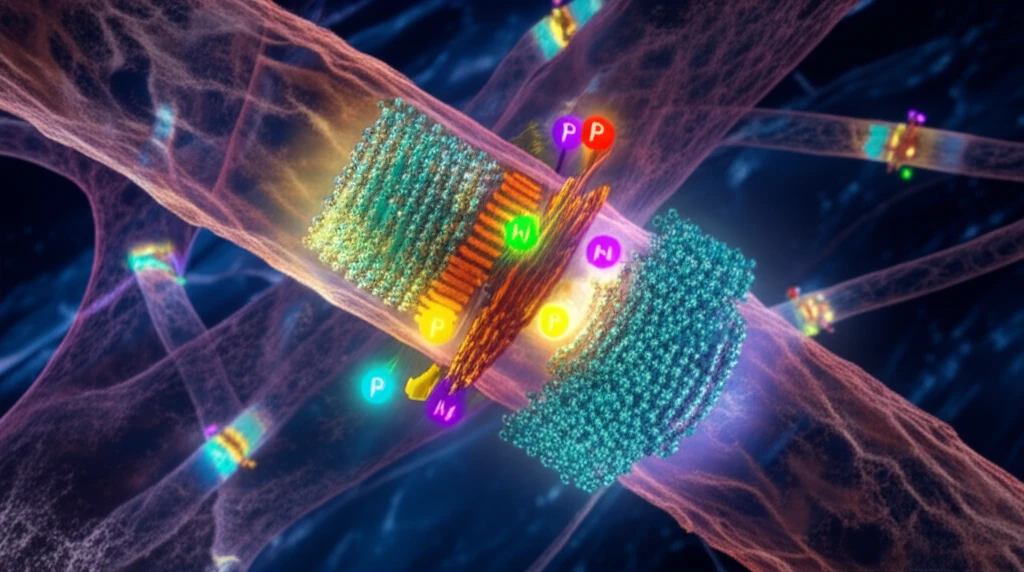
Unlocking Brain Health: How Phosphorylation and Methylation Impact Key Potassium Channels

"A deep dive into the cutting-edge research uncovering how modifications to Kv7.2 channels affect neuronal function and offer potential therapeutic pathways."
Our brains are intricate networks, with electrical signals zipping between neurons to control everything from our thoughts to our movements. These signals depend on tiny channels in the neuron's membrane that allow ions like potassium to flow in and out. Among these, Kv7.2 potassium channels stand out as key players in regulating neuronal excitability. When these channels don't function correctly, it can lead to serious neurological disorders such as epilepsy.
Think of Kv7.2 channels as gates that control the flow of potassium ions, maintaining the delicate balance needed for proper brain function. Recent research has highlighted the importance of post-translational modifications (PTMs), specifically phosphorylation and methylation, in fine-tuning how these channels operate. These modifications can alter the channel's structure and function, impacting how it responds to signals and ultimately influencing neuronal activity.
A new study delves into the specific sites of phosphorylation and methylation on Kv7.2 channels, offering a comprehensive map of these modifications. By identifying these key locations and the enzymes responsible for them, scientists are gaining unprecedented insights into the dynamic regulation of Kv7.2 channels and their potential as therapeutic targets. This article breaks down these complex findings into accessible information, exploring how this knowledge could lead to new treatments for neurological disorders.
Potassium Channels Across Epilepsy Research
Potassium channels are expressed in almost every cell and are ubiquitous in neuronal and glial membranes. Their diversity reflects the large number of human genes encoding pore-forming and accessory subunits, and channel dysfunction has been implicated in epilepsy and other disorders. Recent work includes bibliometric mapping of epilepsy and potassium-channel research, while reviews of voltage-gated potassium channels summarize symptoms, pathogenesis, gene mutations, and treatment progress.
From Variants to Functional Evidence
Current approaches examine potassium-channel gene variants alongside epilepsy phenotypes, functional studies, and pharmacological findings. Identified mutations in several central-nervous-system potassium-channel families can cause rare neonatal-onset epilepsies, including Benign Familial Neonatal Convulsions, also called Self-Limited Familial Neonatal Epilepsy. Reviews emphasize that connecting genetic findings with functional and clinical evidence is important for evidence-based medicine and drug development, but the range of variants and phenotypes makes interpretation complex.
The Rise of Channelepsy
The past 70 years established a foundation for understanding potassium-channel function at the single-channel, cellular, and circuit levels. Basic epilepsy research implicated potassium-channel dysfunction in acquired epilepsy, and genetic studies later identified many potassium-channel gene variants that cause epilepsy. Animal models carrying potassium-channel mutations or genetic manipulations further supported the association by showing spontaneous seizures or increased susceptibility to stimulus-induced seizures.
Decoding Phosphorylation and Methylation: What are these Modifications and Why Do They Matter?
Phosphorylation and methylation are like tiny switches that can turn a protein's activity up or down. Phosphorylation involves adding a phosphate group to a protein, often changing its shape and function. This process is usually controlled by enzymes called kinases. Methylation, on the other hand, involves adding a methyl group, which can also alter a protein's properties and interactions.
- Fine-Tuning Neuronal Excitability: Phosphorylation and methylation act as critical regulators, ensuring that neurons fire at the appropriate times and intensities.
- Impact on Channel Structure: These modifications can alter the three-dimensional structure of the Kv7.2 channel, influencing its interaction with other proteins and its response to cellular signals.
- Therapeutic Potential: By understanding these modification sites, researchers can develop drugs that specifically target these pathways to treat neurological disorders.
Kv7 Channels as Therapeutic Targets
Recent reviews organize potassium-channel epilepsy research around pathogenesis, clinical characteristics, functional studies, and pharmacological advances. Particular attention has focused on voltage-gated Kv7.2 and Kv7.3 channels, which are described as important regulators of seizure susceptibility. Because mutations in the genes encoding these channels produce heterogeneous epilepsy phenotypes, activation of Kv7.2 and Kv7.3 has been considered an attractive strategy for developing antiseizure medicines.
Limits of Channel-Centered Explanations
Potassium-channel research does not by itself provide a complete explanation of epilepsy. The diversity of channel genes, variants, and clinical phenotypes makes it difficult to assume that one channel mechanism or treatment strategy will apply across all patients. Findings from genetic, functional, pharmacological, and clinical studies therefore require careful interpretation, particularly when translating results across different epilepsy syndromes.
Different Levels of Evidence
Potassium-channel epilepsy can be examined at several complementary levels, including gene variation, channel function, neuronal excitability, clinical phenotype, and treatment response. These perspectives may illuminate different parts of the same disorder rather than produce directly interchangeable conclusions. A meaningful comparison therefore depends on aligning the biological level being studied with the specific epilepsy phenotype and therapeutic question.
The Future of Kv7.2 Research: New Hope for Neurological Disorders
This research provides a crucial foundation for future studies aimed at developing targeted therapies for epilepsy and other neurological disorders linked to Kv7.2 dysfunction. By understanding the precise mechanisms by which phosphorylation and methylation regulate these channels, scientists can design drugs that specifically enhance or inhibit these modifications to restore normal brain function. The identification of specific kinases involved in phosphorylation also opens the door to developing kinase inhibitors that can modulate Kv7.2 activity. Further research is also needed to explore how genetic variations in Kv7.2 channels might influence the susceptibility to these modifications and contribute to individual differences in disease risk and severity. As our understanding of Kv7.2 regulation deepens, so does the potential for creating more effective and personalized treatments for neurological disorders.
Controlling Excitability Through Potassium Conductance
Expert commentary identifies control of potassium conductance as having substantial potential for epilepsy treatment. The literature also links epileptic seizures to ion-channel abnormalities in the central nervous system and describes potassium-channel activation as a major area of progress. For pharmacoresistant focal epilepsy, gene therapy affecting potassium channels is characterized as one of the most promising approaches, although this remains a developing therapeutic direction.
Toward Genetic and Targeted Therapies
Future work is likely to continue examining potassium-channel genes as therapeutic targets in epilepsy. Reported genetic alterations in KCN channels can enhance neurotransmitter release, neuronal excitability, and abnormal rapid firing, processes associated with epileptic phenotypes. Reviews of voltage-gated potassium channels are also tracking recent gene-mutation case reports, the proportion of Kv genes involved, and treatment progress.
Genetic Diagnosis and Precision Therapy
Potassium ion channels are crucial to neuronal electrical activity and are directly involved in the mechanisms of epileptic seizures. This places channel biology within broader efforts to improve genetic diagnosis and precision treatment for epilepsy. The cited discussion of China reports that research on genetic diagnosis and precision therapy for genetic epilepsy is progressing rapidly, while the clinical challenge remains linking molecular findings to effective individualized care.
From Molecular Findings to Patient Care
For people with epilepsy, potassium-channel research matters because inherited channel abnormalities can be associated with distinct seizure syndromes and treatment needs. Genetic and functional studies may help clinicians move toward more individualized diagnosis and therapy, but translating a channel variant into a reliable clinical decision is not straightforward. The practical value of this research therefore depends on connecting laboratory evidence with patients’ symptoms, epilepsy type, and treatment response.