
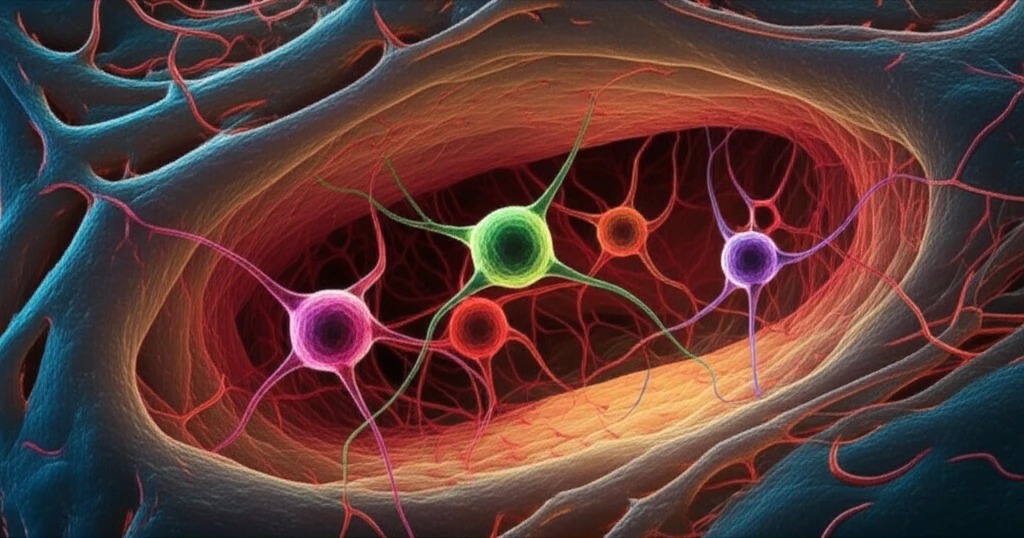
Unlocking Bone Secrets: How Osteocytes Are Revolutionizing Bone Health

"Dive into the microscopic world where tiny bone cells called osteocytes are key players in sensing and responding to different forces, paving the way for innovative treatments."
In the intricate landscape of our skeletal system, bones stand as dynamic, adaptable structures, constantly reshaping themselves in response to the world around us. For a long time, we've known that our bones are influenced by mechanical forces, like the pull of gravity or the impact of physical activity. But what if we could truly understand how our bones perceive and react to these forces at a cellular level? That's the journey we're embarking on, and the key players are osteocytes.
Imagine these osteocytes as tiny, highly specialized sensors, nestled within the bone matrix, that are constantly monitoring their environment and communicating with other cells. They aren't just passive residents; they actively respond to mechanical stimuli. Understanding how these cells work is critical to better bone health, from fracture repair to managing age-related bone loss, which are things that have been top of mind for many.
This article will explore a fascinating study that uses advanced bioinformatics techniques to delve into the world of osteocytes. The study investigated the different ways osteocytes respond to different types of mechanical forces. This research sheds light on how these cells react to mechanical loading, and how those responses can be improved to benefit our overall health.
Osteocytes: The Bone's Tiny Architects of Adaptation
Osteocytes, which were once bone-building cells, become entombed within the bone matrix, forming an intricate network that allows them to communicate and perceive their surroundings. This network is how osteocytes are able to sense and react to mechanical forces, initiating responses that can reshape and remodel our bones. This is a key step toward greater understanding of how our body works.
- Mechanical Loading: The mechanical forces that osteocytes respond to include gravity, fluid flow (like the movement of fluids within the bone), and shear stress.
- Gene Expression Analysis: The researchers analyzed gene expression data to identify genes that were either upregulated (turned on) or downregulated (turned off) in response to these forces.
- Key Genes and Pathways: They identified a set of 'key genes' and biological pathways that are central to the osteocytes' response to mechanical stimuli, and they were also able to analyze how these pathways affected other cells.
- Hypoxia's Role: One key finding was the importance of hypoxia (low oxygen levels) in the response to mechanical stimuli.
The Future of Bone Health: A Promising Outlook
The study has opened the door to a new era in understanding and treating bone-related conditions. It also offers hope for better treatments for the conditions that commonly affect women. By further exploring these key genes and pathways, researchers can aim to develop more targeted and effective interventions to support bone health. As the research continues, we are gaining valuable insights into our own bodies.