
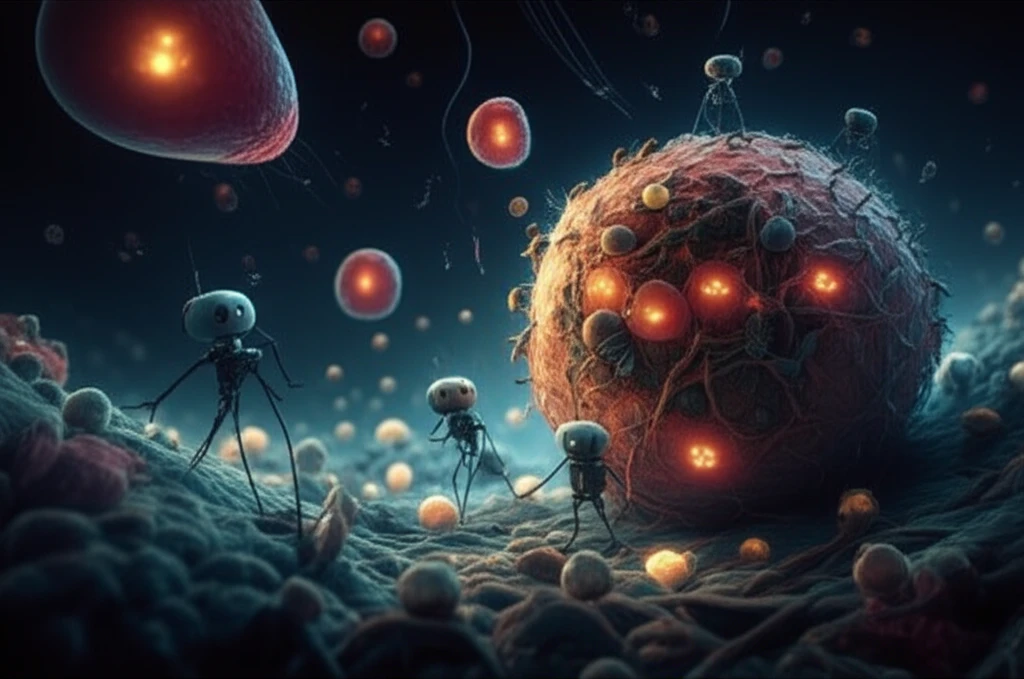
Unlocking Autophagy: How USP1 Could Revolutionize Cancer Therapy

"Scientists discover how targeting a specific protein, USP1, can control cellular cleaning processes, offering new hope for treating cancer and other diseases."
Imagine your body's cells as tiny cities, constantly working, building, and producing waste. Just like any city, they need a clean-up crew to remove the trash and recycle valuable materials. This crucial process is called autophagy, a cellular 'self-eating' mechanism where damaged components are broken down and reused. Autophagy is essential for maintaining cellular health, preventing disease, and even influencing how our bodies respond to treatments like cancer therapy.
Scientists have long been fascinated by autophagy and its potential to fight various diseases. Recent studies have focused on understanding the intricate controls that govern this process, identifying key proteins that act as switches and regulators. Among these proteins, Ubiquitin Specific Peptidase 1 (USP1) has emerged as a promising target for manipulating autophagy.
A groundbreaking study published in 'Autophagy' sheds light on how USP1 regulates a core component of autophagy called ULK1. The research unveils that USP1 targets ULK1, influencing its location within the cell and its ability to initiate the autophagy process. This discovery opens up exciting possibilities for developing new therapies that harness the power of autophagy to combat diseases like cancer.
What is USP1 and Why Does It Matter for Autophagy?
USP1, or Ubiquitin Specific Peptidase 1, belongs to a family of enzymes called deubiquitinases (DUBs). These enzymes are responsible for removing ubiquitin, a small protein that acts like a tag, marking other proteins for degradation or modification. By removing ubiquitin tags, USP1 can stabilize proteins, change their function, or alter their location within the cell.
- Location, Location, Location: USP1 influences where ULK1 resides within the cell. When USP1 is depleted or inhibited, ULK1 tends to form aggregates and relocate to specific compartments.
- Canonical vs. Non-Canonical Autophagy: USP1 plays a role in determining which type of autophagy occurs. Canonical autophagy is the traditional, well-understood pathway, while non-canonical autophagy involves alternative routes and mechanisms.
- Collaboration with SQSTM1: USP1's activity affects the interaction between ULK1 and SQSTM1, a protein that helps to recognize and deliver cargo for degradation during autophagy.
A New Strategy for Cancer Treatment?
The study also highlights the potential for targeting USP1 in cancer therapy. The researchers found that inhibiting USP1 with a drug called pimozide affected the growth of breast cancer cells. This suggests that in tumors where autophagy plays a critical role in survival, targeting USP1 could be a valuable therapeutic strategy. By manipulating autophagy, scientists hope to disrupt cancer cells' ability to adapt and resist treatment, ultimately leading to more effective therapies.