
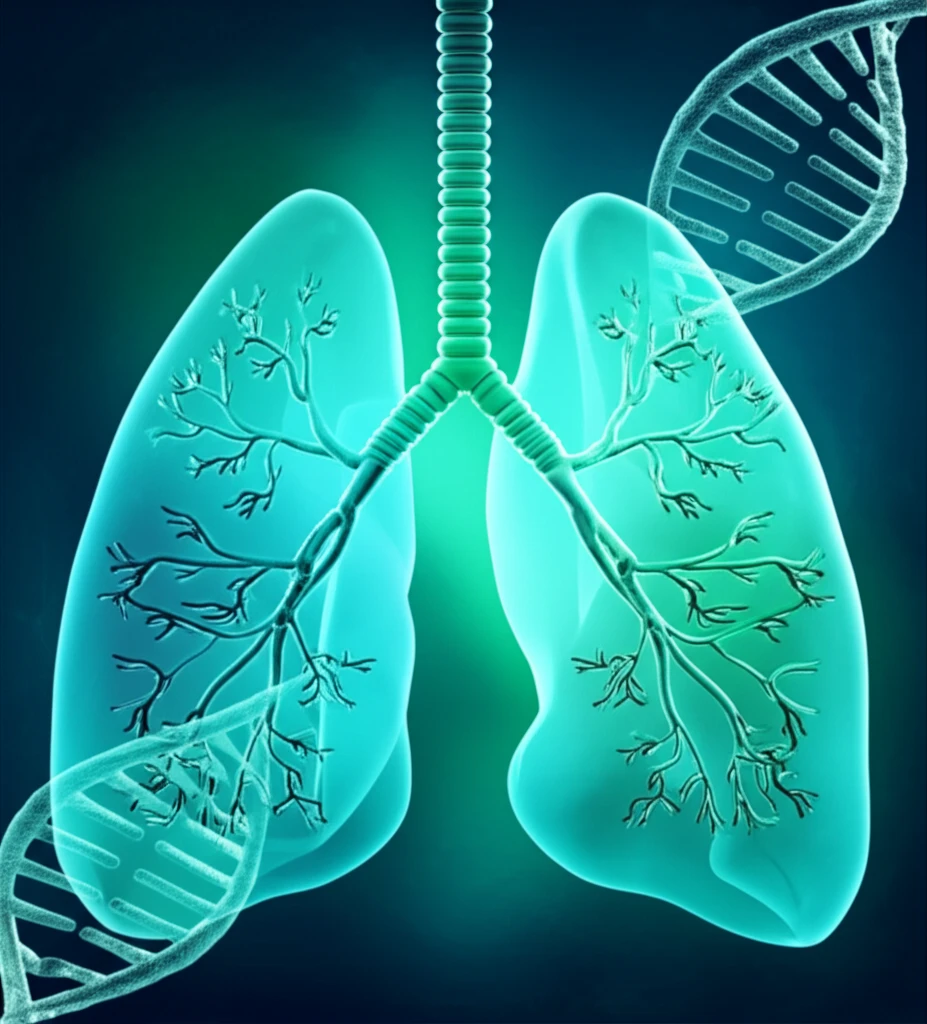
DNA strand intertwined with lungs, symbolizing genetic connection to respiratory health

Unlocking Asthma: How Your Genes Play a Role

"Discover how variations in the VEGF gene could be key to understanding and managing asthma."


Asthma, a chronic respiratory condition affecting millions, has long been understood as a complex interplay between genetic predispositions and environmental factors. While triggers like allergens and pollutants are well-known, the precise genetic components contributing to asthma's development have remained a subject of intense study.

Recent research has shed light on the potential role of specific gene variations, particularly those within the vascular endothelial growth factor (VEGF) gene, in asthma susceptibility. VEGF is crucial in airway restoration and development, making it a prime candidate for investigation.

This article explores the findings of a study that examined the relationship between VEGF gene polymorphisms (variations) and asthma in a Chinese Han population, offering new perspectives on how genetic factors could influence asthma risk and severity.

Decoding the VEGF Gene: What the Study Revealed

DNA strand intertwined with lungs, symbolizing genetic connection to respiratory health

The study, published in Genetics and Molecular Research, investigated the genetic data of 471 participants, including 226 asthma patients and 245 healthy controls. Researchers extracted DNA from blood samples and analyzed seven single nucleotide polymorphisms (SNPs) within the VEGF gene using the MassARRAY system.

Key findings from the study pointed to significant differences in the genotype frequencies of two specific SNPs, rs3025020 and rs3025039, between the asthma and control groups. Furthermore, the 'T' alleles in these SNPs were significantly more prevalent in individuals with asthma.

  • rs3025020 and rs3025039: Significant differences in genotype frequencies were observed between asthma and control groups (P = 0.001 and P = 0.011, respectively).
  • T Alleles: The T alleles in rs3025020 and rs3025039 were significantly more prevalent in the asthma group (P = 0.0003 and P = 0.001, respectively).
  • Haplotype Analysis: The asthma group showed a significantly lower C-C haplotype frequency and a higher T-C haplotype frequency in block 3.
These results suggest that variations in the VEGF gene may be associated with an increased susceptibility to asthma. Further investigation is needed to fully understand the mechanisms by which these genetic variations influence airway inflammation and remodeling, key processes in asthma development.

Personalized Asthma Management: The Future is in Your Genes

While these findings are promising, it's important to remember that asthma is a multifaceted condition influenced by both genetic and environmental factors. However, as research progresses, understanding the specific genetic variations that contribute to asthma risk could pave the way for more personalized and targeted treatment strategies.

About this Article -

This article was crafted using a human-AI hybrid and collaborative approach. AI assisted our team with initial drafting, research insights, identifying key questions, and image generation. Our human editors guided topic selection, defined the angle, structured the content, ensured factual accuracy and relevance, refined the tone, and conducted thorough editing to deliver helpful, high-quality information.See our About page for more information.

Everything You Need To Know

1

What is the primary focus of the research regarding asthma?

The research primarily focuses on the link between specific gene variations, particularly within the VEGF gene, and asthma susceptibility. It investigates how polymorphisms in the VEGF gene could influence the risk and severity of asthma, offering insights into the genetic components of this chronic respiratory condition. The study specifically analyzes the role of VEGF in airway restoration and development within the context of asthma.

2

How did the study investigate the relationship between VEGF gene variations and asthma?

The study, published in Genetics and Molecular Research, analyzed the genetic data of 471 participants, including 226 asthma patients and 245 healthy controls. Researchers extracted DNA from blood samples and analyzed seven single nucleotide polymorphisms (SNPs) within the VEGF gene using the MassARRAY system. This involved comparing the genotype frequencies of the SNPs, especially rs3025020 and rs3025039, between the asthma and control groups. The prevalence of specific alleles (like the 'T' allele) and haplotype frequencies were also examined to identify associations with asthma.

3

What specific findings from the study suggest a link between the VEGF gene and asthma?

The study found significant differences in the genotype frequencies of two SNPs, rs3025020 and rs3025039, between asthma patients and the control group. The 'T' alleles in both rs3025020 and rs3025039 were significantly more prevalent in the asthma group. Additionally, the asthma group showed a significantly lower C-C haplotype frequency and a higher T-C haplotype frequency in block 3. These results suggest that variations in the VEGF gene may be associated with an increased susceptibility to asthma.

4

How could understanding the VEGF gene influence asthma treatment?

Understanding the specific genetic variations within the VEGF gene that contribute to asthma risk could pave the way for more personalized and targeted treatment strategies. This is because the VEGF gene plays a crucial role in airway restoration and development. By identifying individuals with specific VEGF gene variations, healthcare providers could potentially tailor treatments to address the unique genetic predispositions of each patient. This could lead to more effective management of the condition by focusing on the underlying genetic factors influencing airway inflammation and remodeling, key processes in asthma development.

5

Beyond the VEGF gene, what other factors are important in the development of asthma?

While variations in the VEGF gene are a critical area of focus, asthma is a multifaceted condition influenced by both genetic and environmental factors. Environmental factors, such as allergens and pollutants, are well-known triggers. The interaction between genetic predispositions and environmental exposures is complex. Further investigation is needed to fully understand the mechanisms by which VEGF gene variations influence asthma risk, severity, airway inflammation and remodeling within the context of these other factors.

Newsletter Subscribe

Subscribe to get the latest articles and insights directly in your inbox.