
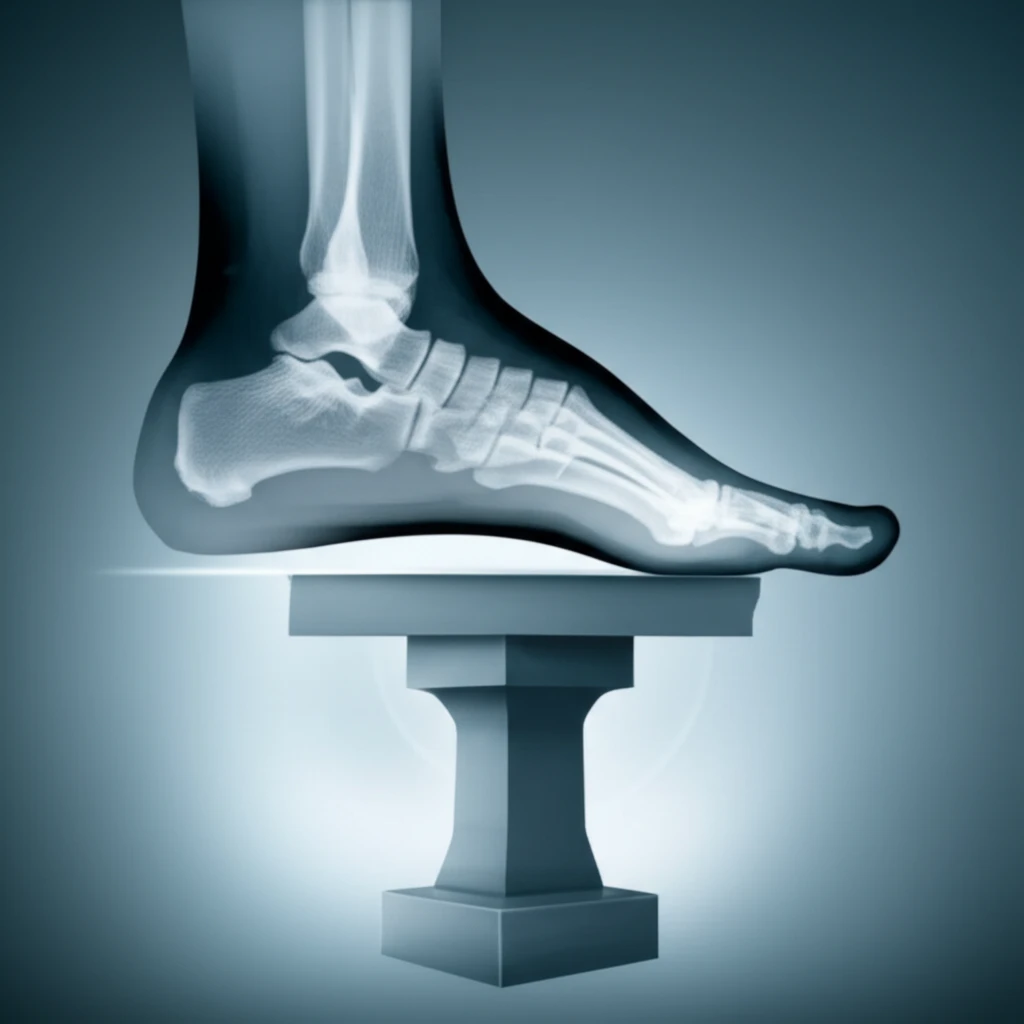
Unlocking Ankle Stability: Can Radiography Predict Your Risk?

"Reliability study suggests radiographic assessment can identify those at risk of chronic ankle instability."
Ankle sprains are incredibly common, affecting a significant portion of the population annually. While many people recover fully, a substantial number go on to experience recurrent sprains and develop chronic ankle instability (CAI). This condition leads to persistent pain, weakness, and a feeling of instability, significantly impacting daily activities and athletic performance.
Identifying individuals at high risk of CAI after an initial ankle sprain is crucial for proactive intervention. Understanding contributing factors such as joint geometry can allow targeted preventative measures and personalized treatment plans, potentially reducing the long-term burden of this debilitating condition.
New research investigates the reliability of using radiographic measurements to assess ankle joint geometry and predict CAI risk. This article explores the findings of this study, examining which measurements are most reliable and how they might contribute to future risk assessment models. Ultimately, this information could pave the way for more effective strategies to combat CAI and improve outcomes for those prone to ankle sprains.
Decoding Chronic Ankle Instability: The Role of Radiography
Chronic ankle instability (CAI) isn't just a minor inconvenience; it's a multifaceted condition that can seriously impact your quality of life. Recognizing the factors that contribute to CAI is crucial for developing effective risk assessment and intervention strategies. Researchers are constantly seeking reliable ways to identify these factors, with radiographic measurements of ankle joint geometry emerging as a promising area of investigation.
- Ankle Alignment: Measured using the Medial Distal Tibial Angle (MDTA) on a mortise view radiograph, this assesses the overall alignment of the ankle joint.
- Fibular Position: Assessed on a lateral view radiograph, this measurement determines the position of the fibula (the smaller bone in the lower leg) relative to the tibia (the larger bone).
- Ankle Joint Congruency: Evaluated on a lateral view radiograph, this assesses the congruity of the ankle joint using measurements like talar radius, talar height, and tibiotalar sector.
The Future of Ankle Instability Prediction
This reliability study sheds light on the potential of using radiographic measurements to predict chronic ankle instability. The study indicates that fibular position and talar radius measurements demonstrate good observer reliability and can be implemented in future risk assessment models. However, the other measurements assessed were prone to measurement errors and should not be used. This research provides a foundation for developing more precise and individualized risk assessment models, leading to earlier interventions, improved outcomes, and greater stability for those prone to ankle sprains.