
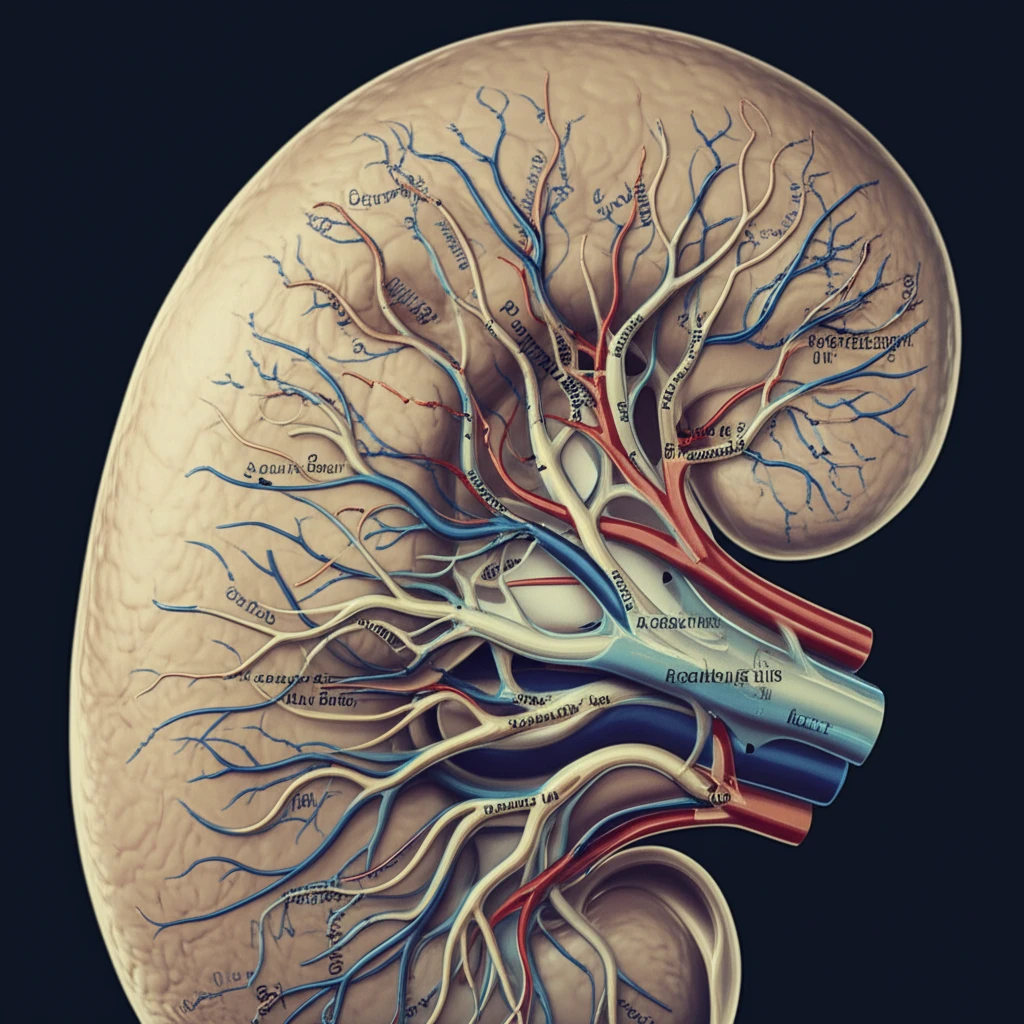
CT scan road map of the human adrenal gland.

Unlocking Adrenal Vein Sampling Success: How CT Mapping Can Help

"Can a simple CT scan before adrenal vein sampling (AVS) really boost your chances of a successful diagnosis? Here's what the latest research reveals about using CT mapping to pinpoint those tricky adrenal veins."


If you've been diagnosed with primary aldosteronism (PA), you're likely familiar with the challenges of managing hypertension, and the quest for an accurate diagnosis. Adrenal vein sampling (AVS) is a critical step in determining the underlying cause of PA, but it's far from a walk in the park. The procedure is technically demanding, and success rates can vary significantly, leaving many patients and doctors frustrated.

For years, AVS has been the gold standard for differentiating between the two main causes of PA: an aldosterone-producing adenoma (a benign tumor on one adrenal gland) or bilateral adrenal hyperplasia (overactivity of both adrenal glands). Knowing the precise cause is essential because it dictates treatment – surgery for an adenoma versus medication for hyperplasia.

Now, a new approach is gaining traction: using detailed CT scans to map the adrenal veins before AVS. This technique, known as CT mapping, aims to provide interventional radiologists with a precise roadmap, making the procedure faster, easier, and more successful. But how effective is it, and is it ready for widespread adoption? Let's dive into the details.

Why is Adrenal Vein Sampling So Darn Difficult?

CT scan road map of the human adrenal gland.

Before we explore the potential of CT mapping, it's important to understand why AVS is so challenging in the first place. The adrenal veins, especially the right one, are small and variable in their anatomy. This is especially true for the right adrenal vein (RAV), which is shorter, smaller, and tends to drain directly into the inferior vena cava (IVC). Finding and cannulating the RAV can feel like searching for a needle in a haystack.

Historically, success rates for AVS have ranged from a discouraging 42% to a more respectable 98%, highlighting the technique's difficulty. When AVS fails, it's often due to the inability to successfully catheterize the RAV. This is where CT mapping comes in, offering a potential solution to guide the way.

  • Small Size: Adrenal veins, particularly the RAV, are tiny, often only 2-3 mm in diameter.
  • Variable Anatomy: The exact location and drainage pattern of the RAV can vary significantly from person to person.
  • Technical Skill: Successfully navigating and cannulating these small veins requires a high degree of skill and experience on the part of the interventional radiologist.
To combat this challenge, researchers at Ludwig-Maximilians-University Hospital Munich investigated the use of pre-procedural MDCT mapping to find the RAV. Here’s what they found after analyzing 75 patients with primary aldosteronism between March 2008 and November 2011.

The Verdict: Is CT Mapping Worth It?

While this study offers promising evidence, it's important to remember that it's just one piece of the puzzle. More research is needed to definitively prove that CT mapping improves AVS success rates, reduces complications, and ultimately leads to better outcomes for patients with primary aldosteronism. However, the initial results are encouraging, and CT mapping may soon become a standard part of the AVS procedure, helping more patients receive an accurate diagnosis and the right treatment.

About this Article -

This article was crafted using a human-AI hybrid and collaborative approach. AI assisted our team with initial drafting, research insights, identifying key questions, and image generation. Our human editors guided topic selection, defined the angle, structured the content, ensured factual accuracy and relevance, refined the tone, and conducted thorough editing to deliver helpful, high-quality information.See our About page for more information.

This article is based on research published under:

DOI-LINK: 10.5152/dir.2014.14026, Alternate LINK

Title: Ct Mapping Of The Vertebral Level Of Right Adrenal Vein

Subject: Cardiology and Cardiovascular Medicine

Journal: Diagnostic and Interventional Radiology

Publisher: AVES Publishing Co.

Authors: Christoph Degenhart, Hanna Strube, Matthias J. Betz, Anna Pallauf, Martin Bidlingmaier, Evelyn Fischer, Martin Reincke, Maximilian F. Reiser, Stefan Wirth

Published: 2015-01-06

Everything You Need To Know

1

What is Adrenal Vein Sampling (AVS), and what is its role in diagnosing medical conditions?

Adrenal vein sampling (AVS) is a procedure crucial for diagnosing primary aldosteronism (PA). It helps doctors determine the underlying cause of PA: an aldosterone-producing adenoma (a benign tumor on one adrenal gland) or bilateral adrenal hyperplasia (overactivity of both adrenal glands). The outcome of AVS guides treatment, with surgery recommended for an adenoma and medication for hyperplasia. The procedure is considered the gold standard for differentiating the two main causes of PA.

2

What makes Adrenal Vein Sampling (AVS) such a challenging procedure?

The main challenges of Adrenal vein sampling (AVS) are related to the anatomy of the adrenal veins, especially the right adrenal vein (RAV). The RAV is often small, only 2-3 mm in diameter, and its location and drainage pattern vary. These factors make it difficult for interventional radiologists to find and cannulate the RAV, leading to a range of success rates. The lack of consistent success rates is a major reason why techniques like CT mapping are being explored to improve the AVS process.

3

How does CT mapping help improve Adrenal Vein Sampling (AVS)?

CT mapping involves using detailed CT scans to map the adrenal veins before Adrenal vein sampling (AVS). This provides interventional radiologists with a precise roadmap. CT mapping aims to make the AVS procedure faster, easier, and more successful by pinpointing the location of the adrenal veins, especially the challenging right adrenal vein (RAV). This technique can improve success rates, reduce complications, and lead to better outcomes for patients with primary aldosteronism.

4

Why is it important to correctly diagnose Primary Aldosteronism (PA), and what is the significance of AVS in this process?

Primary aldosteronism (PA) is a condition characterized by the overproduction of aldosterone, which often leads to hypertension. Adrenal vein sampling (AVS) is important because it helps to accurately diagnose the cause of PA. A correct diagnosis, determined through AVS, ensures that patients receive the most appropriate treatment, either surgery for an aldosterone-producing adenoma or medication for bilateral adrenal hyperplasia. Without this accurate diagnosis, treatment would be less effective.

5

What are the early indications for the use of CT mapping in the process of Adrenal Vein Sampling (AVS)?

The study by Ludwig-Maximilians-University Hospital Munich, which analyzed 75 patients with primary aldosteronism between March 2008 and November 2011, showed promising results for CT mapping. Although it is just one study and more research is needed to confirm its widespread benefits, the early outcomes are encouraging. It suggests that CT mapping could soon become a standard practice during Adrenal vein sampling (AVS). This could potentially lead to improved success rates, reduced complications, and, ultimately, better patient outcomes in the diagnosis and treatment of primary aldosteronism.

Newsletter Subscribe

Subscribe to get the latest articles and insights directly in your inbox.