
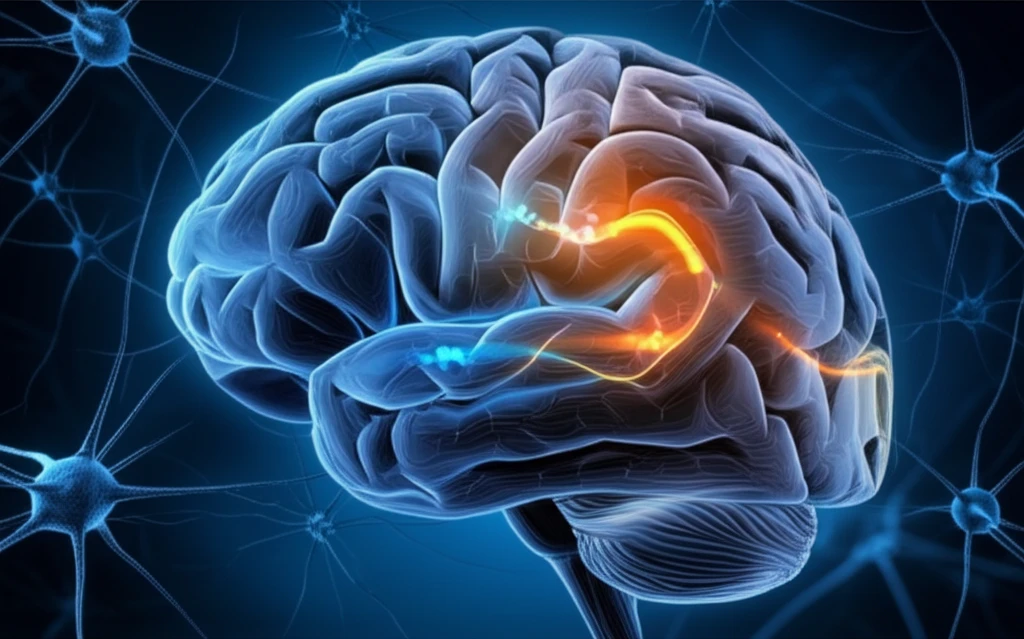
Illustration depicting the impact of Vilazodone on brain activity in Parkinson's disease, showcasing the reduction of dyskinesia.

Unlocking a Better Life: How a New Medication is Revolutionizing Parkinson's Treatment

"Groundbreaking research reveals the potential of Vilazodone to dramatically reduce dyskinesia, offering new hope for those living with Parkinson's disease."


Parkinson's disease (PD) is a progressive neurodegenerative disorder, which profoundly impacts the lives of millions worldwide. Characterized by motor symptoms like tremors, rigidity, and slow movement, PD treatment typically involves levodopa (L-dopa), a medication that replenishes dopamine levels in the brain. While L-dopa effectively manages motor symptoms, its long-term use often leads to a distressing side effect: L-dopa-induced dyskinesia (LID), characterized by involuntary, erratic movements.

LID can significantly diminish the quality of life for individuals with PD, making everyday tasks challenging and emotionally draining. Current treatments for LID have limitations, highlighting the urgent need for more effective and well-tolerated therapeutic options. Recent research offers a beacon of hope, focusing on a medication called Vilazodone, initially approved for depression. This research explores how Vilazodone may hold the key to alleviating LID and improving the lives of those with Parkinson's disease.

This article delves into the groundbreaking findings of a research study that examines the impact of Vilazodone on LID. The study reveals that Vilazodone demonstrates a remarkable ability to reduce dyskinesia in animal models, while preserving the beneficial effects of L-dopa on motor function. These encouraging results suggest that Vilazodone could potentially revolutionize Parkinson's treatment, offering a dual benefit: managing motor symptoms and reducing debilitating side effects.

Understanding Parkinson's Disease and L-dopa-Induced Dyskinesia

Illustration depicting the impact of Vilazodone on brain activity in Parkinson's disease, showcasing the reduction of dyskinesia.

Parkinson's disease arises from the loss of dopamine-producing neurons in the brain, particularly in the substantia nigra. Dopamine plays a crucial role in controlling movement, and its depletion leads to the characteristic motor symptoms of PD. L-dopa, a precursor to dopamine, effectively replaces the missing neurotransmitter, alleviating many of the motor impairments associated with the disease.

However, the long-term use of L-dopa can trigger LID. This condition is characterized by involuntary movements, which can manifest in a variety of ways, from subtle restlessness to severe, uncontrollable writhing. The precise mechanisms underlying LID are complex, involving changes in the brain's dopamine pathways and other neurotransmitter systems, such as serotonin.

  • The Role of Dopamine: L-dopa works by increasing dopamine levels in the brain, easing motor symptoms.
  • The Dyskinesia Dilemma: Prolonged L-dopa use can lead to LID, marked by involuntary movements.
  • Serotonin's Influence: Serotonin pathways also play a role in LID, adding complexity to the condition.
The intricate interplay of dopamine, serotonin, and other brain chemicals highlights the need for innovative approaches to Parkinson's treatment that can target multiple pathways to effectively manage both motor symptoms and LID.

A New Horizon for Parkinson's Treatment

The study's findings point to an encouraging future for individuals with Parkinson's disease, with Vilazodone potentially offering a novel approach to manage both motor symptoms and LID. By acting on both serotonin and dopamine pathways, Vilazodone offers a promising avenue for enhancing the quality of life for millions. Further research, including clinical trials, is essential to confirm these findings and translate them into effective treatments for people affected by Parkinson's disease, offering hope for a future free from the debilitating effects of LID.

About this Article -

This article was crafted using a human-AI hybrid and collaborative approach. AI assisted our team with initial drafting, research insights, identifying key questions, and image generation. Our human editors guided topic selection, defined the angle, structured the content, ensured factual accuracy and relevance, refined the tone, and conducted thorough editing to deliver helpful, high-quality information.See our About page for more information.

This article is based on research published under:

DOI-LINK: 10.1002/mds.100, Alternate LINK

Title: Diverse Serotonin Actions Of Vilazodone Reduce L-3,4-Dihidroxyphenylalanine-Induced Dyskinesia In Hemi-Parkinsonian Rats

Subject: Neurology (clinical)

Journal: Movement Disorders

Publisher: Wiley

Authors: Samantha M. Meadows, Melissa M. Conti, Libby Gross, Nicole E. Chambers, Yarden Avnor, Corinne Y. Ostock, Kathryn Lanza, Christopher Bishop

Published: 2018-11-01

Everything You Need To Know

1

What is L-dopa-induced dyskinesia (LID) and why is it a problem in Parkinson's disease treatment?

L-dopa-induced dyskinesia, or LID, is a common and distressing side effect of long-term levodopa (L-dopa) treatment in Parkinson's disease. While L-dopa effectively manages motor symptoms like tremors and rigidity by increasing dopamine levels, its prolonged use can lead to involuntary, erratic movements known as dyskinesia. These movements can range from mild restlessness to severe, uncontrollable writhing, significantly reducing the quality of life for individuals with Parkinson's. Current treatments for LID are limited, making the search for more effective options critical.

2

How does Vilazodone, a medication for depression, relate to Parkinson's disease and L-dopa-induced dyskinesia?

Vilazodone, initially approved for depression, has shown promise in alleviating L-dopa-induced dyskinesia (LID) in Parkinson's disease. Research suggests that Vilazodone can reduce dyskinesia while preserving the beneficial effects of L-dopa on motor function. Vilazodone acts on both serotonin and dopamine pathways in the brain, offering a potential dual benefit of managing motor symptoms and reducing the debilitating side effects of LID. Clinical trials are needed to confirm these findings and establish Vilazodone as an effective treatment for people affected by Parkinson's disease.

3

What role does dopamine play in Parkinson's disease and how does L-dopa address this?

In Parkinson's disease, dopamine-producing neurons in the brain, particularly in the substantia nigra, are lost. Dopamine is crucial for controlling movement, so its depletion leads to the characteristic motor symptoms of Parkinson's. Levodopa, or L-dopa, is a medication that serves as a precursor to dopamine. It effectively replaces the missing neurotransmitter, alleviating many of the motor impairments associated with the disease. By increasing dopamine levels, L-dopa helps to restore motor function and reduce symptoms like tremors, rigidity, and slow movement.

4

How could Vilazodone potentially revolutionize the treatment of Parkinson's disease, according to recent research?

Recent research indicates that Vilazodone has the potential to revolutionize Parkinson's treatment by addressing both the motor symptoms of the disease and the side effects of L-dopa. By demonstrating a remarkable ability to reduce dyskinesia in animal models, while preserving the beneficial effects of L-dopa on motor function. This dual-action approach could offer a more comprehensive and effective way to manage Parkinson's, improving the quality of life for millions affected by the condition. By acting on both serotonin and dopamine pathways, Vilazodone offers a promising avenue for enhancing the quality of life.

5

Besides dopamine, what other neurotransmitter system is implicated in L-dopa-induced dyskinesia (LID), and why is this significant?

Besides dopamine, the serotonin system also plays a significant role in L-dopa-induced dyskinesia (LID). The intricate interplay of dopamine, serotonin, and other brain chemicals highlights the need for innovative approaches to Parkinson's treatment that can target multiple pathways to effectively manage both motor symptoms and LID. Vilazodone's action on both serotonin and dopamine pathways is particularly promising. Understanding the involvement of multiple neurotransmitter systems is crucial for developing more targeted and effective therapies that can minimize the development of LID while still managing motor symptoms.

Newsletter Subscribe

Subscribe to get the latest articles and insights directly in your inbox.