
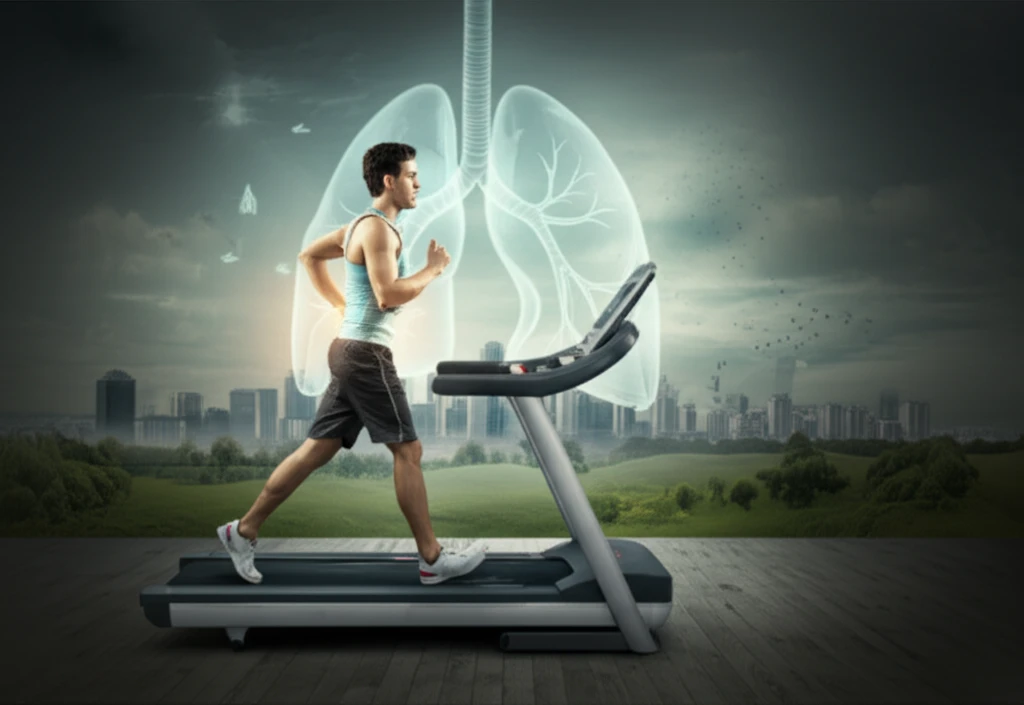
Effortless running with strong lungs

Unlock Your Potential: How Respiratory Training Can Boost Exercise and Weight Loss

"Discover the unexpected link between stronger breathing muscles and a more effective workout, plus strategies to make exercise feel easier and improve your overall fitness journey."


We all know that regular physical activity is a cornerstone of good health, helping with everything from weight management to boosting our mood. But what happens when exercise feels like an uphill battle? For many, especially those struggling with obesity, the simple act of moving can feel incredibly taxing, leading to frustration and, ultimately, inactivity.

Research is increasingly pointing to a surprising factor that may be making exercise harder than it needs to be: the strength and efficiency of your respiratory muscles. Just like your biceps or quads, the muscles you use to breathe can be trained and strengthened, potentially unlocking new levels of fitness and making your workouts feel significantly easier.

This article dives into the fascinating connection between respiratory muscle training (RMET) and exercise performance, exploring how this often-overlooked aspect of fitness can help you overcome common barriers to physical activity, improve your weight loss efforts, and achieve a more active and fulfilling lifestyle.

The Hidden Struggle: How Breathing Affects Your Workout

Effortless running with strong lungs

Obesity often increases the oxygen cost of exercise, partly because of the increased effort required for breathing. This extra effort can create a "competition" for oxygen between your respiratory muscles and the muscles used for movement, leading to fatigue and making exercise feel much harder. This is because resting and exercise breathing often occurs at low lung volumes, straining your respiratory system.

Think of it like this: Imagine trying to run a race while also carrying a heavy backpack. The extra weight makes every step more difficult, and you tire out much faster. Similarly, when your breathing muscles are weak or inefficient, they demand more oxygen, leaving less available for your other muscles and impacting your overall performance.

  • Increased work of breathing can lead to fatigue and premature exhaustion.
  • Reduced chest wall compliance, attributable to excess fat mass, further increases breathing effort.
  • The body tries to compensate, but exercise still becomes harder.
By improving the strength and endurance of these respiratory muscles, you can reduce the oxygen demand of breathing, freeing up more oxygen for your other muscles and making exercise feel easier and more efficient. This is where respiratory muscle training comes in.

Breathing Easier, Moving Better: A Path to Lasting Change

Respiratory muscle training offers a promising avenue for improving exercise tolerance and supporting weight loss efforts, particularly for those who find physical activity challenging. By reducing the oxygen cost of breathing and improving overall efficiency, RMET can help you breathe easier, move better, and unlock your full fitness potential. Remember to consult with a healthcare professional or certified trainer before starting any new training program.

About this Article -

This article was crafted using a human-AI hybrid and collaborative approach. AI assisted our team with initial drafting, research insights, identifying key questions, and image generation. Our human editors guided topic selection, defined the angle, structured the content, ensured factual accuracy and relevance, refined the tone, and conducted thorough editing to deliver helpful, high-quality information.See our About page for more information.

This article is based on research published under:

DOI-LINK: 10.14814/phy2.13888, Alternate LINK

Title: Three Weeks Of Respiratory Muscle Endurance Training Improve The O2 Cost Of Walking And Exercise Tolerance In Obese Adolescents

Subject: Physiology (medical)

Journal: Physiological Reports

Publisher: Wiley

Authors: Hailu K. Alemayehu, Desy Salvadego, Miriam Isola, Gabriella Tringali, Roberta De Micheli, Mara Caccavale, Alessandro Sartorio, Bruno Grassi

Published: 2018-10-01

Everything You Need To Know

1

How does obesity affect breathing during exercise, and why does this make workouts feel harder?

Obesity increases the oxygen cost of exercise because of the increased effort required for breathing. This creates a 'competition' for oxygen between your respiratory muscles and the muscles used for movement, leading to fatigue. Resting and exercise breathing often occurs at low lung volumes, straining your respiratory system. Weak or inefficient breathing muscles demand more oxygen, leaving less available for other muscles, which impacts overall performance. Reduced chest wall compliance from excess fat mass further increases breathing effort. Addressing this imbalance is where Respiratory Muscle Training (RMET) can prove beneficial.

2

What is Respiratory Muscle Training (RMET), and how does it improve exercise performance?

Respiratory Muscle Training (RMET) involves training the muscles you use to breathe to become stronger and more efficient. By improving the strength and endurance of these muscles, RMET reduces the oxygen demand of breathing. This frees up more oxygen for your other muscles, making exercise feel easier and more efficient. This improvement enhances exercise tolerance and overall fitness, allowing for more effective and sustained physical activity.

3

How can Respiratory Muscle Training (RMET) specifically help individuals struggling with weight loss?

For individuals struggling with weight loss, Respiratory Muscle Training (RMET) reduces the oxygen cost of breathing, which often increases due to obesity. By making breathing easier, RMET can improve exercise tolerance and make physical activity less taxing. This increased ease encourages more consistent and effective workouts, supporting weight loss efforts and helping individuals achieve a more active lifestyle. RMET addresses the increased breathing effort, helping promote consistent exercise.

4

Beyond just making exercise easier, what are the potential broader benefits of Respiratory Muscle Training (RMET) for overall fitness and well-being?

Beyond easing exercise, Respiratory Muscle Training (RMET) enhances overall fitness by improving respiratory muscle strength and endurance. This leads to more efficient oxygen utilization throughout the body, benefiting various physiological processes. Improved breathing efficiency can also reduce fatigue, increase energy levels, and improve the ability to perform daily activities. These improvements contribute to a higher quality of life and a greater sense of well-being. Furthermore, while not explicitly mentioned, improved respiratory function may have positive implications for individuals with respiratory conditions, though consultation with healthcare professionals is crucial.

5

What are the key considerations before starting a Respiratory Muscle Training (RMET) program, and why is professional guidance important?

Before starting a Respiratory Muscle Training (RMET) program, consult with a healthcare professional or certified trainer to ensure it's appropriate for your individual needs and health status. Professional guidance is essential to properly assess your respiratory function, create a tailored training plan, and monitor your progress. This ensures that the program is safe, effective, and aligned with your fitness goals. While the text focuses on the benefits, individualized assessment helps to avoid potential risks and maximize the positive outcomes of RMET.

Newsletter Subscribe

Subscribe to get the latest articles and insights directly in your inbox.