
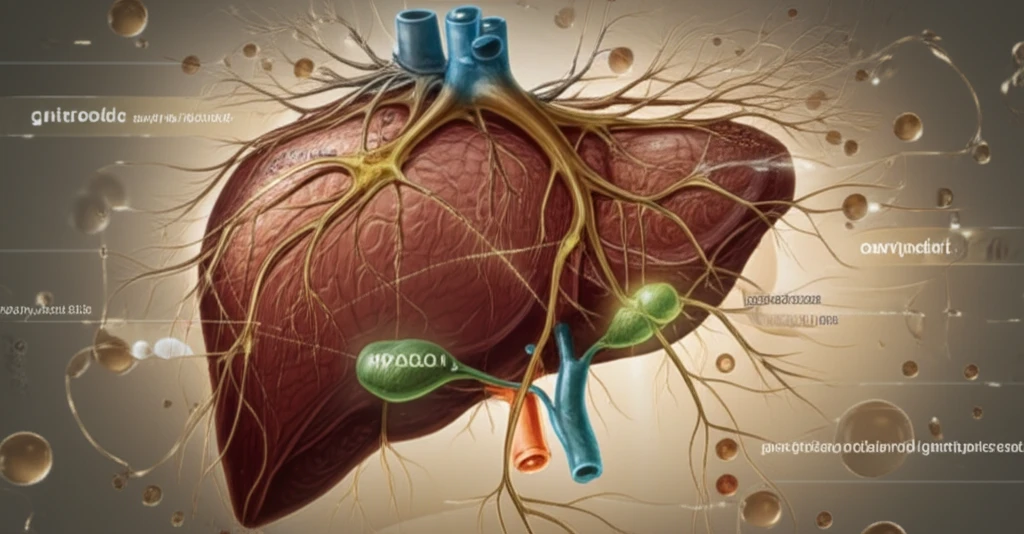
Illustration of liver with plant roots and AKT-FOXO1 pathway.

Unlock Your Liver's Potential: Natural Compounds to Regulate Blood Sugar

"Discover how geniposide and gentiopicroside, found in traditional herbs, may offer a new approach to managing blood sugar levels by targeting a key metabolic pathway."


Maintaining stable blood sugar levels is crucial for overall health, and the liver plays a vital role in this process. Hepatic gluconeogenesis, the production of glucose in the liver, is a key target for managing conditions like type 2 diabetes. While various medications exist, researchers are continuously exploring natural compounds that can help regulate this process.

Recent research has highlighted the potential of two natural iridoid glucosides, geniposide and gentiopicroside, to influence hepatic gluconeogenesis. Found in certain medicinal plants, these compounds have shown promise in suppressing this process, potentially offering a new avenue for blood sugar management.

This article delves into the findings of a study investigating the effects of geniposide and gentiopicroside on hepatic gluconeogenesis. We'll explore how these compounds interact with a critical signaling pathway, known as AKT-FOXO1, and what this means for their potential use in managing blood sugar levels and diabetes.

How Geniposide and Gentiopicroside Tame Blood Sugar: The AKT-FOXO1 Connection

Illustration of liver with plant roots and AKT-FOXO1 pathway.

The study investigated the impact of geniposide (GP) and gentiopicroside (GT) on liver cells (L02 cell line) and in mice with diet-induced hyperglycemia. Researchers used various techniques, including glucose uptake assays, gene expression analysis (q-PCR), and protein analysis (Western blot) to understand how these compounds work.

The results revealed that both geniposide and gentiopicroside effectively inhibited the transcription of two key genes involved in gluconeogenesis: G6PC and PEPCK. This means the compounds reduced the production of these proteins, ultimately lowering glucose production in the liver. Further investigation pinpointed the AKT-FOXO1 pathway as the key player.

  • AKT Activation: GP and GT were found to stimulate the phosphorylation of AKT at Ser473, indicating activation of this important signaling molecule.
  • FOXO1 Inhibition: Activated AKT, in turn, inhibited the transcriptional activity of FOXO1, a transcription factor that promotes the expression of G6PC and PEPCK.
  • Blood Sugar Reduction: Ultimately, the study demonstrated that both compounds could alleviate high-fat diet-induced hyperglycemia in mice, suggesting their potential to improve blood sugar control.
These findings suggest that geniposide and gentiopicroside work by activating the AKT pathway, which then suppresses the activity of FOXO1. By inhibiting FOXO1, these compounds reduce the expression of G6PC and PEPCK, leading to decreased hepatic gluconeogenesis and lower blood sugar levels. This targeted approach offers a potential therapeutic strategy for managing hyperglycemia and type 2 diabetes.

A New Hope for Natural Blood Sugar Control?

This research provides compelling evidence that geniposide and gentiopicroside hold promise as natural agents for regulating blood sugar. Their ability to modulate the AKT-FOXO1 pathway and suppress hepatic gluconeogenesis suggests a potential therapeutic role in managing hyperglycemia and type 2 diabetes.

While these findings are encouraging, it's important to remember that this is just one study. Further research is needed to fully understand the efficacy and safety of these compounds in humans. Clinical trials are necessary to determine the optimal dosage, potential side effects, and long-term effects of geniposide and gentiopicroside supplementation.

If you're interested in exploring natural ways to manage your blood sugar, talk to your doctor or a registered dietitian. They can help you determine if geniposide or gentiopicroside, or other natural approaches, are right for you, while ensuring they don't interact with any medications you're already taking. Always prioritize evidence-based strategies and work with qualified healthcare professionals.

About this Article -

This article was crafted using a human-AI hybrid and collaborative approach. AI assisted our team with initial drafting, research insights, identifying key questions, and image generation. Our human editors guided topic selection, defined the angle, structured the content, ensured factual accuracy and relevance, refined the tone, and conducted thorough editing to deliver helpful, high-quality information.See our About page for more information.

This article is based on research published under:

DOI-LINK: 10.1016/j.arcmed.2018.10.005, Alternate LINK

Title: Geniposide And Gentiopicroside Suppress Hepatic Gluconeogenesis Via Regulation Of Akt-Foxo1 Pathway

Subject: General Medicine

Journal: Archives of Medical Research

Publisher: Elsevier BV

Authors: Shao-Qing Yang, Ye-Dan Chen, Heng Li, Xian Hui, Wen-Yun Gao

Published: 2018-07-01

Everything You Need To Know

1

How does the liver's role in blood sugar regulation relate to the focus of the research?

The liver is crucial for maintaining healthy blood sugar levels, primarily through a process called hepatic gluconeogenesis. This process involves the liver producing glucose. Dysregulation of hepatic gluconeogenesis contributes to conditions like type 2 diabetes, making the liver a key target for managing blood sugar. Compounds like geniposide and gentiopicroside influence this by interacting with the AKT-FOXO1 pathway, which regulates glucose production in the liver.

2

What are geniposide and gentiopicroside?

Geniposide and gentiopicroside are natural compounds found in certain medicinal plants. Research indicates they can help regulate blood sugar levels by suppressing hepatic gluconeogenesis. This is achieved by influencing the AKT-FOXO1 pathway. They have shown promise in studies for managing conditions associated with elevated blood sugar.

3

What is the AKT-FOXO1 pathway, and how do these compounds interact with it?

The AKT-FOXO1 pathway is a crucial signaling pathway involved in regulating blood sugar. Geniposide and gentiopicroside influence this pathway: they activate AKT, which then inhibits FOXO1. This inhibition reduces the expression of specific genes (G6PC and PEPCK) in the liver, ultimately decreasing the production of glucose and lowering blood sugar levels. The interaction with this pathway is central to their mechanism of action.

4

What is hepatic gluconeogenesis, and how do geniposide and gentiopicroside affect it?

Hepatic gluconeogenesis is the process by which the liver produces glucose. This process is essential for maintaining blood sugar levels, but excessive or unregulated gluconeogenesis can lead to hyperglycemia. Geniposide and gentiopicroside can suppress hepatic gluconeogenesis by impacting the AKT-FOXO1 pathway. By reducing the production of glucose in the liver, these compounds help in lowering blood sugar levels, potentially aiding in the management of type 2 diabetes.

5

What are the implications of these findings regarding geniposide and gentiopicroside?

The potential implications of geniposide and gentiopicroside include the development of new therapeutic strategies for managing hyperglycemia and type 2 diabetes. Their ability to regulate blood sugar naturally by influencing the AKT-FOXO1 pathway and suppressing hepatic gluconeogenesis suggests that they could be a new approach to controlling blood sugar levels. Further research may lead to their use in supplements or medications.

Newsletter Subscribe

Subscribe to get the latest articles and insights directly in your inbox.