
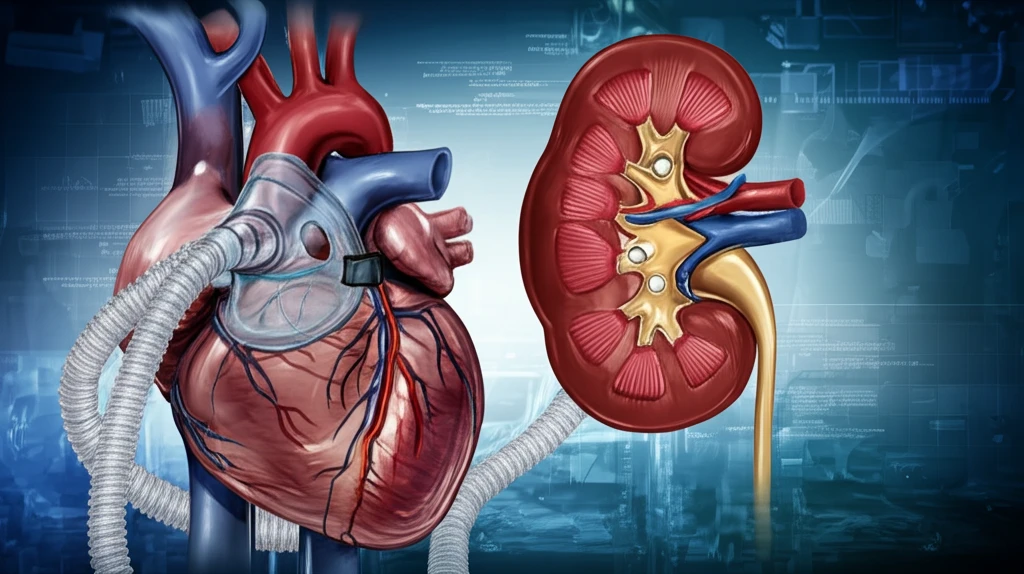
Unlock Your Heart's Potential: How PCI and Lifestyle Changes Can Extend Your Life

"Discover the latest research on percutaneous coronary intervention (PCI), obstructive sleep apnea (OSA), and kidney health, and how managing these factors can significantly impact your cardiovascular health and longevity."
Cardiovascular health is a key concern for many, especially as they age. Heart disease remains a leading cause of mortality worldwide, prompting ongoing research into effective interventions and lifestyle adjustments that can improve outcomes. Percutaneous coronary intervention (PCI) has emerged as a vital procedure for treating coronary artery disease, but its long-term success often depends on various factors, including patient lifestyle and other underlying health conditions.
Recent studies have shed light on several critical aspects of cardiovascular care, from the impact of obstructive sleep apnea (OSA) on PCI outcomes to the predictive value of kidney injury markers in patients undergoing coronary angiography. Understanding these factors can empower individuals and healthcare providers to make informed decisions, leading to better patient outcomes and extended lives.
This article delves into the latest research on PCI, focusing on how managing related health issues such as OSA and monitoring kidney health can optimize the benefits of this life-saving procedure. We will explore key findings from recent studies, providing actionable insights for improving your heart health and overall well-being.
PCI Outcomes: What the Data Shows
Percutaneous coronary intervention may be performed in the same procedure as diagnostic coronary angiography, a practice known as ad hoc PCI. Data from the British Cardiovascular Intervention Society registry have been used to examine the relationship between body mass index and PCI outcomes, including mortality. Research on acute coronary syndrome in octogenarians has explored the association between PCI and mortality in this age group, while other studies have investigated gender differences in hospital mortality and use of coronary interventions across age groups.
Revascularization Methods and Their Limitations
Coronary artery bypass grafting (CABG) and percutaneous coronary intervention (PCI) are both used for revascularization, though issues such as incomplete revascularization remain relevant. Systematic reviews of hybrid coronary revascularization compared to conventional strategies suggest that pooled estimates should be interpreted with caution due to limitations that reduce overall certainty of evidence. Comparative analyses have also demonstrated the clinical superiority of the invasive PCI approach over thrombolytic therapy for myocardial infarction.
Procedural Challenges and Technical Milestones
Primary PCI has been successfully performed using a diagnostic catheter in cases of anomalous right coronary artery origin, a condition occurring in 0.026 to 0.255% of cases. Coronary angiography and PCI of anomalous right coronary artery arising from the left sinus of Valsalva can be difficult due to inappropriate selection of catheter, and is associated with higher mean fluoroscopic time and contrast volume. These technical challenges highlight the evolving nature of PCI as an interventional procedure.
The Impact of Obstructive Sleep Apnea on Cardiovascular Outcomes After PCI
Obstructive sleep apnea (OSA) is a common chronic disorder that affects millions of adults. Emerging evidence suggests that OSA can exacerbate coronary artery disease and is associated with significant cardiovascular events. A recent systematic review and meta-analysis investigated the impact of OSA on cardiovascular outcomes in patients undergoing percutaneous coronary intervention (PCI).
- Increased Risk: Untreated OSA was associated with a 96% increased risk of MACCE (Risk Ratio [RR] 1.96, 95% Confidence Interval [CI] 1.32-2.92, P<0.001).
- Sample Size Matters: Studies with smaller sample sizes (less than 200 participants) showed a risk ratio of 1.52, while larger studies (200 or more participants) had a risk ratio of 4.36.
- Long-Term Impact: Patients with OSA had a higher risk of adverse events with extended follow-up (more than 1 year; RR 1.75, 95% CI 1.20-2.54, P=0.003).
- Short-Term Observation: No increased risk was apparent in patients with short-term follow-up (less than 1 year; RR 3.95, 95% CI 0.59-26.24, P=0.16).
Recent Findings on PCI Outcomes
Research has identified persistent sex disparities in clinical outcomes following percutaneous coronary intervention, with systematic reviews also examining how frailty affects mortality outcomes post-PCI. Studies comparing sex-specific outcomes following PCI versus coronary artery bypass grafting for left main coronary artery disease have investigated whether outcomes differ between men and women. Long-term outcomes of PCI in bypass grafts have also been studied, particularly regarding diabetic patients.
When PCI Falls Short
While primary PCI has been shown to be superior to thrombolysis for treatment of ST-elevation myocardial infarction, this advantage is less evident in low-risk populations. Coronary artery disease is the leading cause of heart failure, which results from cumulative heart damage and represents a significant complication. Elective PCI may be appropriate for patients experiencing progressive chest pain, shortness of breath, or those with unexplained congestive heart failure.
PCI Versus CABG Across Patient Groups
A comparison of in-hospital outcomes of coronary bypass grafting versus PCI in left main STEMI complicated by cardiogenic shock has been conducted using a large national inpatient database. Nonrandomized comparisons of CABG and PCI for unprotected left main coronary artery disease have been performed specifically in octogenarians. Octogenarians have been under-represented in PCI trials, making it difficult to determine the best stent type in this patient population.
Actionable Steps for Better Heart Health
Improving cardiovascular health involves a multifaceted approach that includes medical interventions, lifestyle adjustments, and proactive monitoring. By understanding the impact of conditions like OSA and the importance of kidney health, individuals can take control of their well-being and work towards a healthier, longer life. Consulting with healthcare professionals for personalized advice and regular check-ups is essential for managing these interconnected health factors effectively.
Advancing Assessment and Treatment Adjuncts
Accurate anatomical assessment of coronary lesions is fundamental to effective PCI, with conventional two-dimensional quantitative coronary angiography limited by projection dependency, vessel overlap, and foreshortening. Expert opinion has addressed pharmacological antithrombotic adjuncts to percutaneous coronary intervention as a key area of clinical consideration. Collaborative analyses of individual patient data from randomized trials have compared coronary artery bypass surgery with percutaneous coronary interventions for multivessel disease.
Predicting Outcomes and Tracking Trends
A model based on nine simple factors known after diagnostic catheterization but prior to PCI has been developed to provide accurate prediction of five-year survival prospects. Studies examining temporal trends in relative survival following PCI have noted substantial shifts in patient selection that have increased baseline patient mortality risk. Research has also tracked temporal trends in PCI outcomes among older patients in the United States.
Logistical and Supply Chain Hurdles
Transfer for primary percutaneous coronary intervention in rural areas presents significant logistical challenges for emergency cardiac care. Circulatory disturbances in patients with acute coronary syndrome undergoing PCI represent significant challenges in interventional cardiology. The first successful use of the ShockFast intravascular lithotripsy system was reported during a shortage of iodinated contrast media, highlighting supply chain vulnerabilities.
Patient Experience and Psychological Factors
Virtual reality has been explored across the PCI pathway, as PCI remains one of the most frequently performed invasive procedures in medicine yet continues to be technically demanding. Studies have evaluated whether depression or anxiety could affect the prognosis of patients with PCI following acute coronary syndrome, suggesting psychological factors play a role in recovery. Real-world studies comparing antiplatelet therapies such as ticagrelor versus clopidogrel as part of dual antiplatelet therapy regimens have yielded nuanced findings on treatment superiority.