
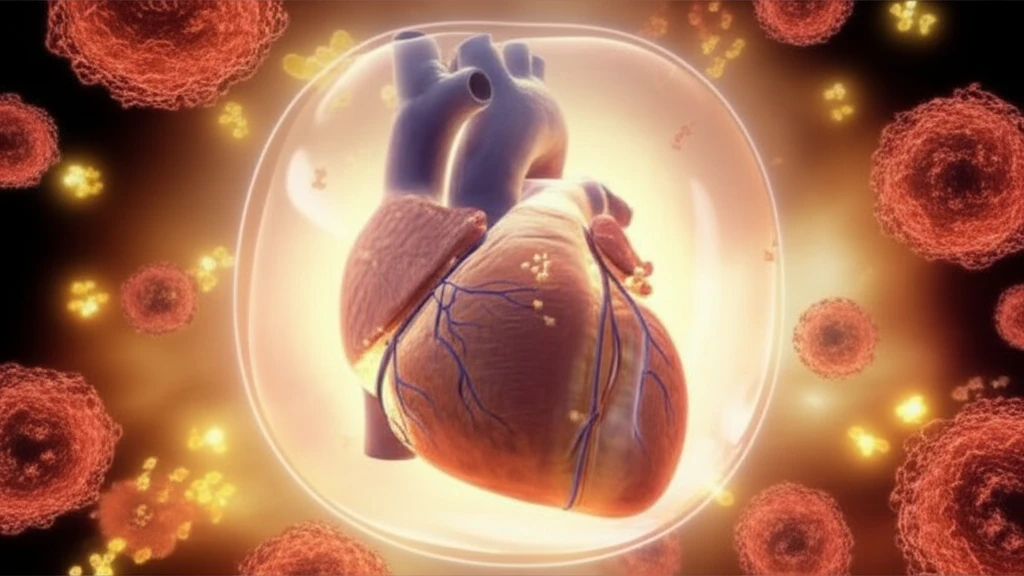
Protective bubble around a heart, symbolizing lipoxin's role in cardiovascular health.

Unlock Your Heart's Potential: How Lipoxins Can Revolutionize Cardiovascular Health

"Discover the groundbreaking research on lipoxins and their role in preventing heart disease, reducing inflammation, and promoting long-term wellness."


Heart disease remains a leading cause of concern worldwide, but what if there was a natural way to enhance your heart's defense system? Groundbreaking research is shedding light on the remarkable potential of lipoxins, molecules that could revolutionize how we approach cardiovascular health. These findings suggest that understanding and leveraging lipoxins could be a key to preventing heart disease and promoting long-term wellness.

Inflammation is a critical factor in the development of atherosclerosis, a condition where plaque builds up inside the arteries, leading to heart attacks and strokes. Macrophages, immune cells that engulf harmful substances, play a dual role. While they help clear debris, they can also become overloaded with oxidized low-density lipoprotein (oxLDL), transforming into foam cells that contribute to plaque formation. This process triggers further inflammation and cell death, exacerbating the disease.

Recent studies have highlighted the importance of resolving inflammation to maintain cardiovascular health. Lipoxins, a class of specialized pro-resolving mediators (SPMs), have emerged as potent anti-inflammatory agents. These molecules actively work to shut down inflammation, clear cellular debris, and promote tissue repair. Insufficient levels of lipoxins can lead to unresolved inflammation, increasing the risk of atherosclerosis and other heart-related issues.

Lipoxins: Nature's Answer to Heart Disease?

Protective bubble around a heart, symbolizing lipoxin's role in cardiovascular health.

Lipoxin A4 (LXA4) is a key player in resolving inflammation and protecting against heart disease. Research indicates that LXA4 can compromise foam cell formation, reduce oxLDL-induced inflammation, and prevent cell death in macrophages. A study examined circulating and local LXA4 levels in patients with coronary artery disease (CAD) and rabbit models of atherosclerosis to understand the role of LXA4 biosynthesis in heart health.

The study revealed that while circulating LXA4 levels were higher in CAD patients, local LXA4 levels in atherosclerotic vessel walls were significantly lower. This suggests that the body's ability to produce LXA4 in the arteries is impaired in individuals with atherosclerosis. Further experiments demonstrated that inflammatory stimuli, such as interferon-gamma (IFN-γ) and tumor necrosis factor-alpha (TNF-α), could suppress LXA4 synthesis in foam cells, contributing to non-resolving inflammation.

  • Reduced Cholesterol Uptake: LXA4 inhibits the expression of cholesterol uptake genes, such as CD36 and SR-A, in macrophages, reducing the formation of foam cells.
  • Inhibited Inflammation: LXA4 reduces the inflammatory response triggered by oxLDL, preventing further damage to the arteries.
  • Protected Against Cell Death: LXA4 reduces oxLDL-induced macrophage apoptosis by inhibiting caspase-3 activation and restoring mitochondrial membrane potential.
These findings underscore that LXA4 not only reduces cholesterol uptake and inflammation but also protects against cell death, making it a multifaceted protector against atherosclerosis. Increasing LXA4 levels could potentially prevent or slow the progression of heart disease.

The Future of Heart Health: Harnessing the Power of Lipoxins

The research on lipoxins offers a promising new direction for preventing and treating heart disease. By understanding how LXA4 and other SPMs work, scientists can develop targeted therapies to boost the body's natural ability to resolve inflammation and protect the heart. This could lead to innovative treatments that go beyond traditional approaches, offering new hope for those at risk of or living with cardiovascular disease.

About this Article -

This article was crafted using a human-AI hybrid and collaborative approach. AI assisted our team with initial drafting, research insights, identifying key questions, and image generation. Our human editors guided topic selection, defined the angle, structured the content, ensured factual accuracy and relevance, refined the tone, and conducted thorough editing to deliver helpful, high-quality information.See our About page for more information.

This article is based on research published under:

DOI-LINK: 10.1016/j.atherosclerosis.2018.09.025, Alternate LINK

Title: The Atheroprotective Role Of Lipoxin A4 Prevents Oxldl-Induced Apoptotic Signaling In Macrophages Via Jnk Pathway

Subject: Cardiology and Cardiovascular Medicine

Journal: Atherosclerosis

Publisher: Elsevier BV

Authors: Jingting Mai, Wenhao Liu, Yongbiao Fang, Shujuan Zhang, Qiong Qiu, Ying Yang, Xiaoqiao Wang, Tucheng Huang, Haifeng Zhang, Yong Xie, Maohuan Lin, Yangxin Chen, Jingfeng Wang

Published: 2018-11-01

Everything You Need To Know

1

What are lipoxins and why are they important for heart health?

Lipoxins are natural molecules that act as potent anti-inflammatory agents, working to shut down inflammation, clear cellular debris, and promote tissue repair. Their significance lies in their ability to protect against heart disease by reducing inflammation and preventing cell damage. Insufficient levels of lipoxins can lead to unresolved inflammation, increasing the risk of atherosclerosis and other heart-related issues. Understanding and leveraging lipoxins could be a key to preventing heart disease and promoting long-term wellness.

2

How does inflammation contribute to heart disease, and how do lipoxins help?

Inflammation is a critical factor in the development of atherosclerosis, where plaque builds up inside the arteries. Macrophages, immune cells that engulf harmful substances, can become overloaded with oxidized low-density lipoprotein (oxLDL), transforming into foam cells. This process triggers further inflammation and cell death, exacerbating the disease. Lipoxins, particularly Lipoxin A4 (LXA4), play a crucial role by resolving inflammation, clearing cellular debris, and promoting tissue repair, counteracting the damaging effects of inflammation.

3

What specific roles does Lipoxin A4 (LXA4) play in preventing heart disease?

Lipoxin A4 (LXA4) is a key player in resolving inflammation and protecting against heart disease. Research indicates that LXA4 can compromise foam cell formation, reduce oxLDL-induced inflammation, and prevent cell death in macrophages. LXA4 inhibits the expression of cholesterol uptake genes, such as CD36 and SR-A, in macrophages, reducing the formation of foam cells. Additionally, it reduces the inflammatory response triggered by oxLDL and protects against cell death, making it a multifaceted protector against atherosclerosis.

4

What were the findings regarding Lipoxin A4 (LXA4) levels in patients with coronary artery disease?

In patients with coronary artery disease (CAD), circulating Lipoxin A4 (LXA4) levels were higher, but local LXA4 levels in atherosclerotic vessel walls were significantly lower. This suggests that the body's ability to produce LXA4 in the arteries is impaired in individuals with atherosclerosis. Inflammatory stimuli, such as interferon-gamma (IFN-γ) and tumor necrosis factor-alpha (TNF-α), could suppress LXA4 synthesis in foam cells, contributing to non-resolving inflammation. The implications are that boosting local LXA4 levels could be a therapeutic target.

5

What is the future of heart health with respect to lipoxins?

The research on lipoxins opens up a promising new direction for preventing and treating heart disease. By understanding how Lipoxin A4 (LXA4) and other specialized pro-resolving mediators (SPMs) work, scientists can develop targeted therapies to boost the body's natural ability to resolve inflammation and protect the heart. This could lead to innovative treatments that go beyond traditional approaches, offering new hope for those at risk of or living with cardiovascular disease. This could potentially lead to new treatments such as drugs or lifestyle changes focusing on boosting the production of Lipoxins.

Newsletter Subscribe

Subscribe to get the latest articles and insights directly in your inbox.