
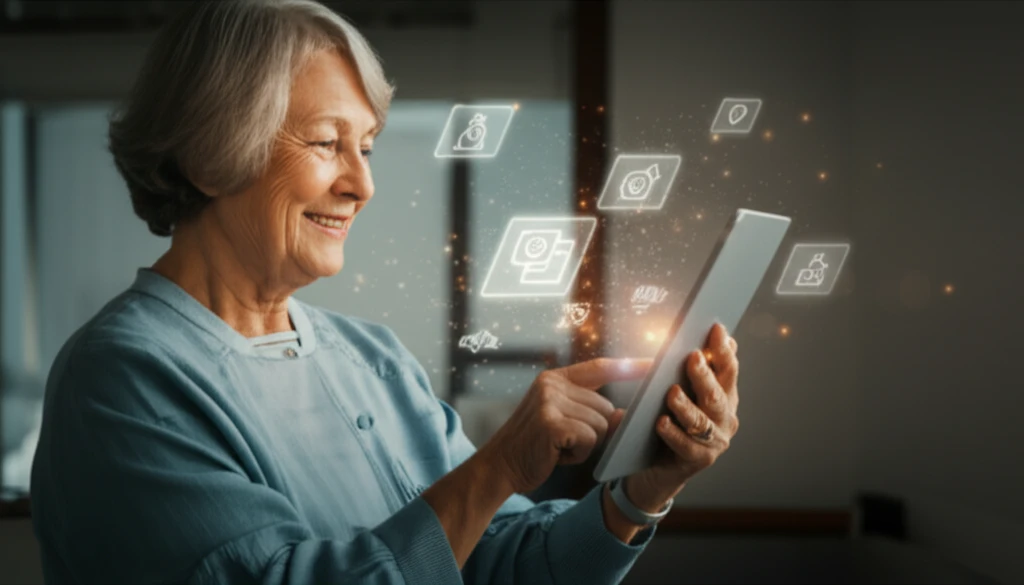
Older woman using a tablet for healthcare management

Unlock Your Health: How Online Portals Empower Older Adults

"Discover the transformative impact of e-learning programs on older adults' health management through patient portals, bridging the digital divide and fostering better healthcare outcomes."


In an era where digital healthcare solutions are rapidly evolving, patient portals (PPs) have emerged as powerful tools for managing chronic illnesses, particularly among older adults. These platforms offer unprecedented access to medical records, facilitate communication with healthcare providers, and streamline tasks such as appointment scheduling and medication refills. However, the adoption rates among older adults have been notably low, creating a critical gap in healthcare accessibility and management.

A recent study published in Telemedicine and e-Health sheds light on this issue, examining the impact of a Theory-based Patient portal e-Learning Program (T-PeP) on older adults with chronic conditions. The research delves into how targeted education and training can significantly improve older adults' engagement with PPs, leading to enhanced health outcomes and a greater sense of control over their well-being.

This article explores the key findings of the study, highlighting the potential of e-learning programs to bridge the digital divide and empower older adults to actively participate in their healthcare management. By focusing on improving PP knowledge, health decision-making self-efficacy, and e-health literacy, the T-PeP model offers a promising approach to transforming healthcare for an aging population.

The Promise and Pitfalls of Patient Portals for Seniors

Older woman using a tablet for healthcare management

Patient portals offer numerous benefits, including convenient access to medical records, direct communication with healthcare providers, and tools for managing appointments and medications. For older adults managing chronic conditions, these features can be particularly valuable, enabling them to stay organized, informed, and engaged in their care. Accessing test results, requesting prescription refills, and sending messages to doctors can all be done from the comfort of home, reducing the need for frequent office visits and phone calls.

Despite these advantages, several barriers hinder the widespread adoption of PPs among older adults. A lack of technological literacy, insufficient training, and concerns about privacy and security can make navigating these platforms challenging. Many older adults also lack the confidence in their ability to use technology effectively, leading to frustration and abandonment of PPs. Without adequate support and user-friendly designs, the potential benefits of PPs remain out of reach for many seniors.

  • Technological Literacy: Many seniors are not comfortable with new technologies, making it difficult to navigate patient portals.
  • Insufficient Training: Lack of proper training and support leads to frustration and underutilization of portal features.
  • Privacy Concerns: Worries about data security and privacy can deter older adults from using online health platforms.
  • User-Friendly Design: Patient portals are often not designed with the needs of older adults in mind, making them difficult to use.
The study highlights the critical need for interventions that address these barriers and provide older adults with the necessary skills and confidence to use PPs effectively. By tailoring e-learning programs to the specific needs of older adults, healthcare providers can unlock the full potential of these platforms and improve health outcomes for an aging population.

Empowering a Healthier Future

The study underscores the effectiveness of theory-based e-learning programs in enhancing older adults' engagement with patient portals, ultimately improving their health knowledge, self-efficacy, and communication with healthcare providers. As the older adult population continues to grow, these interventions offer a promising strategy for promoting better health outcomes and empowering seniors to take control of their healthcare journey.

About this Article -

This article was crafted using a human-AI hybrid and collaborative approach. AI assisted our team with initial drafting, research insights, identifying key questions, and image generation. Our human editors guided topic selection, defined the angle, structured the content, ensured factual accuracy and relevance, refined the tone, and conducted thorough editing to deliver helpful, high-quality information.See our About page for more information.

Everything You Need To Know

1

What are the primary benefits of using Patient Portals for older adults managing chronic illnesses?

Patient Portals (PPs) offer several key advantages for older adults with chronic conditions. These include convenient access to medical records, direct communication with healthcare providers, and tools for managing appointments and medications. This improved access enables older adults to stay organized, informed, and engaged in their care, facilitating better chronic illness management. Accessing test results, requesting prescription refills, and sending messages to doctors from home reduces the need for frequent office visits and phone calls.

2

What are the main obstacles preventing wider adoption of Patient Portals among older adults?

Several barriers hinder the widespread adoption of Patient Portals (PPs) among older adults. These include a lack of technological literacy, insufficient training on how to use the portals, and concerns about privacy and security. Many older adults also lack the confidence in their ability to use technology effectively, leading to frustration and underutilization of the PPs. Also, PPs are often not designed with the needs of older adults in mind, making them difficult to use.

3

How can e-learning programs help older adults overcome barriers to using Patient Portals?

Theory-based e-learning programs, like the Theory-based Patient portal e-Learning Program (T-PeP), are designed to address the barriers hindering older adults' Patient Portal (PP) use. By focusing on improving PP knowledge, health decision-making self-efficacy, and e-health literacy, these programs provide targeted education and training. They enhance older adults' engagement with PPs, increasing their understanding and confidence in using the portals, leading to enhanced health outcomes and a greater sense of control over their well-being. Through tailored e-learning, healthcare providers can equip older adults with the necessary skills and confidence to use PPs effectively.

4

What specific aspects of healthcare management can be improved through the use of Patient Portals by older adults?

Patient Portals (PPs) can significantly improve several aspects of healthcare management for older adults. These include better access to medical records, facilitating more direct communication with healthcare providers, and streamlining tasks such as appointment scheduling and medication refills. Enhanced access to medical information and the ability to communicate with doctors from home empowers older adults to be more active in their healthcare. This leads to improved health knowledge, enhanced health decision-making self-efficacy, and better chronic illness management, fostering better healthcare outcomes.

5

How does the Theory-based Patient portal e-Learning Program (T-PeP) work to empower older adults in managing their health?

The Theory-based Patient portal e-Learning Program (T-PeP) empowers older adults by improving their engagement with Patient Portals (PPs). T-PeP enhances their PP knowledge, boosts health decision-making self-efficacy, and improves e-health literacy. By providing targeted education and training, T-PeP helps older adults overcome barriers such as technological literacy gaps and lack of confidence. This leads to increased understanding and use of PPs, enabling them to actively participate in their healthcare, communicate more effectively with providers, and manage their chronic illnesses more effectively. Ultimately, T-PeP aims to foster better healthcare outcomes and empower seniors to take control of their healthcare journey.

Newsletter Subscribe

Subscribe to get the latest articles and insights directly in your inbox.