
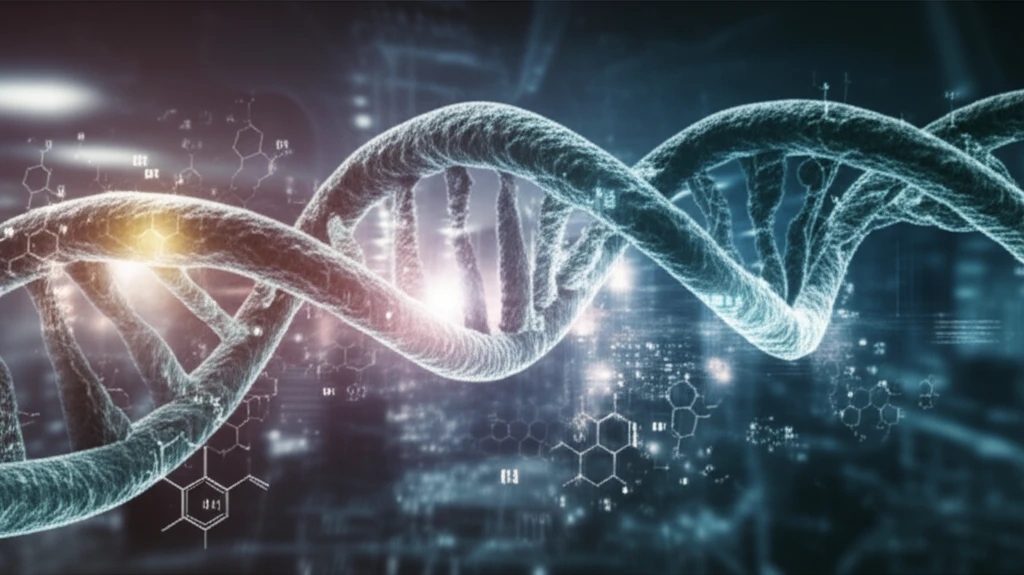
Surreal illustration of DNA strands and glowing chemical structures symbolizing epigenetic drugs and medical innovation.

Unlock Your Genetic Potential: The New Frontier of Epigenetic Drugs

"Explore how groundbreaking epigenetic drugs are rewriting our understanding of disease treatment, targeting cancer, and cardiovascular health with innovative precision."


Imagine a future where diseases are not just treated but preemptively managed by tweaking the very mechanisms that control your genes. This is the promise of epigenetics, a field that explores how your genes are expressed—or silenced—by factors other than your DNA sequence itself. Think of it as having a master control panel for your health, where lifestyle and environmental factors can adjust the dials.

Epigenetics has rapidly evolved from a theoretical concept to a practical approach in medicine, particularly in drug development. Researchers are now creating medications that target epigenetic modifications, offering new ways to combat diseases like cancer, heart disease, and neurological disorders. These drugs aim to correct malfunctions in how your genes are regulated, paving the way for more effective and personalized treatments.

This article delves into the exciting world of epigenetic drugs, explaining how they work, what conditions they target, and what the future holds for this innovative field. Whether you're battling a chronic illness, curious about the latest in medical science, or simply interested in optimizing your health, understanding epigenetics could be a game-changer.

What are Epigenetic Drugs and How Do They Work?

Surreal illustration of DNA strands and glowing chemical structures symbolizing epigenetic drugs and medical innovation.

Epigenetic drugs are designed to influence how your genes are expressed. Your DNA contains all the instructions for your body, but not every gene is active all the time. Epigenetics involves chemical modifications to your DNA and its associated proteins, which can switch genes 'on' or 'off.' These modifications include:

DNA Methylation: This process involves adding a methyl group to DNA, often silencing a gene.

  • Histone Acetylation: Adding acetyl groups to histone proteins (around which DNA is wrapped) typically loosens the DNA, making genes more accessible for expression.
  • Histone Methylation: Similar to DNA methylation, but can either activate or repress gene expression depending on the location and number of methyl groups added.
Epigenetic drugs target the enzymes that add, remove, or interpret these modifications. By doing so, they can help restore normal gene function in diseases where epigenetic marks have gone awry. These drugs are categorized based on their targets:

The Horizon of Epigenetic Therapies

The field of epigenetic drug development is rapidly advancing, promising more targeted and effective treatments for a variety of diseases. As ongoing clinical trials continue to unfold, the future looks bright for personalized medicine that hones in on individual genetic expressions. Stay informed about these innovative therapies, as they may hold the key to unlocking better health outcomes for you and your loved ones. Epigenetics is not just about treating diseases; it's about optimizing life.

About this Article -

This article was crafted using a human-AI hybrid and collaborative approach. AI assisted our team with initial drafting, research insights, identifying key questions, and image generation. Our human editors guided topic selection, defined the angle, structured the content, ensured factual accuracy and relevance, refined the tone, and conducted thorough editing to deliver helpful, high-quality information.See our About page for more information.

This article is based on research published under:

DOI-LINK: 10.1007/s40495-017-0100-7, Alternate LINK

Title: Novel Drugs Targeting The Epigenome

Subject: Drug Discovery

Journal: Current Pharmacology Reports

Publisher: Springer Science and Business Media LLC

Authors: Zhuo Chen, Honglin Li

Published: 2017-08-15

Everything You Need To Know

1

What exactly are epigenetic drugs, and how do they differ from traditional medications?

Epigenetic drugs are medications designed to influence gene expression without altering the DNA sequence itself. Traditional drugs often target proteins or other molecules produced by genes, while epigenetic drugs target the mechanisms that control whether a gene is active or inactive. These mechanisms include DNA Methylation, Histone Acetylation, and Histone Methylation, which modify DNA and associated proteins to switch genes on or off, offering a way to correct malfunctions in gene regulation that lead to diseases. By targeting the enzymes that manage these modifications, epigenetic drugs aim to restore normal gene function, especially in diseases where epigenetic marks have gone awry. Unlike traditional drugs, epigenetic drugs offer the potential for more personalized treatments that address the root causes of diseases at the DNA level.

2

How might epigenetic drugs revolutionize the treatment of cancer and cardiovascular diseases?

Epigenetic drugs offer a new approach to treating cancer and cardiovascular diseases by targeting the epigenetic modifications that contribute to these conditions. In cancer, epigenetic changes can silence tumor suppressor genes or activate oncogenes, promoting uncontrolled cell growth. Epigenetic drugs, such as those targeting DNA Methylation and Histone modifications, can help reverse these changes, restoring normal gene expression and inhibiting cancer development. Similarly, in cardiovascular diseases, epigenetic modifications can affect genes involved in inflammation, lipid metabolism, and vascular function. By modulating these epigenetic marks, epigenetic drugs can help reduce inflammation, improve vascular function, and prevent the progression of heart disease. This approach not only treats the symptoms but also addresses the underlying epigenetic factors driving these diseases, offering the potential for more effective and personalized therapies.

3

Could lifestyle factors influence epigenetics, and if so, how might this affect drug development?

Yes, lifestyle factors such as diet, exercise, and exposure to environmental toxins can indeed influence epigenetics. These factors can alter DNA Methylation, Histone Acetylation, and other epigenetic modifications, thereby affecting gene expression. This influence has significant implications for drug development, as it suggests that personalized medicine approaches should consider an individual's lifestyle and environmental exposures. For example, drugs targeting Histone Acetylation might be more effective in individuals with specific dietary habits that promote histone deacetylation. Furthermore, understanding how lifestyle factors interact with epigenetic drugs can lead to the development of combination therapies that integrate lifestyle modifications with pharmacological interventions for more comprehensive and effective treatments. This holistic approach recognizes that epigenetics is not just about treating diseases but also about optimizing life through lifestyle choices.

4

What are some of the specific epigenetic modifications that these drugs target, and what are the implications of altering them?

Epigenetic drugs target specific epigenetic modifications such as DNA Methylation, Histone Acetylation, and Histone Methylation. DNA Methylation involves adding a methyl group to DNA, often silencing a gene. Drugs that inhibit DNA methyltransferases can reactivate silenced genes, which is particularly useful in cancer therapy. Histone Acetylation, the addition of acetyl groups to histone proteins, typically loosens DNA, making genes more accessible for expression. Histone deacetylase inhibitors (HDAC inhibitors) prevent the removal of acetyl groups, increasing gene expression. Histone Methylation, which can either activate or repress gene expression depending on the location and number of methyl groups added, is targeted by drugs that modulate histone methyltransferases or demethylases. The implications of altering these modifications are significant, as they can restore normal gene function in diseases where epigenetic marks have gone awry. However, it's crucial to carefully target these modifications to avoid unintended effects on other genes and cellular processes. Altering DNA Methylation and Histone modifications may result in unintended consequences. Therefore, specificity and precision are essential in epigenetic drug development.

5

Where do epigenetic therapies stand in terms of clinical trials and real-world applications, and what does the future hold for this field?

Epigenetic therapies are rapidly advancing, with numerous clinical trials underway to evaluate their safety and efficacy in treating various diseases. Several epigenetic drugs targeting DNA Methylation and Histone modifications have already been approved for use in certain cancers, such as leukemia and lymphoma, demonstrating the potential of this approach in real-world applications. The future of epigenetic drug development looks promising, with ongoing research focused on developing more targeted and selective epigenetic drugs, as well as combination therapies that integrate epigenetic drugs with traditional treatments. Personalized medicine approaches, which consider an individual's unique epigenetic profile, are also gaining traction. As clinical trials continue to unfold, the field is expected to witness significant advancements in personalized medicine that hones in on individual genetic expressions, offering the potential for more effective and tailored treatments for a wide range of diseases. Epigenetic therapies hold the key to unlocking better health outcomes.

Newsletter Subscribe

Subscribe to get the latest articles and insights directly in your inbox.