
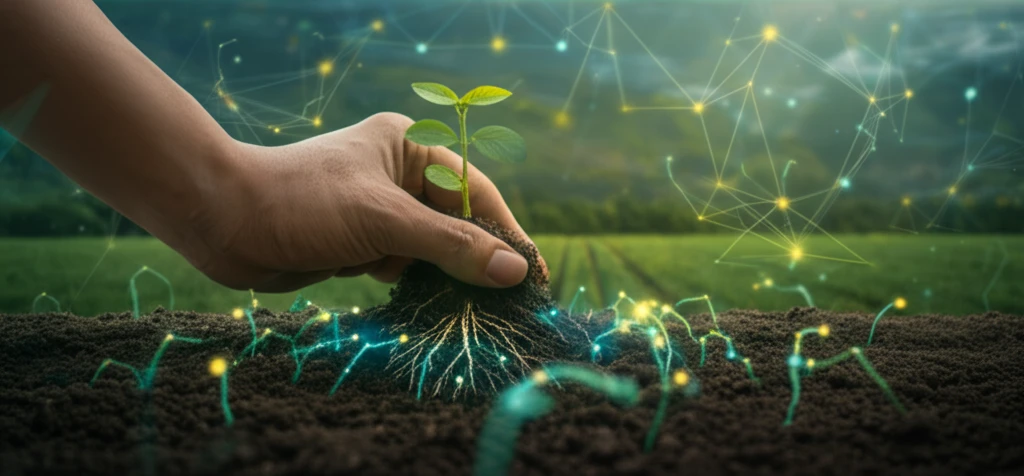
Unlock Your Garden's Potential: A Modern Guide to Fertilizer Use

"From Yesterday's Patterns to Today's Sustainable Practices: Optimizing Fertilizer Use for a Healthier Planet."
In today's world, where sustainability meets agricultural innovation, understanding fertilizer use is more crucial than ever. This isn't just about maximizing crop yields; it's about doing so responsibly, ensuring a healthy planet for future generations. As our understanding of soil science and plant nutrition deepens, so too must our approach to fertilization.
This guide is designed to walk you through the evolving patterns of fertilizer use, from historical practices to cutting-edge techniques. Whether you're a seasoned farmer, a backyard gardener, or simply someone interested in sustainable agriculture, you'll find valuable insights to help you make informed decisions.
We'll explore everything from selecting the right fertilizers to understanding soil-plant relationships, all while keeping an eye on the environmental impact of our choices. Let's dive into the world of fertilizers and discover how we can cultivate a greener, more productive future.
Global Fertilizer Consumption Trends
Fertilizer use in the agricultural sector spans crops, livestock, forestry, fisheries, and aquaculture, with consumption measured by plant nutrients per unit of arable land. The United States has tracked fertilizer consumption by plant nutrient and major fertilizer products from 1960 through recent years, including mixed fertilizers, secondary nutrients, and micronutrients. European fertilizer use by nutrient in 2018-2019 is documented in million metric tons, showing the scale of application across the continent. Global country-level rankings reveal significant variation in fertilizer consumption patterns worldwide.
Precision Agriculture and Common Application Mistakes
Precision agriculture uses satellite data to identify farmland areas that consistently produce low yields, enabling farmers to streamline fertilizer application by limiting amounts applied to unproductive lands. Excessive fertilizer use leads to salt accumulation in plant roots and nutrient imbalances in the soil, causing burning, stunted growth, and even plant death. There are large differences in fertilizer use across the world, with crops requiring specific nutrients that become limiting when lacking. When particular nutrients are insufficient, crops fail or grow at significantly slower rates.
Nitrogen Fertilizer's Environmental Legacy
University of California, Berkeley chemists discovered a smoking gun proving that increased fertilizer use over the past 50 years is responsible for a dramatic rise in atmospheric nitrous oxide, a major greenhouse gas contributing to global climate change. Researchers developed a spatially explicit time-series data set of nitrogen fertilizer use in agricultural land of the continental US to examine cumulative impacts. This long-term nitrogen fertilizer use history is important for both field investigators and the modeling community to understand environmental effects.
The Evolution of Fertilizer Use: A Historical Perspective
The journey of fertilizer use is a story of continuous innovation and adaptation. In the early days, agriculture relied heavily on natural sources of nutrients, such as manure and compost. These organic materials provided essential elements for plant growth, but their availability was often limited, and their nutrient content varied.
- Early reliance on natural sources like manure and compost.
- The revolutionary impact of chemical fertilizers on crop yields.
- Growing awareness of environmental concerns related to overuse.
- Shift towards sustainable and precision fertilization methods.
Environmental Impact and Research Frontiers
Recent research examines the impact of fertilizers on environmental quality, with particular attention to phosphorus forms in runoff and exceptions to commonly held assumptions about land use and phosphorus transport. Studies analyze determinants of inorganic fertilizer use intensity on cereal crops among smallholders, using two-stage random sampling methods to collect data from respondents. Population growth is identified as causing catastrophic declines in biodiversity, with fertilizer use implicated in broader environmental changes.
Fertilizer's Role in Yield Stabilization
Evidence clearly indicates that fertilizer use reduces variability in barley yields under rainfed conditions in dry areas, with substantial yield gains possible alongside reductions in variability. Research demonstrates that farmers in Western Kenya often fail to take advantage of apparently profitable fertilizer investments due to procrastination and impatience, postponing purchases until later periods. The experimental evidence shows that behavioral nudging can help overcome these decision-making barriers.
Regional Fertilizer Use Patterns
Turkey's fertilizer use is measured as the quantity of plant nutrients per unit of arable land, with historical data spanning from 1961 to 2023 covering nitrogenous, potash, and phosphate fertilizers including ground rock phosphate. Nutrient balance and fertilizer use efficiency in Swedish vineyards represents one approach to optimizing application in specialized agricultural contexts. Synthetic fertilizer application worldwide varies significantly by region, with nitrogen, phosphate, and potassium fertilisers measured in kilograms per hectare across different countries.
Cultivating a Sustainable Future
As we look ahead, the future of fertilizer use lies in embracing sustainable practices that prioritize soil health, minimize environmental impact, and maximize crop yields. By adopting a holistic approach to nutrient management, we can ensure a more resilient and productive agricultural system for generations to come.
Isotope Tracking for Optimization
Scientists use fertilizers labelled with nitrogen-15 stable isotopes—atoms with an extra neutron compared with normal nitrogen—to track and determine how effectively crops take up fertilizer. This stable nitrogen isotope technique helps researchers optimize both water and fertilizer use in agricultural systems. The approach provides precise measurements of nutrient uptake efficiency.
Digital Agriculture and Sustainability Trends
Future fertilizer use trends focus on enhancing sustainability, efficiency, and minimizing environmental impacts through precision agriculture technologies like GPS and remote sensing. These technologies enable accurate fertilizer application targeting specific field areas based on need. The global NPK fertilizer market shows growing emphasis on sustainable agriculture, integration of digital farming technologies, and rise of organic fertilizers as key trends shaping the industry.
ESG Integration in Agricultural Systems
Environmental, Social, and Governance considerations are increasingly integrated into global agricultural operations rather than treated as separate projects. This systemic approach to sustainability reflects how organizations build environmental responsibility into their core products and operations. The broader context of fertilizer use extends beyond immediate agricultural applications to encompass wider sustainability frameworks.
Pollinator Decline and Fertilizer Use
The world's longest-running study reveals that high fertiliser use halves numbers of pollinators, with even average nitrogen fertiliser use cutting flower numbers fivefold and halving pollinating insects. This is the first study to demonstrate that increased fertiliser use leads to a fall in pollinator numbers, affecting bees in particular. The research connects agricultural intensification directly to biodiversity loss in grassland ecosystems.