
Unlock Your Focus: Creating Study Spaces That Work For You

"Transform your study environment into a haven of productivity by understanding how soundscapes, coping mechanisms, and personal satisfaction intertwine. Discover practical strategies to optimize your space for peak performance."
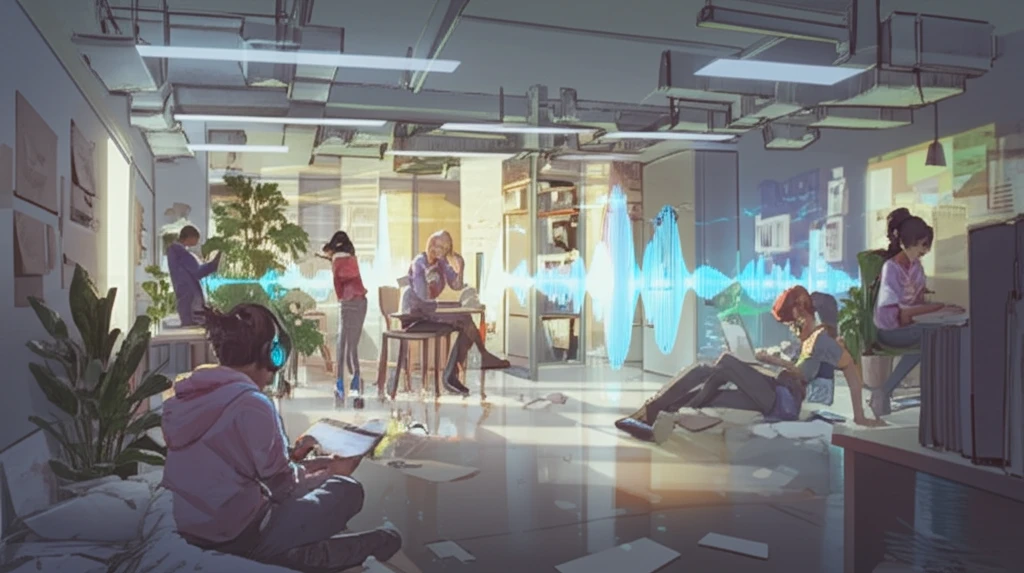
In recent years, the way students approach studying has evolved. The traditional, silent library is increasingly overshadowed by open study areas. These spots are favored for their ability to combine academic work with social interaction, offering a more relaxed and collaborative atmosphere. But this informality often comes at a cost: uncontrolled sound environments that can hinder concentration.
While a silent study zone minimizes sound to prevent annoyance and frustration, open study areas present a different challenge. Students in these spaces often adapt to higher sound levels, but how does this adaptation truly affect their learning experience? What are the key elements of a sound environment that contribute to satisfaction and productivity? This article delves into understanding the indoor soundscape of study areas, focusing on how sound sources, user reactions, coping methods, and perceptual dimensions influence students' ability to focus and learn effectively.
We'll explore how to create a study space that caters to your needs, whether it's finding the right balance between quiet and social interaction or implementing strategies to manage distractions. By understanding the principles of soundscape design and considering your personal preferences, you can transform your study environment into a haven of productivity.
Why Ambient Sound Matters for Focus
Soundscape research has been formalized through the ISO 12913 series, which standardizes how sound environments are defined and evaluated across data collection and analysis. The growing popularity of ambient soundscape recordings reflects this impact, with low-frequency cosmic soundscapes marketed to calm anxiety, ease insomnia, and boost focus during study and coding sessions. Urban researchers similarly study how the perceived sound of public spaces shapes user experience, as seen in a survey of ten Tejo River waterfront spaces in Lisbon. Citizen science initiatives extend this reach, letting volunteers help classify acoustic data gathered from natural environments. Together, these efforts show how deliberately shaping what we hear can transform a workspace into a peaceful, productive sanctuary.
Standardized Methods and Their Limits
Quantitative soundscape analysis is increasingly guided by the ISO 12913 framework, which provides methods for collecting, analysing, and representing soundscape data. Researchers have tested these methods against large existing assessment databases to see how well they hold up in practice. However, soundscape researchers stress that understanding complex everyday sound environments demands a multidisciplinary, multimethod approach that a single standard cannot fully capture. Critics note that the standardization of the soundscape concept is still in its early steps, with the measurement of soundscape quality still being refined. The result is a field that uses common tools but continues to debate their adequacy.
From Acoustic Ecology to Auditory Heritage
The concept of a historical soundscape refers to the auditory environment of a specific time and place, encompassing sounds from natural elements, human activities, and cultural practices. Acoustic ecology deepened this idea by studying how sounds of different origins shape life on the planet, including our own. Researchers now treat the historical soundscape as the auditory memory of a place and a form of cultural heritage that evolves with the social, cultural, and political history of that place. Recent work argues that new technologies and digital humanities methods can update how these historical soundscapes are reconstructed and studied. This shift turns the sounds of the past into a recoverable, analyzable record.
Decoding the Soundscape: What Really Matters
The concept of a "soundscape" goes beyond simply measuring decibel levels. It's about understanding how people perceive and experience the acoustic environment around them. According to ISO 12913-1, a soundscape is defined as "the acoustic environment as perceived or experienced and/or understood by a person or people, in context." This means that the same sounds can be interpreted differently depending on the individual, the location, and the activity taking place.
- Context: The location and activity taking place.
- Information: The meaning we attribute to certain sounds.
- Individual perception: How we personally interpret and react to sounds.
- Overall environment: A blend of both sounds and the way we understand them.
Green Spaces, Sound, and Mental Health
Recent studies link urban sound environments to health and well-being, with urban soundscapes in green spaces increasingly recognized as factors that influence human mental health. Research on urban green spaces proposes global indicators such as Lden (in decibels) for evaluating the quality of these sound environments. Other assessments of urban recreational areas combine literature reviews, computer simulations, and interviews with users of the open spaces to understand the perceived acoustic experience. This convergence suggests that the soundscape quality of green spaces, not just their visual design, helps determine the health and well-being benefits people gain from them.
The Debate Over Soundscape Quality
Not all researchers agree on how soundscape quality should be measured. Critics argue that further alternative definitions of “soundscape quality” must be explored, proposing that quality be assessed by the extent to which a soundscape is appropriate to its place. This framing shifts attention from purely acoustic metrics to the relationship between a sound environment and its context. At the same time, work connecting soundscapes and acoustic ecology with cultural geography and urban ethnomusicology emphasizes that soundscape research must stay grounded in human subjects and lived experience, which standardized metrics can overlook. These challenges highlight the difficulty of capturing what makes a soundscape genuinely supportive or restorative.
Natural Versus Reproduced Soundscapes
Comparing soundscape approaches reveals a split between preserving real acoustic environments and recreating them. Soundscape ecology has deepened understanding of ecological issues and established visceral connections to ecological data, making the preservation of natural soundscapes a recognized conservation goal, as reflected in acoustic research on the Anthropocene ocean. In parallel, laboratory reproduction using techniques such as first-order Ambisonics raises questions about the ecological validity of studying soundscapes outside their real context. Meanwhile, commercial ambient soundscape recordings, such as cinematic deep-space audio designed for study and sleep, offer accessible alternatives that trade fidelity for convenience. Each approach serves different goals, from conservation science to everyday focus.
Crafting Your Ideal Study Soundscape
Ultimately, creating a productive study soundscape is a personal journey. By understanding the principles outlined in this article and paying attention to your own preferences, you can transform your study environment into a space that promotes focus, reduces distractions, and supports your academic success. Experiment with different strategies, find what works best for you, and enjoy the benefits of a well-designed soundscape.
Designing and Describing Soundscapes
Expert analysis of soundscape design acknowledges that it constitutes a mixture of urban, architectural, and acoustic interventions, yet it remains unclear which interventions arise from which expertise and how planners will integrate their recommendations. Recent research has also sought to systematize how soundscapes are described, categorizing analysis into acoustic environment-oriented and affective perception-oriented approaches. New tools such as SoundSCaper generate soundscape captions, which are evaluated against human expert descriptions using within-subjects designs. This push toward automated, consistent captioning reflects a broader effort to close the gap between scientific measurement and how people actually experience a place.
Designing Sound for the Spaces Ahead
Future-oriented thinking treats soundscapes as something to design rather than merely record, with a laboratory of future soundscapes exploring these questions within the postgraduate Futures Studies program of an educational institution in Mexico City. Commercial products are already moving in this direction, with aesthetic study spaces that layer lofi ambient sounds with timers and task management. The next frontier extends even beyond Earth: scientists have mapped how design factors such as lighting, privacy, and shared spaces could shape astronaut wellbeing on long missions to the Moon and Mars. Virtual study rooms that run around the clock offer a preview of how designed sound environments might support focus at scale.
From Soundwave to Gestalt Soundscape
Soundscapes present systemic challenges because they are more than collections of individual sounds. Guides to the field walk readers from soundwave to soundscape, emphasizing that a complex, gestalt whole emerges from many acoustic features. The burgeoning field of conservation technology offers new methods to capture multiple features of these complex soundscapes for monitoring and protection. Beyond science, soundscapes are widely used in creative practice, where producers deliberately build layered ambiences to change the feel of a track. Bridging these worlds - scientific measurement, conservation, and creative design - is one of the central challenges for the soundscape field.
Soundscape Interventions in Everyday Life
On the ground, soundscape research is moving from theory to practical intervention. An online platform called the Catalogue of Soundscape Interventions (CSI) systematically gathers real-world examples of how places have been redesigned acoustically. From this catalogue, researchers have developed a taxonomy of soundscape interventions through three primary steps: developing data collection tools, collecting examples, and reviewing them. Studies of spatial soundscapes in both real-world and virtual reality settings further evaluate how people perceive sound in space. These efforts ground soundscape science in the lived experience of people, from public plazas to study spaces and even deep-space ambience designed to block distractions.