
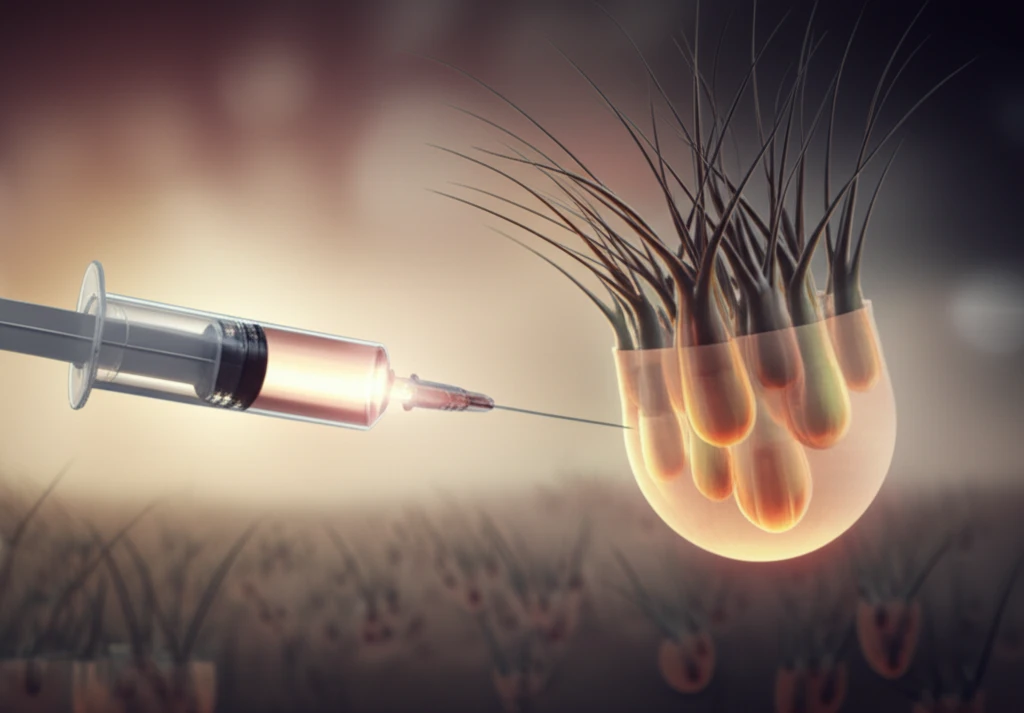
Corifollitropin Alfa Transforming Injections into Fertility

Unlock Your Fertility Potential: A Comprehensive Guide to Corifollitropin Alfa in IVF

"Is Corifollitropin Alfa the key to optimizing your IVF outcomes? Explore the benefits, usage, and real-world results of this innovative fertility treatment."


In-vitro fertilization (IVF) has revolutionized the landscape of reproductive medicine, offering hope to countless individuals and couples struggling with infertility. A cornerstone of successful IVF is controlled ovarian hyperstimulation (COH), a process designed to stimulate the ovaries to produce multiple eggs. Traditionally, COH involves daily injections of exogenous gonadotropins, a routine that can be both physically and emotionally taxing.

Enter corifollitropin alfa, a long-acting recombinant follicle-stimulating hormone (FSH) analog. This innovative medication offers a significant advantage: a single injection can replace seven days of daily gonadotropin injections. The appeal is clear – less stress, fewer needles, and a potentially smoother experience for patients undergoing IVF. But does it deliver comparable results to traditional methods?

This article delves into the world of corifollitropin alfa, exploring its role in IVF, its benefits, and the evidence supporting its effectiveness. We'll examine a recent study that provides real-world insights into the use of corifollitropin alfa in a diverse group of IVF patients, offering a balanced perspective on this promising fertility treatment.

What is Corifollitropin Alfa and How Does It Simplify IVF?

Corifollitropin Alfa Transforming Injections into Fertility

Corifollitropin alfa (Elonva) is a synthetic hormone designed to stimulate the ovaries to develop multiple follicles, each containing an egg. Unlike traditional FSH treatments requiring daily injections, corifollitropin alfa is administered as a single, subcutaneous injection at the beginning of the ovarian stimulation phase of IVF. This single dose sustains FSH levels for seven days, reducing the need for frequent injections.

The development of corifollitropin alfa represents a significant advancement in fertility treatment, primarily aimed at reducing the burden of daily injections. This can lead to:

  • Reduced Stress: Fewer injections translate to less anxiety and discomfort associated with daily medication administration.
  • Improved Convenience: A single injection simplifies the treatment process, making it easier to manage and integrate into daily life.
  • Enhanced Adherence: The reduced burden of injections may improve patient compliance with the treatment protocol.
The study we will examine provides a valuable look at how corifollitropin alfa performs in a real-world setting, outside the controlled environment of clinical trials. This type of observational study is crucial for understanding the true impact of a treatment in a diverse patient population.

Is Corifollitropin Alfa Right for You?

The decision to use corifollitropin alfa in IVF is a personal one that should be made in consultation with your fertility specialist. While studies, including the one discussed here, suggest that it is a safe and effective option for many women, it is essential to consider your individual circumstances, medical history, and preferences. By working closely with your doctor, you can determine the best course of treatment to help you achieve your fertility goals.

About this Article -

This article was crafted using a human-AI hybrid and collaborative approach. AI assisted our team with initial drafting, research insights, identifying key questions, and image generation. Our human editors guided topic selection, defined the angle, structured the content, ensured factual accuracy and relevance, refined the tone, and conducted thorough editing to deliver helpful, high-quality information.See our About page for more information.

This article is based on research published under:

DOI-LINK: 10.4067/s0717-75262015000500005, Alternate LINK

Title: Experiencia De La Unidad De Medicina Reproductiva Clínica Monteblanco Con El Uso De Corifollitropin Alfa En Ciclos De Fecundación In Vitro

Subject: Obstetrics and Gynecology

Journal: Revista chilena de obstetricia y ginecología

Publisher: Publicidad Permanyer, SLU

Authors: Juan E Schwarze M, Sonia Villa V, Carolina Ortega H, Ricardo Pommer T

Published: 2015-08-01

Everything You Need To Know

1

What exactly is Corifollitropin Alfa (Elonva) and how does it work in the context of IVF?

Corifollitropin alfa, also known as Elonva, is a synthetic hormone that acts as a long-acting recombinant follicle-stimulating hormone (FSH) analog. Its primary function in IVF is to stimulate the ovaries to develop multiple follicles, each containing an egg. Unlike traditional FSH treatments requiring daily injections, corifollitropin alfa is administered as a single, subcutaneous injection at the beginning of the ovarian stimulation phase. This single dose sustains FSH levels for seven days, significantly reducing the need for frequent injections. This helps simplify the IVF process, potentially reducing stress, improving convenience, and enhancing adherence to the treatment protocol. However, it's important to note that corifollitropin alfa only covers the initial phase of ovarian stimulation, and additional medications might be necessary to trigger final egg maturation.

2

What are the main advantages of using Corifollitropin Alfa compared to traditional daily gonadotropin injections during the controlled ovarian hyperstimulation (COH) phase of IVF?

The key advantages of using corifollitropin alfa over daily gonadotropin injections in controlled ovarian hyperstimulation (COH) are reduced stress, improved convenience, and enhanced adherence. Because corifollitropin alfa involves only a single injection for the first seven days, patients experience less anxiety and discomfort from daily medication administration. A single injection simplifies the treatment process and makes it easier to manage within daily life. By reducing the burden of frequent injections, patient compliance with the overall treatment protocol may improve. However, it's crucial to remember that corifollitropin alfa is not a one-size-fits-all solution, and the choice between it and traditional methods should be made in consultation with a fertility specialist considering individual patient factors.

3

Is Corifollitropin Alfa suitable for all women undergoing IVF, and what factors should be considered when making this decision?

Corifollitropin alfa may not be suitable for all women undergoing IVF. The decision to use corifollitropin alfa should be made in consultation with a fertility specialist, who will consider individual circumstances, medical history, and preferences. While studies suggest it can be a safe and effective option for many, factors such as age, ovarian reserve, previous IVF cycles, and specific fertility diagnoses can influence its appropriateness. For instance, women with diminished ovarian reserve or those at high risk of ovarian hyperstimulation syndrome (OHSS) may require alternative stimulation protocols. Careful evaluation and personalized treatment planning are essential to determine the best approach for each patient. This process should also incorporate a discussion of potential risks and benefits specific to the individual.

4

How does the use of Corifollitropin Alfa in IVF affect the overall success rates and the number of eggs retrieved compared to traditional methods?

The effect of corifollitropin alfa on overall success rates and the number of eggs retrieved in IVF is a subject of ongoing research and discussion. Studies, including real-world observational studies, aim to compare outcomes with corifollitropin alfa to those achieved with traditional daily gonadotropin injections. While some studies suggest comparable success rates and egg retrieval numbers, individual results can vary. Factors such as patient age, ovarian reserve, and the specific stimulation protocol used alongside corifollitropin alfa can all influence outcomes. Furthermore, the expertise of the fertility clinic and the quality of the embryology lab play significant roles in determining overall IVF success. Therefore, it's crucial to consult with a fertility specialist to understand the potential impact of corifollitropin alfa on individual success rates based on their specific situation.

5

What are the potential side effects or risks associated with using Corifollitropin Alfa during IVF treatment, and how are they managed?

Like all medications used in IVF, corifollitropin alfa carries potential side effects and risks. The most common side effects are similar to those associated with traditional gonadotropin injections, including headache, nausea, pelvic discomfort, and fatigue. A significant risk associated with ovarian stimulation is ovarian hyperstimulation syndrome (OHSS), a condition where the ovaries become enlarged and fluid accumulates in the body. While corifollitropin alfa does not inherently increase the risk of OHSS compared to traditional methods, careful monitoring and individualized dosing are crucial to minimize this risk. Fertility specialists employ strategies such as adjusting medication dosages, using trigger shots (like Lupron) to induce final egg maturation, and cryopreserving all embryos to avoid fresh embryo transfer in cases of high OHSS risk. Patients should discuss potential side effects and management strategies with their doctor before starting treatment.

Newsletter Subscribe

Subscribe to get the latest articles and insights directly in your inbox.