
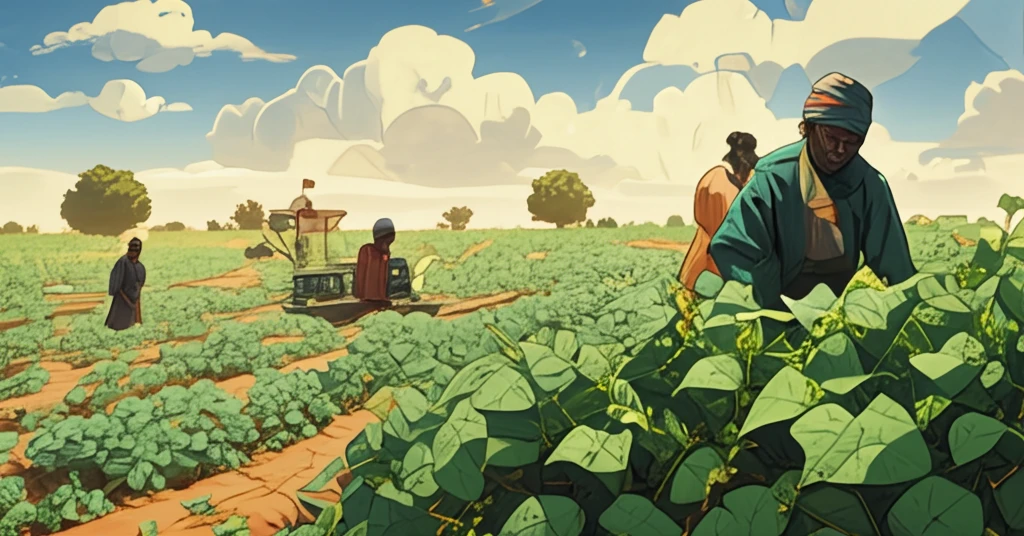
Unlock Your Farm's Potential: Maximize Fodder Production with Smart Cowpea Choices

"Discover how selecting the right cowpea varieties can significantly boost fodder yields, even in challenging climates, ensuring better livestock nutrition and increased income for farmers."
In regions where livestock is vital, such as the southern areas of Niamey, Niger, finding reliable fodder sources is essential. Cowpea, a staple crop, is often grown primarily for this purpose. However, not all cowpea varieties are created equal, and many farmers miss out on the potential to significantly increase their fodder production.
Traditional farming methods often lack the precision needed to optimize yields. The key lies in identifying and cultivating dual-purpose cowpea varieties that not only provide nutritious fodder but also offer other benefits. This approach can transform agricultural practices and improve economic outcomes for farmers.
An experiment conducted across two sites in Niger, Ticko and Bogodjotou, aimed to compare the fodder production of nine different cowpea varieties. The findings revealed significant variations in yield based on the variety chosen and the environmental conditions, highlighting the importance of informed decision-making in crop selection.
Cowpea's Role in Livestock Fodder Systems
The cowpea (Vigna unguiculata) is an annual herbaceous legume exhibiting a high level of morphological diversity, with variations in plant size, shape, and structure. It is a valued crop for both grain and fodder, particularly in sub-Saharan Africa where it has been a favored livestock forage for centuries. Research indicates that intercropping with improved cultivars of maize and cowpea can optimize grain and fodder biomass production while providing high-quality fodder and better weed control. Statistical analyses of cowpea genotypes have revealed significant genotypic differences, confirming the presence of sufficient variability in experimental materials for breeding and selection.
Fodder Production Practices and Constraints
Cowpea yields are typically low, primarily due to insect damage, poor management, and the use of unimproved varieties. In the last four decades, cowpea production in regions like South Africa has been limited by a lack of improved varieties that exhibit good agronomic traits and pest resistance. Standard fodder production management involves strategies for weed control, among other practices. Higher productions of both cowpea fodder and seed are considered necessary for maintaining a balanced fodder supply and regular seed supply, given the crop's importance as a leguminous fodder crop grown during summer and rainy seasons.
Breeding and Utilization Milestones
Cowpea breeding programs began working toward producing dual-purpose varieties that emphasize both grain and fodder production since the late 1980s. A systematic breeding program to develop dual-purpose cowpea was initiated by IITA in 1989, recognizing cowpea as a key to crop-livestock integration. In Southern Africa, cowpea is at present planted primarily for fodder, though it is also used for grain production, green manure, weed control, and as a cover crop. Cowpea by-products such as seed waste and hulls from dehulling have been used to replace conventional feedstuffs in some developing countries.
The Science of Cowpea Selection: A Guide to Maximizing Fodder Production
The study's results clearly indicated that the year in which the cowpea was grown had a substantial impact on fodder yield. In 2001, the fodder yield across all varieties was significantly higher compared to 2002. This difference underscores the influence of environmental factors, such as rainfall patterns and soil conditions, on crop productivity.
- Variety Selection: Choose varieties known for high fodder yield and adaptability to your local climate.
- Environmental Conditions: Monitor rainfall and soil conditions to anticipate potential challenges and adjust planting strategies accordingly.
- Planting Time: Aim for earlier planting dates to maximize the vegetative period, especially for day-length-sensitive varieties.
- Dual-Purpose Varieties: Opt for cowpea types that offer both fodder and grain benefits, providing multiple income streams.
Advances in Fodder Research and Market Dynamics
Cowpea is an important legume crop in Africa, valued highly for its grain and also its haulms, which are a tradable commodity in fodder markets. Reviews of intercropping systems, particularly of cereals and legumes like sorghum and cowpea, aim to improve understanding for future strategies to enhance fodder production and quality. Research on cowpea breeding for quality traits continues to be an active area for enhancing sustainable production. The economics of fodder production and its importance to agricultural economies have been highlighted in review literature.
Challenges and Limitations in Fodder Cowpea Production
While cowpea holds promise for dual-purpose use, its adoption and productivity face persistent challenges. Yields often remain low due to biotic stresses like insect damage and abiotic factors, alongside suboptimal management practices. The lack of widely adopted improved varieties that combine high grain and fodder yields with pest resistance continues to limit production potential in many regions.
Nutritional Value of Cowpea Fodder
Cowpea fodder is recognized for its high nutritional value, being rich in protein, minerals, and essential amino acids for livestock. This makes it a valuable component of animal feed, contributing positively to livestock health and productivity. Its nutritional profile supports its role as a favorable forage option compared to some other fodder sources.
Empowering Farmers Through Informed Choices
The introduction of dual-purpose cowpea varieties presents a promising pathway to increase fodder production and improve the economic well-being of farmers. By carefully selecting the right varieties and adapting planting strategies to local conditions, farmers can unlock the full potential of their land and secure a more sustainable future for their livestock and communities.
Hydroponic Production and Water Use Efficiency
Recent studies have explored hydroponic systems for producing cowpea sprouts as green fodder, evaluating yield and nutrient content at various growth stages. Research in this area also examines the water use efficiency of forage crops under hydroponic conditions, offering insights into resource-efficient fodder production methods. This represents a potentially innovative approach to supplementing traditional fodder production systems.
Strategic Breeding and Value Chain Expansion
Strategic breeding priorities for cowpea are evolving to address production challenges and capitalize on the crop's potential. Cowpea haulms provide important fodder for ruminants, especially in the Sahel regions of West and Central Africa. Beyond feed, cowpea fodder serves as a source of starch and can contribute to biofuel production, highlighting its importance in the broader agricultural value chain and ensuring its economic impact resonates within communities.
Systemic Barriers to Optimizing Cowpea Fodder Use
Optimizing cowpea for fodder involves navigating systemic challenges, including limited access to quality seed, knowledge gaps in optimal management, and underdeveloped market linkages for haulms. Climate variability and soil fertility issues in key producing regions add complexity to production planning. Addressing these barriers often requires coordinated efforts across research, extension, and policy domains.
Intercropping Systems and Farmer Outcomes
On-farm research demonstrates that intercropping systems, such as integrating cowpea with toria, can contribute to increased green fodder yield. This success is attributed to the complementary growth dynamics between the crops, which can improve overall system productivity. Such findings highlight the practical benefits and real-world impact of adopting integrated cropping strategies for smallholder farmers.