
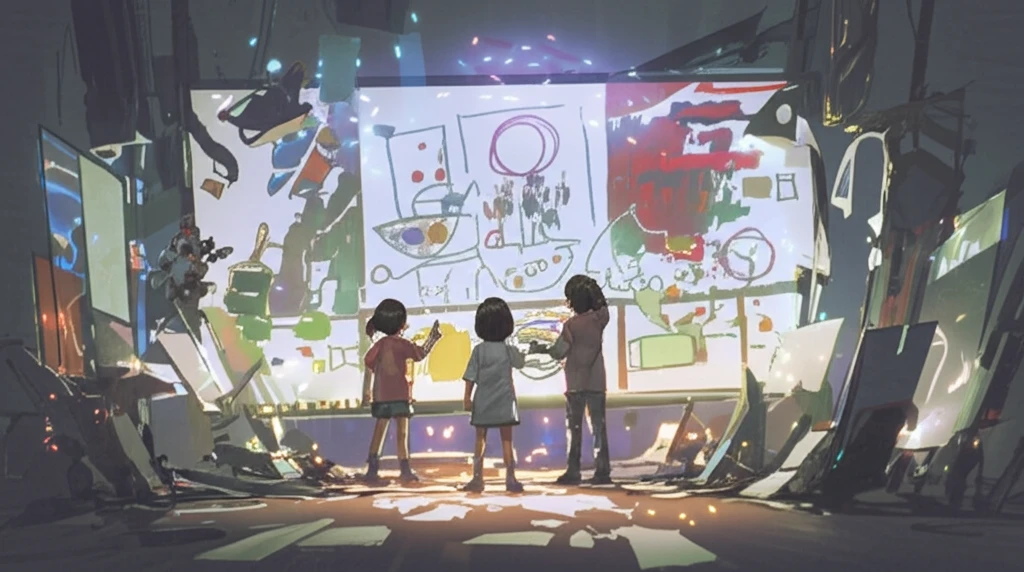
Children collaborating on digital art

Unlock Your Child's Potential: How Tech and Arts Combine for Creative Learning

"Explore how integrating technology and arts-based activities can boost creativity and learning in young children, preparing them for a dynamic future."


In today's rapidly evolving world, fostering creativity in young children is more vital than ever. Early childhood teachers play a crucial role in providing varied opportunities that engage children in creative experiences. As technology becomes increasingly integrated into our daily lives, it offers a powerful vehicle for nurturing children's creativity and enhancing arts-based teaching and learning.

This article explores how technology and interactive media can be strategically used to promote creativity and arts-based learning in young children. By aligning technology with key ideas from early childhood theories and developmentally appropriate practices, educators and parents can unlock a world of possibilities for young learners.

We'll delve into practical technology-based teaching strategies, explore essential tools and materials, and highlight interdisciplinary creative experiences that seamlessly blend technology and the arts. Prepare to discover how to transform learning and empower the next generation of innovators.

Why Combine Technology and Arts? Unlocking Creativity in Young Minds

Children collaborating on digital art

Imagine a classroom where children are not just passively consuming information, but actively creating, exploring, and expressing themselves. This is the power of combining technology and the arts. Technology offers dynamic platforms for children to manipulate, experiment, and bring their creative visions to life.

Consider the example of Braden, a six-year-old using an iPad app to write words. The sparkly, colorful display ignites his imagination, while his teacher guides him to manipulate sounds and create new words. This interactive experience transforms learning into an exciting adventure, fostering both literacy and creativity.

  • Enhanced Engagement: Interactive media captivates children's attention and encourages active participation.
  • Personalized Learning: Technology allows for customized learning experiences that cater to individual needs and interests.
  • Expanded Creative Expression: Digital tools provide a wider range of options for artistic creation, from digital painting to music composition.
  • Development of 21st-Century Skills: Integrating technology prepares children for a future where digital literacy and creative problem-solving are essential.
As McManis and Gunnewig (2012) emphasize, educational technology plays a significant role in children's learning when it is grounded in research, child development theory, and developmentally appropriate practices. By intentionally using technology to align with curriculum goals, educators can help children achieve remarkable outcomes.

Empowering the Future: A Call to Action for Creative Learning

The integration of technology and interactive media holds immense potential for unlocking creativity and transforming arts-based learning in young children. By embracing these tools and strategies, educators and parents can empower children to become innovative thinkers, problem-solvers, and creators. Let’s ensure that every child has the opportunity to explore their creative potential and thrive in the digital age.

About this Article -

This article was crafted using a human-AI hybrid and collaborative approach. AI assisted our team with initial drafting, research insights, identifying key questions, and image generation. Our human editors guided topic selection, defined the angle, structured the content, ensured factual accuracy and relevance, refined the tone, and conducted thorough editing to deliver helpful, high-quality information.See our About page for more information.

This article is based on research published under:

DOI-LINK: 10.1007/978-94-017-9184-7_4, Alternate LINK

Title: Teaching With Technology And Interactive Media To Promote Creativity And Arts-Based Learning In Young Children

Journal: Young Children and Families in the Information Age

Publisher: Springer Netherlands

Authors: Deanna M. Laverick

Published: 2014-12-06

Everything You Need To Know

1

How does combining technology with arts-based activities enhance a child's learning experience?

Combining technology and arts allows children to actively create, explore, and express themselves rather than passively consuming information. Technology provides dynamic platforms for manipulation and experimentation, enabling children to bring their creative visions to life. For example, using an iPad app for writing words can ignite a child's imagination through colorful displays and interactive manipulation of sounds.

2

What role do research and child development theory play in the effective integration of educational technology, according to McManis and Gunnewig?

Educational technology significantly impacts children's learning when grounded in research, child development theory, and developmentally appropriate practices, as emphasized by McManis and Gunnewig (2012). Intentionally aligning technology with curriculum goals helps children achieve remarkable outcomes. However, the text doesn't detail specific research or theories; it generally advocates for thoughtful integration based on established principles.

3

What are the key benefits of integrating technology and arts for young children's creative development and skill-building?

Integrating technology and arts enhances engagement by captivating children's attention and encouraging active participation. It also allows for personalized learning experiences that cater to individual needs and interests. Furthermore, digital tools expand the options for artistic creation, from digital painting to music composition, fostering the development of essential 21st-century skills like digital literacy and creative problem-solving.

4

What are the concrete strategies educators and parents can employ to effectively promote creativity and arts-based learning through technology?

To promote creativity and arts-based learning, educators and parents can strategically use technology and interactive media. This involves creating opportunities for children to manipulate and experiment with digital tools, providing guidance and support, and aligning technology use with curriculum goals. The text emphasizes the importance of intentional integration, although specific strategies beyond the iPad example aren't thoroughly detailed. It opens possibilities for further examples like coding for art or digital storytelling.

5

What potential long-term societal benefits can arise from the integration of technology and arts in early childhood education?

The integration of technology and arts holds immense potential for fostering innovative thinkers, problem-solvers, and creators. By embracing these tools and strategies, children can explore their creative potential and thrive in the digital age. While the text doesn't explicitly detail the long-term societal implications, the implied benefit is a more creatively capable and digitally literate future workforce, but would need more examples and theories to create a robust understanding.

Newsletter Subscribe

Subscribe to get the latest articles and insights directly in your inbox.