
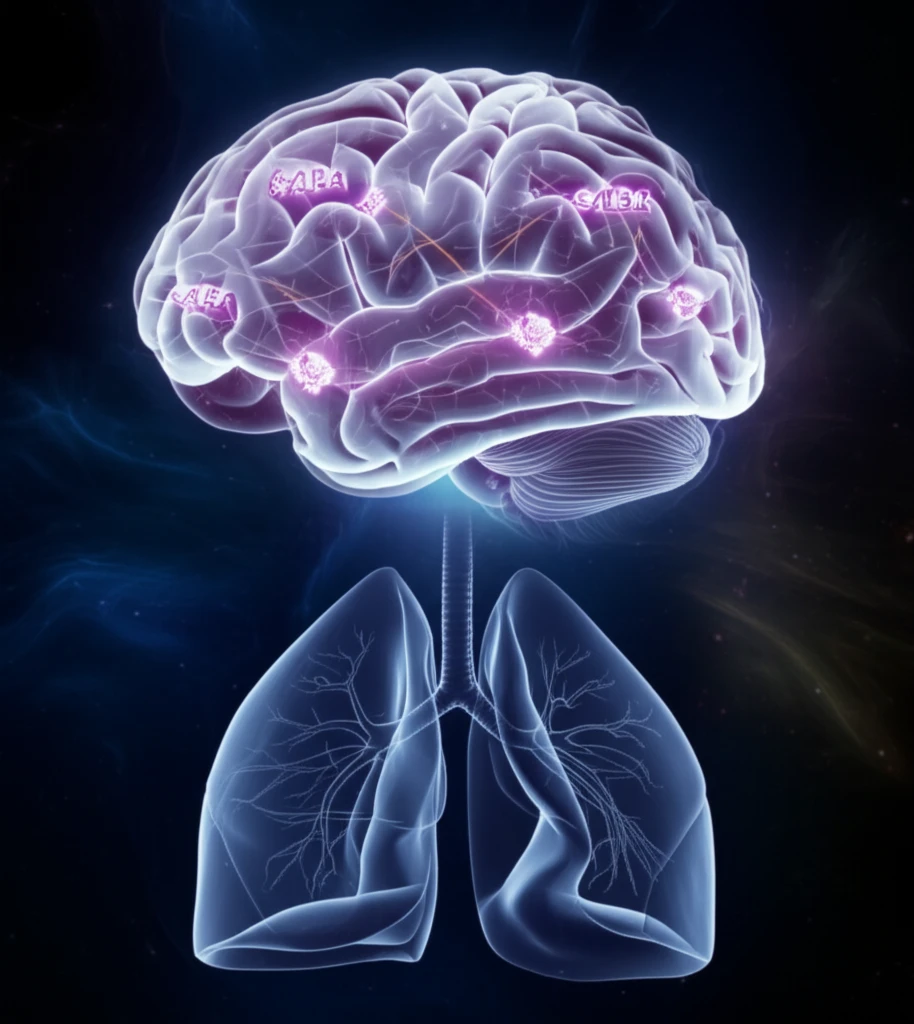
Brain with glowing GABA receptors controlling lung rhythm.

Unlock Your Breath: How GABA Receptors Impact Your Respiratory Rhythm

"Exploring the Role of GABA Receptors in the Parafacial Respiratory Group for Better Breathing"


Breathing, a process often taken for granted, is meticulously controlled by various regions within the brain. Among these is the parafacial respiratory group (pFRG), a cluster of neurons located in the brainstem. This area plays a crucial role in generating and regulating our respiratory rhythm.

Within the pFRG, different neurotransmitters, including GABA (gamma-aminobutyric acid), exert their influence. GABA, known for its inhibitory effects, helps to fine-tune the activity of neurons involved in respiration. Understanding how GABA receptors in the pFRG contribute to respiratory control is essential for gaining insights into respiratory disorders and potential therapeutic interventions.

Recent research has delved into the specific role of GABA receptors within the pFRG of rats, shedding light on how these receptors modulate respiratory rate and pattern. By examining the effects of both activating and blocking GABA receptors, scientists are uncovering the intricacies of GABAergic inhibition in this vital brain region.

GABA's Impact on Respiratory Control: What the Rat Studies Reveal

Brain with glowing GABA receptors controlling lung rhythm.

A study published in the "Bulletin of Experimental Biology and Medicine" investigated the impact of GABA receptors in the pFRG on respiratory control in rats. The researchers used microinjections of muscimol (a GABA agonist, which activates GABA receptors) and bicuculline (a GABA antagonist, which blocks GABA receptors) directly into the pFRG of narcotized mature rats.

Here's a breakdown of what the study found:

  • Activating GABA Receptors (Muscimol): When muscimol was injected, the rats exhibited inhibited external respiration. This meant diminished tidal volume (the amount of air inhaled and exhaled with each breath) and a decreased respiration rate. The researchers also observed prolonged inspiration, expiration, and intervals between inspiratory bursts in the phrenic electromyogram (EMG), which measures the electrical activity of the diaphragm.
  • Blocking GABA Receptors (Bicuculline): Conversely, when bicuculline was injected, it stimulated respiration, leading to a marked increase in volumetric parameters. While it affected the expiratory phase and interburst intervals in the phrenic EMG, it did not significantly alter the respiration rate.
These findings suggest that GABA-mediated inhibition plays a significant role in the functioning of the pFRG. The study highlights that GABA receptors are not just involved in regulating the speed of breathing but also in shaping the overall pattern of respiration and the motor outputs that originate from the pFRG.

The Bigger Picture: GABA Receptors and Your Respiratory Health

The research on GABA receptors in the pFRG provides valuable insights into the complex mechanisms that govern our breathing. While this study was conducted on rats, the fundamental principles of respiratory control are often conserved across species, including humans.

Understanding the role of GABA in respiratory regulation opens doors to potential therapeutic interventions for respiratory disorders. For example, targeting GABA receptors could be a strategy for managing conditions characterized by abnormal breathing patterns.

Further research is needed to fully elucidate the implications of GABAergic modulation in the pFRG for human respiratory health. However, these initial findings underscore the importance of GABA receptors as key players in the intricate symphony of breathing.

About this Article -

This article was crafted using a human-AI hybrid and collaborative approach. AI assisted our team with initial drafting, research insights, identifying key questions, and image generation. Our human editors guided topic selection, defined the angle, structured the content, ensured factual accuracy and relevance, refined the tone, and conducted thorough editing to deliver helpful, high-quality information.See our About page for more information.

This article is based on research published under:

DOI-LINK: 10.1007/s10517-018-4248-x, Alternate LINK

Title: Role Of Gabaa Receptors Of Parafacial Respiratory Group In Control Of Respiration In Rats

Subject: General Biochemistry, Genetics and Molecular Biology

Journal: Bulletin of Experimental Biology and Medicine

Publisher: Springer Science and Business Media LLC

Authors: O. A. Vedyasova, T. E. Kovaleva

Published: 2018-10-01

Everything You Need To Know

1

What is the parafacial respiratory group (pFRG) and what does it do?

The parafacial respiratory group (pFRG) is a cluster of neurons located in the brainstem. It plays a vital role in generating and regulating our respiratory rhythm. Within the pFRG, neurotransmitters like GABA influence the activity of neurons involved in respiration, helping to fine-tune the breathing process.

2

What is GABA, and how does it affect breathing?

GABA, or gamma-aminobutyric acid, is a neurotransmitter known for its inhibitory effects. In the context of breathing, GABA helps to fine-tune the activity of neurons within the parafacial respiratory group (pFRG). By activating or blocking GABA receptors in the pFRG, the respiratory rate and pattern can be modulated.

3

What did the rat studies reveal about how GABA receptors in the parafacial respiratory group (pFRG) affect breathing?

Research involving rats has shown that activating GABA receptors in the parafacial respiratory group (pFRG) with muscimol leads to inhibited external respiration, diminished tidal volume, and a decreased respiration rate. Conversely, blocking GABA receptors with bicuculline stimulates respiration and increases volumetric parameters. These experiments demonstrate that GABA-mediated inhibition significantly shapes both the speed and pattern of respiration.

4

What is the difference between muscimol and bicuculline, and what effects do they have on breathing when injected into the parafacial respiratory group (pFRG)?

Muscimol is a GABA agonist, meaning it activates GABA receptors. When microinjected into the parafacial respiratory group (pFRG) of rats, muscimol inhibits external respiration, decreasing both the amount of air inhaled and exhaled with each breath (tidal volume) and the overall respiration rate. Bicuculline, on the other hand, is a GABA antagonist, meaning it blocks GABA receptors. Injecting bicuculline into the pFRG stimulates respiration and increases volumetric parameters.

5

What aspects of respiratory control were not addressed in the GABA receptor study on the parafacial respiratory group (pFRG)?

The study focused on the role of GABA receptors in the parafacial respiratory group (pFRG) and their impact on breathing. It did not explore the influence of other brain regions or neurotransmitters involved in respiratory control, such as the preBötzinger complex or the role of other neurotransmitters like glutamate. Future research could investigate how these different elements interact to provide a more complete picture of respiratory regulation and potential therapeutic targets for respiratory disorders.

Newsletter Subscribe

Subscribe to get the latest articles and insights directly in your inbox.