
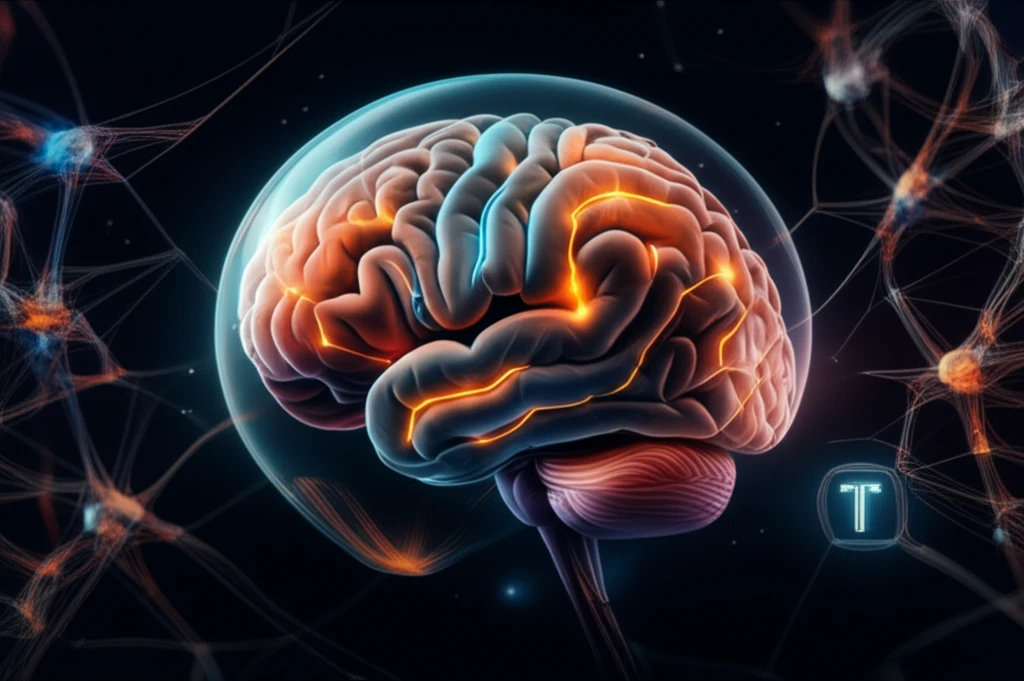
Stylized brain protected by a bubble, representing protection against oxidative stress.

Unlock Your Brain's Potential: How to Combat Oxidative Stress for Enhanced Neuroendocrine Function

"Discover the critical link between oxidative stress, a key protein called SELENOT, and how activating a specific pathway can boost your brain's resilience and overall health."


In the intricate world of cell differentiation, various signals guide precursor cells toward specialized roles. Among these signals, pituitary adenylate cyclase-activating polypeptide (PACAP) plays a crucial role. PACAP, acting through cAMP stimulation, influences the fate of sympathoadrenal (SA) precursors, steering them towards distinct cell phenotypes by promoting both their survival and specialization.

A key player in this process is Selenoprotein T (SELENOT), an ER oxidoreductase stimulated by PACAP. SELENOT exhibits significant antioxidant activity, with its increased presence closely tied to the differentiation of SA cells. This raises a crucial question: How does PACAP/cAMP trigger SELENOT gene transcription to facilitate this essential cell conversion?

New research sheds light on this process, uncovering an unexpected connection to mitochondrial function. The study reveals how PACAP/cAMP leverages a pathway traditionally associated with energy regulation to drive SELENOT gene transcription and enhance antioxidant defenses during PC12 cell differentiation. This discovery highlights a previously unappreciated link between cellular energy, oxidative stress, and the factors that promote specialized cell function in the nervous system.

The SELENOT Connection: Why It's Essential for Brain Health

Stylized brain protected by a bubble, representing protection against oxidative stress.

Oxidative stress, an imbalance between free radical production and the body's ability to neutralize them, is a major threat to neuronal and neuroendocrine cells. High metabolic rates and intense functional activity lead to the increased risk of oxidative stress.

SELENOT, an antioxidant protein residing in the endoplasmic reticulum (ER), emerges as a critical defense mechanism. Scientific investigations confirm SELENOT's vital role in maintaining redox homeostasis and shielding cells from ER and oxidative stresses. This protection extends to neuroendocrine and endocrine cells, ensuring proper calcium storage, protein glycosylation, and hormone production.

  • Maintains redox homeostasis.
  • Protects against ER and oxidative stresses.
  • Ensures proper calcium storage and hormone production.
  • Shields cells from metabolic-related stress.
When SELENOT is deficient, cells become vulnerable. Studies show increased ROS levels, reduced cell viability, and impaired neuroendocrine differentiation. This underscores SELENOT's importance in preserving cellular health and enabling cells to fulfill their specialized functions.

The Road Ahead: Harnessing the Power of SELENOT

These findings open new avenues for therapeutic interventions aimed at bolstering brain health and resilience. By understanding the intricate interplay between PACAP, SELENOT, and mitochondrial function, scientists can develop targeted strategies to mitigate oxidative stress and promote neuroendocrine cell differentiation.

Further research into SELENOT's mechanisms of action holds immense potential for combating neurodegenerative diseases and age-related cognitive decline. Strategies that enhance SELENOT expression or activity could provide a powerful means of safeguarding vulnerable neurons and preserving optimal brain function throughout life.

This research marks a significant step forward in understanding the complex processes that govern brain health. By targeting the AMPK-PGC-1α/NRF-1 pathway and its influence on SELENOT, we may unlock new ways to protect our brains from the damaging effects of oxidative stress and promote healthy aging.

About this Article -

This article was crafted using a human-AI hybrid and collaborative approach. AI assisted our team with initial drafting, research insights, identifying key questions, and image generation. Our human editors guided topic selection, defined the angle, structured the content, ensured factual accuracy and relevance, refined the tone, and conducted thorough editing to deliver helpful, high-quality information.See our About page for more information.

Everything You Need To Know

1

What is oxidative stress and why is it important?

Oxidative stress is an imbalance where the body can't neutralize free radicals, threatening neuronal and neuroendocrine cells. It's a major factor in reduced brain health. High metabolic rates and functional activity in these cells increase this risk. Managing oxidative stress is key for brain cell protection and enhanced neuroendocrine function.

2

What does SELENOT do and why is it essential?

SELENOT, or Selenoprotein T, is an antioxidant protein within the endoplasmic reticulum (ER). It acts as a defense mechanism, protecting cells from ER and oxidative stresses. It helps maintain redox homeostasis and ensures essential functions like proper calcium storage, protein glycosylation, and hormone production. When SELENOT is deficient, cells become vulnerable, leading to increased ROS levels and impaired differentiation.

3

How does PACAP influence cell differentiation?

PACAP (pituitary adenylate cyclase-activating polypeptide) plays a crucial role in cell differentiation, particularly in sympathoadrenal (SA) precursors. It influences these cells through cAMP stimulation, promoting their survival and specialization. This involves activating SELENOT, an ER oxidoreductase, which in turn boosts antioxidant defenses, highlighting the connection between cell differentiation and protection against oxidative stress.

4

What is the relationship between PACAP/cAMP, SELENOT, and mitochondrial function?

The connection between PACAP/cAMP, SELENOT, and mitochondrial function is a newly discovered pathway. PACAP/cAMP leverages a pathway traditionally associated with energy regulation to trigger SELENOT gene transcription. This, in turn, enhances antioxidant defenses during PC12 cell differentiation. This finding reveals a significant link between cellular energy, oxidative stress, and factors that promote specialized cell function within the nervous system.

5

How can the knowledge of these concepts be used therapeutically?

Understanding the interplay between PACAP, SELENOT, and mitochondrial function offers new ways to boost brain health. This knowledge could lead to therapies that reduce oxidative stress and support neuroendocrine cell differentiation. Targeting these pathways could provide strategies to protect brain cells and improve overall brain function. This approach focuses on enhancing the natural defenses of the brain against stress and damage.

Newsletter Subscribe

Subscribe to get the latest articles and insights directly in your inbox.