
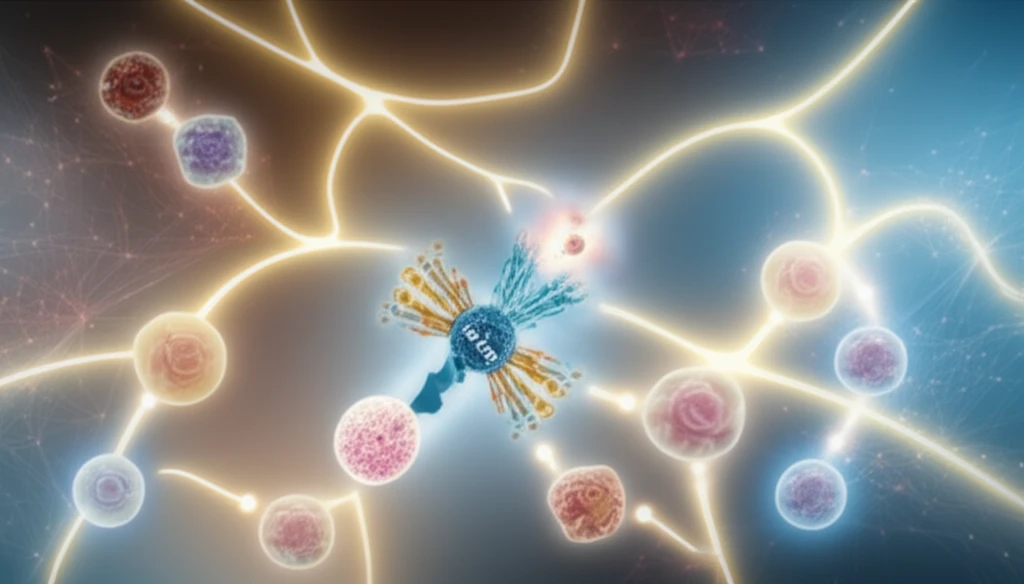
Protegrin-1 activating immune pathways in the gut.

Unlock Your Body's Potential: How Protegrin-1 Supercharges Your Immune System

"Discover the groundbreaking research revealing how Protegrin-1, a natural antimicrobial peptide, boosts cellular defense and could revolutionize treatment for inflammatory conditions."


The rise of antibiotic resistance is a major global health threat, demanding innovative solutions. Antimicrobial peptides (AMPs) are emerging as a promising alternative. Protegrin-1, a unique AMP found in pigs, has potent antibacterial properties, but its role in modulating the immune system has remained largely unexplored. Recent research sheds light on this exciting new function.

This article explores groundbreaking findings on how Protegrin-1 (specifically, its mature form, mPG-1) enhances innate cellular defense. We'll delve into the study's key findings, revealing how mPG-1 stimulates intestinal cell migration, alters gene expression related to cell movement, and boosts the production of pro-inflammatory cytokines and immune-related factors. This suggests mPG-1 could be a key player in treating infections and immune disorders.

Most importantly, we'll uncover the mechanism behind mPG-1's action, revealing its activation of the insulin-like growth factor 1 receptor (IGF1R) and how this interaction modulates immune activity and cell migration. This novel function and associated pathway suggest exciting therapeutic potential, particularly for gastrointestinal conditions like inflammatory bowel syndrome (IBS).

Protegrin-1: More Than Just an Antibacterial

Protegrin-1 activating immune pathways in the gut.

Traditionally, AMPs like Protegrin-1 were primarily recognized for their direct antibacterial action, disrupting bacterial cell membranes. However, the latest research indicates a far more complex role. Scientists are now understanding that these peptides actively participate in the body's broader immune response. This is especially important because, unlike conventional antibiotics that target specific bacterial enzymes (leading to resistance), Protegrin-1 acts through a physical mechanism, making it harder for bacteria to develop resistance.

The study detailed here focused on intestinal porcine enterocytes (IPEC-J2 cells) to understand how mPG-1 impacts cell migration – a critical process in wound healing and preventing pathogen spread in the gut. The results were compelling: mPG-1 significantly stimulated cell migration in a dose-dependent manner. This enhancement was directly linked to altered gene expression associated with cell movement and increased production of key inflammatory signals.

Here's a summary of the key effects observed:
  • Stimulated Intestinal Cell Migration: mPG-1 promotes the movement of intestinal cells, essential for tissue repair.
  • Altered Gene Expression: Affects genes linked to cell migration, boosting healing and defense.
  • Increased Cytokine Production: Enhances pro-inflammatory signals, crucial for immune response.
The real breakthrough came in understanding how mPG-1 achieved these effects. Researchers discovered that mPG-1 activates the insulin-like growth factor 1 receptor (IGF1R). By blocking IGF1R with specific inhibitors, they demonstrated that mPG-1's immune activity and cell migration effects were significantly reduced. This pinpointed IGF1R as a key pathway through which mPG-1 exerts its influence.

The Future of Protegrin-1: A New Era in Immunotherapy?

This research opens exciting new avenues for therapeutic intervention. The discovery that mPG-1 activates the IGF1R pathway to modulate immune activity and cell migration suggests its potential use in treating a range of disorders, especially those affecting the gastrointestinal tract.

Imagine a future where mPG-1 is used to: Accelerate healing in the gut after surgery or injury. Reduce inflammation in individuals with IBD, offering a more natural and targeted approach. Boost the body's natural defenses against infection, reducing reliance on traditional antibiotics.

While further research is needed to fully understand the therapeutic potential of mPG-1, this study provides a compelling foundation for future investigations. By harnessing the power of natural antimicrobial peptides like Protegrin-1, we may unlock innovative solutions to combat antibiotic resistance and revolutionize the treatment of immune-related disorders.

About this Article -

This article was crafted using a human-AI hybrid and collaborative approach. AI assisted our team with initial drafting, research insights, identifying key questions, and image generation. Our human editors guided topic selection, defined the angle, structured the content, ensured factual accuracy and relevance, refined the tone, and conducted thorough editing to deliver helpful, high-quality information.See our About page for more information.

This article is based on research published under:

DOI-LINK: 10.3389/fcimb.2018.00331, Alternate LINK

Title: Protegrin 1 Enhances Innate Cellular Defense Via The Insulin-Like Growth Factor 1 Receptor Pathway

Subject: Infectious Diseases

Journal: Frontiers in Cellular and Infection Microbiology

Publisher: Frontiers Media SA

Authors: Jenna Penney, Julang Li

Published: 2018-09-28

Everything You Need To Know

1

What is Protegrin-1, and how does it contribute to the body's defense mechanisms?

Protegrin-1, particularly its mature form mPG-1, is a natural antimicrobial peptide (AMP) found in pigs. While AMPs were initially known for their direct antibacterial action, Protegrin-1 has now been shown to have a more complex role in modulating the immune system and enhancing cellular defense. It achieves this by stimulating intestinal cell migration, altering gene expression related to cell movement, and boosting the production of pro-inflammatory cytokines and immune-related factors.

2

How does Protegrin-1 (mPG-1) activate the insulin-like growth factor 1 receptor (IGF1R), and why is this interaction important?

The research discovered that mPG-1 activates the insulin-like growth factor 1 receptor (IGF1R). This activation is crucial because blocking IGF1R significantly reduces mPG-1's immune activity and cell migration effects. This finding pinpoints the IGF1R pathway as a key mechanism through which mPG-1 exerts its influence on the body's immune response. The study used intestinal porcine enterocytes (IPEC-J2 cells) to understand how mPG-1 impacts cell migration, a critical process in wound healing and preventing pathogen spread in the gut.

3

What are the potential therapeutic applications of Protegrin-1, especially concerning gastrointestinal disorders?

The discovery that mPG-1 activates the IGF1R pathway to modulate immune activity and cell migration suggests its potential therapeutic use in treating a range of disorders, especially those affecting the gastrointestinal tract, such as inflammatory bowel syndrome (IBS). By understanding how mPG-1 influences the immune system, researchers can develop targeted therapies that harness its properties to combat infections, promote tissue repair, and manage immune-related conditions. Further research is needed to explore its full potential and safety for clinical applications.

4

How does Protegrin-1 differ from traditional antibiotics in terms of its mechanism and the development of resistance?

Protegrin-1 stands out from traditional antibiotics primarily due to its mechanism of action. While antibiotics typically target specific bacterial enzymes, leading to resistance over time, Protegrin-1 acts through a physical mechanism, disrupting bacterial cell membranes directly. This makes it harder for bacteria to develop resistance against it. Additionally, Protegrin-1's role in modulating the immune system offers a broader approach to combating infections compared to the narrow focus of conventional antibiotics.

5

What specific effects does Protegrin-1 have on intestinal cells and the immune response in the gut?

Protegrin-1 stimulates intestinal cell migration, which is essential for tissue repair and preventing pathogen spread in the gut. It also alters gene expression associated with cell movement, further boosting healing and defense mechanisms. Additionally, Protegrin-1 enhances the production of pro-inflammatory signals (cytokines), which are crucial for mounting an effective immune response against infections. These combined effects highlight Protegrin-1's significant role in promoting gut health and overall immune function. The study examined how mPG-1 impacts cell migration – a critical process in wound healing.

Newsletter Subscribe

Subscribe to get the latest articles and insights directly in your inbox.