
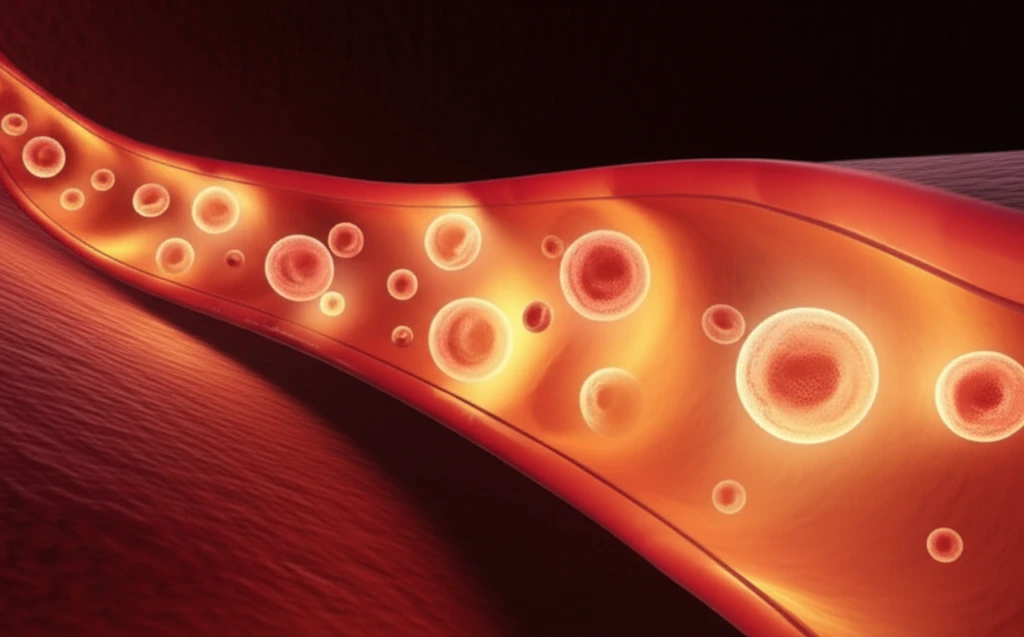
Unlock Your Body's Potential: How GM-CSF Can Mobilize Stem Cells for Healing

"Discover the groundbreaking research on GM-CSF and its ability to mobilize mesenchymal stem cells for regenerative medicine, offering new hope for tissue repair and recovery."
Our bodies possess an incredible ability to heal and regenerate, and at the heart of this lies stem cells. These remarkable cells have the potential to develop into many different cell types in the body, serving as a sort of internal repair system. Now, imagine if we could boost the body's natural healing process by mobilizing these stem cells to areas where they're most needed. That's the exciting potential behind new research exploring the role of Granulocyte-Macrophage Colony-Stimulating Factor (GM-CSF) in mobilizing mesenchymal stem cells (MSCs).
Mesenchymal stem cells (MSCs) are adult stem cells that have garnered attention for their regenerative capabilities. Researchers and clinicians are eager to utilize them for therapeutic interventions due to their capacity to modulate immune responses, reduce inflammation, and aid in tissue repair. MSCs reside in various tissues including bone marrow, adipose tissue and umbilical cord blood, and they stand ready to be deployed to sites of injury or disease.
A study published in the journal Tissue Engineering and Regenerative Medicine, investigates the effect of GM-CSF on the mobilization of MSCs from the bone marrow into the peripheral blood in rats. This research provides insights into how GM-CSF could be used as a tool to enhance the body's natural ability to heal, potentially leading to new therapeutic strategies for a wide range of conditions.
How Does GM-CSF Help Mobilize Stem Cells?
The study was designed to investigate the effects of GM-CSF on the mobilization of mesenchymal stem cells (MSCs) from the bone marrow (BM) into the peripheral blood (PB) in rats. Researchers administered GM-CSF to rats over five consecutive days and collected samples of bone marrow and peripheral blood at various intervals to analyze the presence and activity of MSCs.
- GM-CSF vs. G-CSF: Compared to Granulocyte-Colony Stimulating Factor (G-CSF), another known stimulator of stem cell mobilization, GM-CSF appeared to stimulate higher levels of MSC mobilization from the bone marrow to the peripheral blood.
- Hypoxic and Proteolytic Microenvironment: The study revealed that GM-CSF induced a hypoxic and proteolytic microenvironment in the bone marrow, which is conducive to stem cell mobilization.
- CXCR4's Role: GM-CSF increased the expression of C-X-C chemokine receptor type 4 (CXCR4) in the bone marrow, a receptor known to play a crucial role in stem cell migration. In vitro experiments further demonstrated that GM-CSF increased CXCR4 expression and cell migration in a dose-dependent manner.
- SDF-1 Interaction: The study also highlighted the involvement of the SDF-1-CXCR4 interaction in the mechanism of GM-CSF-induced MSC mobilization. When CXCR4 expression was reduced using siRNA, the migration of MSCs induced by GM-CSF and G-CSF was significantly reduced.
The Future of Healing: Harnessing GM-CSF for Regenerative Therapies
The findings of this study suggest that GM-CSF holds promise as a therapeutic tool for mobilizing bone marrow MSCs into the peripheral blood. By understanding the mechanisms through which GM-CSF influences stem cell mobilization, researchers can develop targeted strategies to enhance tissue repair and regeneration. While further research is needed to fully elucidate the potential of GM-CSF in regenerative medicine, this study offers a valuable step forward in unlocking the body's own healing capabilities.