
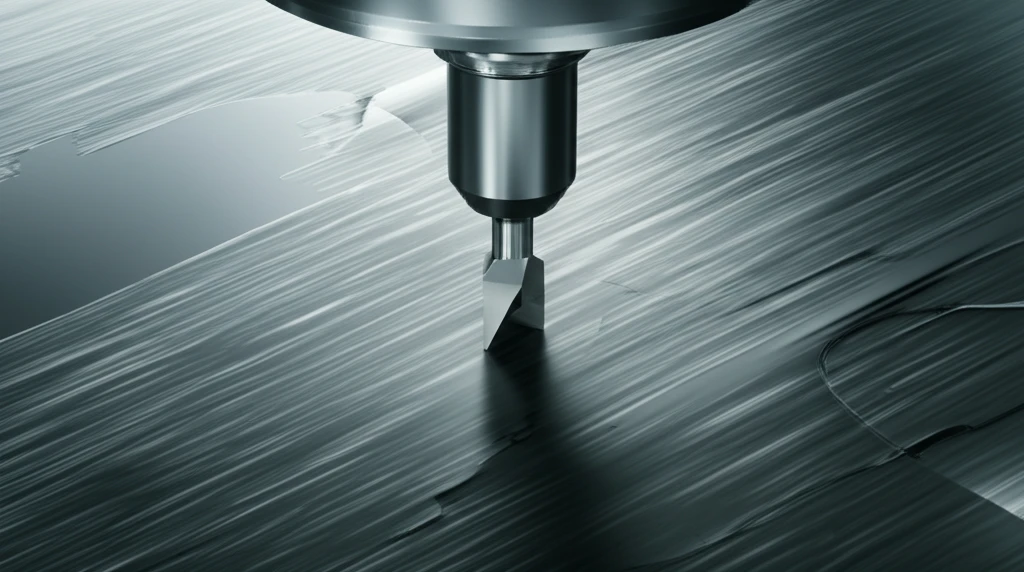
Microscopic view of metal machining process.

Unlock the Secrets to Perfect Metal Finishing: A Comprehensive Guide to Cutting Conditions

"Dive into the science of surface quality and discover how mastering cutting conditions can transform your metal products."


In today's manufacturing landscape, the reliability and longevity of machined components are paramount. Achieving superior surface quality is no longer just about aesthetics; it's a critical factor that directly influences a product's performance in demanding engineering applications. Think of it as the skin of your product – if it's flawed, the underlying structure is vulnerable.

Surface quality is a multifaceted characteristic, influenced by numerous factors including cutting conditions, tool material, and the inevitable wear and tear on tools. Imperfections like feed marks, material deposits, cracks, and burrs can compromise the integrity of a machined part, making precise control over machining processes essential. Like a skilled artist meticulously refining their work, manufacturers must carefully manage each parameter to achieve the desired outcome.

One particularly challenging aspect is the formation of burrs—those unwanted edges that appear on workpieces. Burrs not only affect the dimensional accuracy of products but also necessitate secondary de-burring operations, adding time and cost to the manufacturing process. Imagine trying to assemble a puzzle with pieces that have jagged edges; the fit will never be perfect. Controlling burrs is, therefore, a key focus in precision machining, akin to a surgeon’s precision in the operating room.

How Do Cutting Speeds and Feed Rates Affect Surface Quality?

Microscopic view of metal machining process.

Recent research has shed light on the intricate relationship between cutting parameters and surface quality in high-speed machining (HSM). A study focusing on titanium alloys—materials widely used in aerospace and medical industries due to their high strength-to-weight ratio and corrosion resistance—revealed some surprising insights. The researchers explored the effects of cutting speed and feed rate on the surface and subsurface quality of titanium alloy Ti-6Al-4V during dry end milling, a process where no liquid coolants are used.

The study employed PVD-coated carbide tools under varying cutting speeds and feed rates to machine the titanium alloy. The resulting surfaces were then meticulously examined using scanning electron microscopy (SEM) to assess their quality and identify any alterations in the subsurface and edges. This is akin to a forensic investigation, where every detail is scrutinized to uncover the truth.

Here’s what the research uncovered:
  • Higher Speeds, Better Finish: Surprisingly, better surface quality was achieved at higher cutting speeds and feed rates. This challenges conventional wisdom, which might suggest that slower speeds result in finer finishes.
  • The Downside of Worn Tools: Using worn tools in high-speed dry end milling led to plastic deformation of the alloy, resulting in the formation of lamellae (thin layers) on the surface and, consequently, a poorer surface finish.
  • Uniform Wear is Key: Worn tools with uniform wear patterns produced better surface quality compared to those with chipping and flaking on the cutting edge. This highlights the importance of maintaining tool integrity.
  • Tool Wear and Edge Damage: Tool wear was identified as a significant factor contributing to damage on the entry and exit edges of the workpiece.
  • Subsurface Alterations: Worn tools increased subsurface alterations, leading to a 45% increase in plastic deformation compared to using new tools.
These findings underscore the delicate balance between cutting parameters, tool condition, and the resulting surface quality. It’s not enough to simply increase cutting speeds; manufacturers must also closely monitor tool wear and ensure uniform tool degradation to achieve optimal results. The research highlights that what might seem counterintuitive—higher speeds leading to better finishes—can indeed be true under specific conditions.

Mastering the Art of Metal Machining

The quest for perfect metal finishing is an ongoing journey. By understanding the intricate interplay between cutting conditions, tool wear, and material properties, manufacturers can unlock new levels of precision and reliability in their products. As technology advances, continued research and experimentation will undoubtedly reveal even more nuanced techniques for achieving flawless surfaces. The key takeaway? Never underestimate the power of a well-tuned cutting process.

About this Article -

This article was crafted using a human-AI hybrid and collaborative approach. AI assisted our team with initial drafting, research insights, identifying key questions, and image generation. Our human editors guided topic selection, defined the angle, structured the content, ensured factual accuracy and relevance, refined the tone, and conducted thorough editing to deliver helpful, high-quality information.See our About page for more information.

Everything You Need To Know

1

How do cutting speeds and feed rates specifically impact the surface quality of metal components during machining?

Cutting speeds and feed rates have a significant impact. Research indicates that higher cutting speeds and feed rates can surprisingly lead to better surface quality under specific conditions. However, this is contingent on other factors, especially tool condition. Using worn tools, even at high speeds, can result in plastic deformation of the metal, leading to the formation of lamellae and a poorer surface finish. It's a balancing act, where optimizing both parameters is crucial for achieving the desired surface quality, especially when machining materials like titanium alloy Ti-6Al-4V.

2

What role does tool wear play in determining the final surface finish of machined metal parts, and how can its effects be minimized?

Tool wear is a critical factor influencing surface quality. Worn tools, especially in high-speed dry end milling, can lead to plastic deformation and subsurface alterations, increasing plastic deformation significantly compared to new tools. To minimize these effects, it's essential to monitor tool wear closely and ensure uniform tool degradation. Tools with uniform wear patterns tend to produce better surface quality than those with chipping or flaking. Consistent tool maintenance and timely replacement are essential. Further research into advanced tool materials and coatings could also mitigate the impact of tool wear.

3

What are burrs, and why is controlling their formation important in metal finishing processes?

Burrs are unwanted edges that form on workpieces during machining. Controlling their formation is important because they affect the dimensional accuracy of products and necessitate secondary de-burring operations, adding both time and cost to the manufacturing process. If burrs are not controlled, the fit will never be perfect. Strategies like optimizing cutting parameters, selecting appropriate tool geometries, and applying advanced machining techniques can help minimize burr formation and streamline the manufacturing workflow.

4

The study mentioned the use of PVD-coated carbide tools for machining titanium alloys. Why are these specific tools and coatings important, and what advantages do they offer?

PVD-coated carbide tools are important due to their hardness and wear resistance, making them suitable for machining hard materials like titanium alloys. The PVD coating enhances the tool's performance by reducing friction and wear, which are critical in high-speed machining. These tools help maintain precision and extend tool life, contributing to better surface quality and overall machining efficiency. Further research into advanced coating materials and methods could lead to even more durable and effective tools for machining challenging materials.

5

How can manufacturers apply the insights from research on cutting conditions, like the study on titanium alloy Ti-6Al-4V, to improve their metal finishing processes and product quality?

Manufacturers can apply these insights by carefully tuning their cutting processes based on the specific material and application. The titanium alloy Ti-6Al-4V research suggests that higher cutting speeds can improve surface finish, but it also highlights the importance of closely monitoring tool wear. Regular inspection, maintenance, and timely replacement of cutting tools are crucial. Experimentation with different cutting parameters and tool materials, along with meticulous examination of the resulting surfaces (perhaps using techniques like scanning electron microscopy (SEM)), can enable manufacturers to optimize their processes for superior surface quality and product performance. Understanding the interplay between cutting conditions, tool wear, and material properties is key to achieving flawless surfaces.

Newsletter Subscribe

Subscribe to get the latest articles and insights directly in your inbox.