
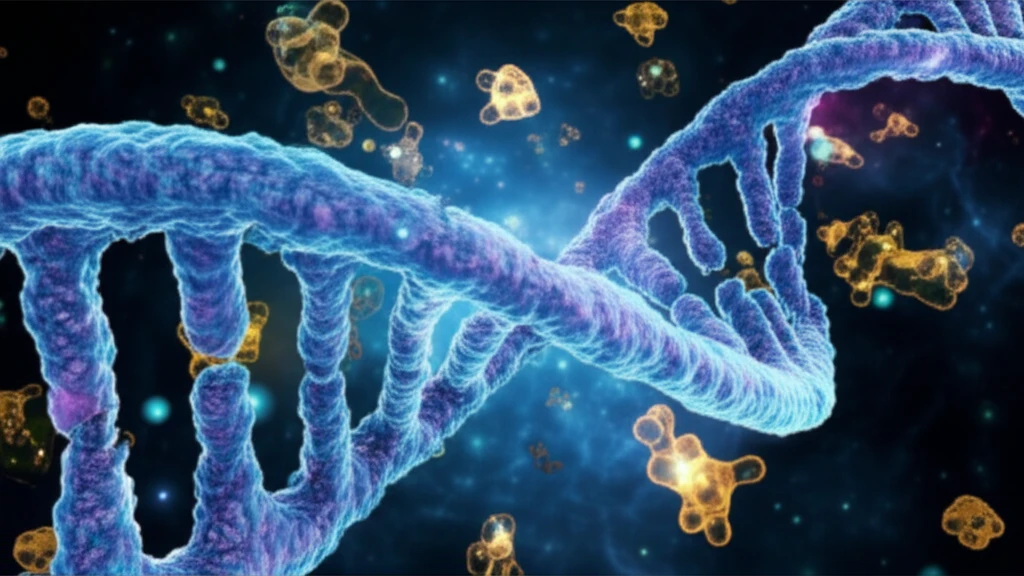
RNA strands intertwined with glowing proteins.

Unlock the Secrets of RNA: A Simplified Guide to CLIP Technology

"Demystifying 3'-Linker Ligation and Size Selection for Cross-Linking Immunoprecipitation"


In the dynamic world of molecular biology, understanding how RNA interacts with proteins is crucial. These interactions play a vital role in countless cellular processes, and disruptions can lead to disease. That's where Cross-Linking Immunoprecipitation (CLIP) comes in—a powerful technique that allows researchers to pinpoint exactly where RNA and proteins meet within a cell.

However, CLIP isn't always straightforward. The process of purifying and analyzing RNA fragments can be complex. Researchers have been working to refine CLIP methods to improve accuracy and efficiency. One such refinement involves a technique called 3'-linker ligation, combined with size selection using SDS-PAGE.

This guide will break down this seemingly complex process, explaining each step in simple terms. We'll explore how 3'-linker ligation and SDS-PAGE size selection enhance CLIP, providing a clearer picture of RNA-protein interactions and ultimately advancing our understanding of cellular mechanisms.

CLIP: A Step-by-Step Simplified Process

RNA strands intertwined with glowing proteins.

CLIP works by essentially taking a snapshot of RNA-protein interactions within living cells. Here's a simplified overview:

  • Cross-linking: Cells are exposed to ultraviolet (UV) light. This causes proteins that are directly interacting with RNA to become covalently bonded (cross-linked) to the RNA.

  • 2. Cell lysis and RNA fragmentation: The cells are broken open (lysed), and the RNA is intentionally broken into smaller fragments using enzymes called RNases. The key is to digest long RNA strands into a manageable size for downstream analysis.
  • 3. Immunoprecipitation: Antibodies, are used to 'fish out' the protein of interest along with any RNA fragments that are cross-linked to it. This is a crucial step to isolate the specific RNA-protein complex you want to study.
  • 4. Linker Ligation: Adding linkers, act as 'adapters', to the ends of the RNA fragments. These adapters are essential for the next step: reverse transcription and PCR amplification.
  • 5. Reverse Transcription and PCR: The RNA fragments are converted into DNA, amplified, and then sequenced. Sequencing reveals the identity of the RNA fragments that were bound to the protein of interest.
While the steps outlined above give the general process for performing CLIP analysis, researchers have enhanced existing CLIP protocols to include 3'-Linker Ligation and Size Selection by SDS-PAGE.

The Future of RNA Research with CLIP

CLIP, especially when refined with techniques like 3'-linker ligation and SDS-PAGE size selection, is a powerful tool for unraveling the complexities of RNA-protein interactions. As technology advances, we can expect even more sophisticated CLIP methods to emerge, providing us with an unprecedented understanding of the role RNA plays in life and disease.

By continuing to refine and apply these techniques, scientists can unlock new therapeutic targets, develop more effective diagnostics, and gain a deeper understanding of the fundamental processes that govern life.

This knowledge could lead to revolutionary treatments for genetic disorders, cancer, infectious diseases, and a host of other conditions, promising a healthier future for all.

About this Article -

This article was crafted using a human-AI hybrid and collaborative approach. AI assisted our team with initial drafting, research insights, identifying key questions, and image generation. Our human editors guided topic selection, defined the angle, structured the content, ensured factual accuracy and relevance, refined the tone, and conducted thorough editing to deliver helpful, high-quality information.See our About page for more information.

This article is based on research published under:

DOI-LINK: 10.1101/pdb.prot097964, Alternate LINK

Title: 3′-Linker Ligation And Size Selection By Sds-Page For Cross-Linking Immunoprecipitation (Clip)

Subject: General Biochemistry, Genetics and Molecular Biology

Journal: Cold Spring Harbor Protocols

Publisher: Cold Spring Harbor Laboratory

Authors: Jennifer C. Darnell, Aldo Mele, Ka Ying Sharon Hung, Robert B. Darnell

Published: 2018-12-01

Everything You Need To Know

1

What is Cross-Linking Immunoprecipitation (CLIP), and why is it important?

Cross-Linking Immunoprecipitation (CLIP) is a powerful technique that helps researchers identify where RNA and proteins interact within a cell. It's important because these interactions are critical for many cellular processes, and any problems with them can lead to diseases. By using CLIP, scientists can see these interactions directly and learn more about how they work, which can lead to new treatments for diseases caused by these interactions.

2

What are the basic steps involved in the CLIP process?

The process of CLIP involves several key steps. First, cells are exposed to UV light to cause cross-linking, where proteins and RNA that are close together become covalently bonded. Then, the cells are broken open (lysed), and the RNA is broken into smaller pieces. After that, antibodies are used to capture the protein of interest along with the RNA fragments attached to it. Linkers are added to the RNA fragments, which are then converted to DNA, amplified, and sequenced. This sequencing step reveals which RNA fragments were bound to the protein.

3

What is 3'-linker ligation, and how does it improve the CLIP method?

3'-linker ligation is a refinement of CLIP. It involves adding linkers, which act as adapters, to the ends of the RNA fragments. These linkers are essential for the following steps: reverse transcription and PCR amplification, which are necessary to analyze the RNA fragments. By using 3'-linker ligation, researchers can improve the efficiency and accuracy of their analysis of RNA-protein interactions.

4

What is the role of SDS-PAGE size selection in CLIP?

SDS-PAGE size selection is another refinement of CLIP. After the RNA fragments are captured, they go through a process called SDS-PAGE size selection, where they are separated by size. This helps to isolate and analyze specific RNA fragments more accurately. The addition of SDS-PAGE size selection combined with 3'-linker ligation enhances the CLIP method, giving a clearer picture of RNA-protein interactions. This ultimately helps in understanding cellular mechanisms.

5

What is the future of RNA research using CLIP?

The future of RNA research, particularly with methods like CLIP, including 3'-linker ligation and SDS-PAGE size selection, is promising. As technology advances, these techniques will allow researchers to gain an even deeper understanding of RNA-protein interactions, which are critical to understanding how cells function and what goes wrong in diseases. This can lead to new discoveries and treatments for diseases.

Newsletter Subscribe

Subscribe to get the latest articles and insights directly in your inbox.