
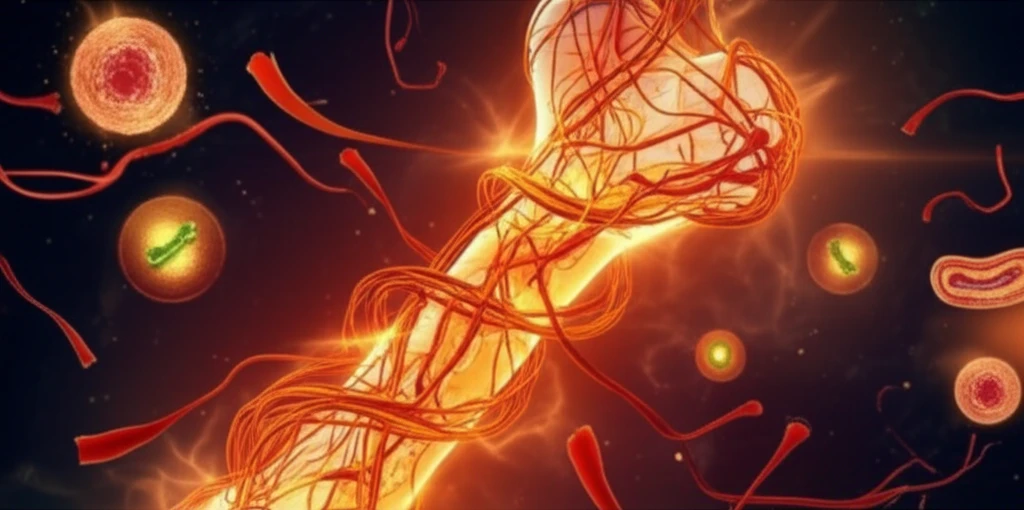
Saffron threads forming a healthy bone, symbolizing crocin's benefits for bone health.

Unlock the Power of Crocin: Your Guide to Bone Health and Beyond

"Discover how this natural compound found in saffron can combat bone dysfunction and boost your overall wellness."


In today's fast-paced world, maintaining optimal health can feel like an uphill battle. Factors like poor diet, stress, and environmental toxins can wreak havoc on our bodies, leading to a variety of health issues. Among these, bone health is often overlooked until problems arise. Conditions like osteoporosis, characterized by weakened bones, can significantly impact your quality of life.

But what if there was a natural way to combat these threats and fortify your bones? Enter crocin, a vibrant carotenoid found in saffron, the world's most expensive spice. Research suggests that crocin isn't just a coloring agent; it's a powerful compound with a range of health benefits, particularly for bone health.

This article dives deep into the science behind crocin, exploring its potential to mitigate bone dysfunction, reduce oxidative stress, and enhance mitochondrial function. We'll break down the complex research, offering you actionable insights to incorporate crocin into your wellness routine and safeguard your bone health.

What is Crocin and How Does It Benefit Bone Health?

Saffron threads forming a healthy bone, symbolizing crocin's benefits for bone health.

Crocin is a naturally occurring chemical compound found in the Crocus Sativus plant, commonly known as saffron. It's responsible for the spice's distinctive color and has been used for centuries in traditional medicine. Modern research is now uncovering the remarkable properties of crocin, particularly its potential to protect against bone diseases.

One of the key ways crocin supports bone health is by combating methylglyoxal (MG), a harmful compound that contributes to bone dysfunction. MG is a byproduct of glucose metabolism and can accumulate in the body, leading to oxidative stress and mitochondrial damage, both of which negatively impact bone health. Crocin helps regulate glyoxalase, an enzyme that breaks down MG, thus reducing its harmful effects.

Here’s a closer look at the specific benefits of crocin for bone health:
  • Reduces Oxidative Stress: Crocin's antioxidant properties help neutralize free radicals, protecting bone cells from damage.
  • Supports Mitochondrial Function: By enhancing mitochondrial function, crocin ensures that bone cells have the energy they need to thrive.
  • Regulates Glyoxalase: Crocin aids in the regulation of glyoxalase, reducing the accumulation of harmful methylglyoxal.
  • Inhibits Bone Resorption: Crocin can inhibit the activity of osteoclasts, cells responsible for breaking down bone tissue, helping to maintain bone density.
  • Promotes Bone Formation: By supporting osteoblast function, crocin aids in the creation of new bone tissue, contributing to stronger bones.
Emerging research indicates that crocin targets key molecular pathways involved in bone health. For example, studies show that crocin can decrease the expression of genes like TNF receptor-associated factor-6 (TRAF6), Akt2, extracellular-signal-regulated kinase-1 (ERK1), osteopetrosis-associated transmembrane protein 1 (OSTM1), and matrix metalloproteinase 9 (MMP-9), all of which play a role in bone remodeling. By modulating these pathways, crocin helps maintain a healthy balance between bone formation and resorption.

Incorporating Crocin into Your Daily Routine

While research on crocin is still ongoing, the existing evidence suggests it's a promising natural compound for supporting bone health and overall wellness. Before making any significant changes to your diet or supplement regimen, it’s essential to consult with your healthcare provider. They can help you determine the right dosage and ensure that crocin is safe and appropriate for your individual needs.

About this Article -

This article was crafted using a human-AI hybrid and collaborative approach. AI assisted our team with initial drafting, research insights, identifying key questions, and image generation. Our human editors guided topic selection, defined the angle, structured the content, ensured factual accuracy and relevance, refined the tone, and conducted thorough editing to deliver helpful, high-quality information.See our About page for more information.

Everything You Need To Know

1

What is Crocin and where does it come from?

Crocin is a natural chemical compound found in saffron, derived from the Crocus Sativus plant. It is responsible for the spice's distinct color and has been used for centuries in traditional medicine. Modern research is now uncovering the remarkable properties of crocin, particularly its potential to protect against bone diseases. It's a vibrant carotenoid.

2

How does Crocin specifically benefit bone health?

Crocin supports bone health through multiple mechanisms. It reduces oxidative stress by neutralizing free radicals, protecting bone cells from damage. It enhances mitochondrial function, ensuring bone cells have the energy they need. Crocin regulates glyoxalase, decreasing harmful methylglyoxal accumulation. It inhibits osteoclasts to maintain bone density and promotes osteoblast function, aiding in new bone tissue formation.

3

What is the significance of methylglyoxal (MG) in the context of bone health and how does Crocin help?

Methylglyoxal (MG) is a harmful byproduct of glucose metabolism that contributes to bone dysfunction. MG accumulation leads to oxidative stress and mitochondrial damage, negatively impacting bone health. Crocin helps regulate glyoxalase, an enzyme that breaks down MG, thus reducing its harmful effects on bone and promoting bone health. This action protects bone cells from further damage caused by MG.

4

Besides bone health, what other benefits does Crocin offer and how does it work?

While the provided text focuses on bone health, Crocin's benefits extend to overall wellness through its antioxidant and mitochondrial-enhancing properties. By reducing oxidative stress, Crocin protects cells from damage. By enhancing mitochondrial function, Crocin ensures cells have the energy they need to function optimally. These actions contribute to overall health and well-being beyond just bone health.

5

What are some key molecular pathways that Crocin influences to support bone health and how does it work?

Crocin influences several key molecular pathways. It decreases the expression of genes like TNF receptor-associated factor-6 (TRAF6), Akt2, extracellular-signal-regulated kinase-1 (ERK1), osteopetrosis-associated transmembrane protein 1 (OSTM1), and matrix metalloproteinase 9 (MMP-9). By modulating these pathways, Crocin helps maintain a healthy balance between bone formation and resorption, promoting overall bone health. TRAF6, for example, plays a role in bone remodeling, and inhibiting it can positively affect bone health.

Newsletter Subscribe

Subscribe to get the latest articles and insights directly in your inbox.