
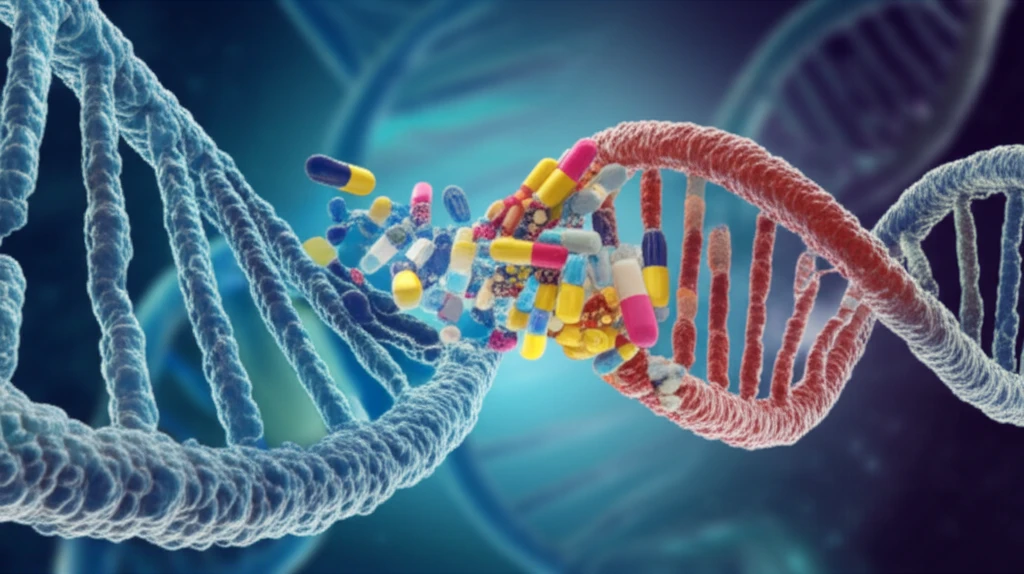
Unlock Synergistic Drug Combinations: A Guide to Better Treatments

"Navigate the complexities of drug synergy with a comprehensive guide, designed to explain statistical analysis and enhance treatment effectiveness."
In the relentless pursuit of more effective treatments, combining drugs to leverage their synergistic effects has emerged as a promising frontier. This approach, however, introduces significant complexity in data analysis. It's no longer sufficient to understand how each drug performs in isolation; the critical question becomes how they interact when administered together.
Imagine trying to bake a cake, but instead of just focusing on whether your oven heats up correctly, you also have to worry about how the flour reacts with the sugar at different temperatures. That's the challenge scientists face when studying drug combinations: understanding not just the individual effects, but their combined impact.
This guide aims to demystify the process by exploring statistical methodologies designed to analyze drug combination studies. We'll break down complex concepts into digestible insights, empowering researchers, healthcare professionals, and anyone interested in optimizing treatment strategies to make sense of the science.
Decoding Drug Synergy: What Methods Work Best?
When analyzing how drugs interact, we're essentially trying to determine if their combined effect is simply additive (1+1=2), synergistic (1+1>2, a multiplied effect), or antagonistic (1+1<2, a lessened effect). The goal is to move beyond simple observation and quantify the extent of these interactions in a statistically meaningful way.
- Individual Drug Analysis: First, you assess each drug's effect separately. This baseline helps in understanding the combined impact.
- Combination Studies: Next, conduct experiments with varying drug ratios. Collect data on how these combinations affect the targeted condition or disease.
- Statistical Modeling: Apply statistical models to the data to determine whether the drug interaction is additive, synergistic, or antagonistic. Models like the Loewe additivity model or variations of the Bliss independence model are often used.
- SAS Package: One of the methods uses the SAS statistical package. While the results from different methods don't vary widely, the method allows for estimating simultaneously all required parameters is preferable because it allows for a statistical test for the significance of the joint action of the drug combinations to be carried out.
- Combination Index (CI): Loewe's additivity is typically used, using the combination index to assess the joint action of two compounds.
The Future of Combination Therapy: Precision and Personalization
As statistical methods evolve and computing power increases, the ability to analyze complex drug interactions will continue to improve. Future research will likely focus on developing more sophisticated models that account for individual patient variability, genetic factors, and other variables that influence treatment response. This will pave the way for precision medicine approaches where drug combinations are tailored to each patient's unique needs, maximizing therapeutic benefit and minimizing adverse effects.