
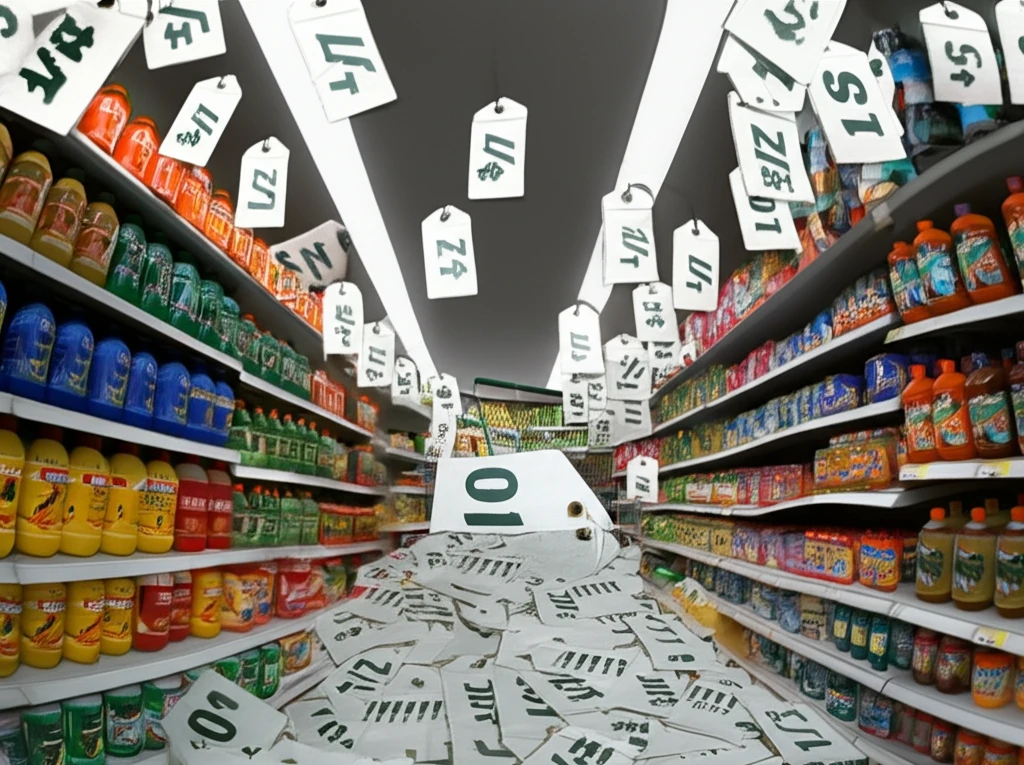
Simplified shopping aisle with easy-to-understand price tags.

Unlock Smarter Shopping: How Simple Pricing Menus Can Boost Your Savings

"Confused by complex pricing? Discover how retailers use simple pricing strategies to create win-win situations for both their bottom line and your wallet."


Ever feel overwhelmed by the endless options when shopping, each with its own confusing price tag? You're not alone. Retailers are constantly experimenting with ways to grab your attention and secure your purchase, but what if simplicity could be the key to a better deal? Recent research dives into how simple pricing menus can actually benefit both businesses and consumers.

Imagine walking into a store, physical or online, and instead of being bombarded with choices, you're presented with a clear, easy-to-understand set of options. This approach, known as 'robust selling mechanisms,' is designed to navigate the uncertainties of the market while providing you, the buyer, with transparent choices.

This article explores the power of these simple pricing strategies, revealing how they can lead to more satisfying shopping experiences and potential cost savings. We'll break down the complex world of pricing, making it accessible and empowering you to become a smarter, more informed shopper.

Why Simple Menus? Decoding the Retailer's Strategy

Simplified shopping aisle with easy-to-understand price tags.

In today's dynamic marketplace, sellers face a significant challenge: understanding what you, the customer, are willing to pay. While it might seem like retailers have all the data at their fingertips, they often operate with limited information about your individual valuation of a product. This is where 'robust selling mechanisms' come into play, offering a strategic way for sellers to maximize revenue while acknowledging market uncertainties.

Traditionally, robust screening involves offering a wide range of options – theoretically infinite – to cater to every possible customer valuation. But this complexity can backfire, leading to decision paralysis and operational headaches. The goal, then, is to find a sweet spot: simple mechanisms that effectively hedge against market ambiguity without overwhelming you with choices.

  • Reduced Complexity: Simple menus make it easier for you to understand the options and make a decision.
  • Hedged Bets: Retailers can protect themselves from market uncertainty, ensuring they make a reasonable profit even if they don't know exactly what each customer is willing to pay.
  • Fairness: Prevents excessive discrimination among buyers, addressing fairness issues that can arise with overly complex pricing.
Consider a scenario where a seller is unsure whether customers value their product at $40 or $100. Instead of setting a fixed price and risking alienating a segment of customers, they offer a simple menu: (a) pay $50 to get the product or (b) pay $100 to get the product with 66% probability. Such simplification offers a better revenue return and customer satisfaction.

Making Informed Choices: The Power is in Your Hands

Ultimately, the move towards simpler pricing menus signals a shift towards transparency and customer-centricity. By understanding the strategies retailers employ, you can navigate the marketplace with greater confidence, identify the best deals, and make purchasing decisions that align with your needs and budget. Keep an eye out for these simple menus – they might just unlock significant savings and a more satisfying shopping experience.

About this Article -

This article was crafted using a human-AI hybrid and collaborative approach. AI assisted our team with initial drafting, research insights, identifying key questions, and image generation. Our human editors guided topic selection, defined the angle, structured the content, ensured factual accuracy and relevance, refined the tone, and conducted thorough editing to deliver helpful, high-quality information.See our About page for more information.

This article is based on research published under:

DOI-LINK: https://doi.org/10.48550/arXiv.2310.17392,

Title: The Power Of Simple Menus In Robust Selling Mechanisms

Subject: econ.th math.oc

Authors: Shixin Wang

Published: 26-10-2023

Everything You Need To Know

1

What are 'robust selling mechanisms' and how do they benefit shoppers?

'Robust selling mechanisms' are strategic approaches that retailers use to navigate market uncertainties while providing transparent choices to buyers. They benefit shoppers by presenting clear, easy-to-understand options, leading to more satisfying shopping experiences and potential cost savings. These mechanisms aim to balance the retailer's need to maximize revenue with the customer's desire for fair and straightforward pricing, addressing potential fairness issues that can arise with overly complex pricing strategies. The use of 'robust selling mechanisms' reflects a move towards transparency and customer-centricity in the retail environment.

2

Why are simple pricing menus more effective than complex ones, both for retailers and customers?

Simple pricing menus are more effective because they reduce complexity, making it easier for customers to understand their options and make decisions. For retailers, simple menus hedge against market uncertainty, ensuring a reasonable profit without overwhelming customers with choices. Complex pricing can lead to decision paralysis and operational headaches, while simple menus offer a better revenue return and increased customer satisfaction. Additionally, simple menus prevent excessive discrimination among buyers, addressing fairness issues that can arise with overly complex pricing. Therefore, 'robust selling mechanisms' help both parties.

3

How can retailers protect themselves from market uncertainty by using simple pricing strategies?

Retailers can protect themselves from market uncertainty by using 'robust selling mechanisms', such as offering a simple menu of options instead of a single fixed price or a wide range of choices. For example, a retailer unsure whether customers value a product at $40 or $100 might offer a menu: (a) pay $50 to get the product or (b) pay $100 to get the product with 66% probability. This approach allows them to capture revenue from customers willing to pay more while still attracting those who value the product less. This strategic simplification ensures a reasonable profit even without precise knowledge of each customer's valuation.

4

What is the significance of 'robust screening' in the context of pricing strategies, and why is simplicity preferred over an infinite range of options?

'Robust screening' involves offering a range of options to cater to every possible customer valuation, theoretically infinite. However, this complexity can backfire, leading to decision paralysis and operational headaches. Simplicity, through 'robust selling mechanisms', is preferred because it effectively hedges against market ambiguity without overwhelming the customer. The goal is to find a sweet spot that balances the retailer's need to maximize revenue with the customer's ability to make informed choices. While 'robust screening' aims to capture the entire market, its practical implementation often benefits from the more streamlined approach of simple pricing menus.

5

How does the shift towards simpler pricing menus impact the relationship between retailers and consumers, and what role does transparency play in this dynamic?

The shift towards simpler pricing menus signals a move towards transparency and customer-centricity. By employing 'robust selling mechanisms', retailers are acknowledging the uncertainties of the market and providing customers with clear, easy-to-understand choices. This transparency fosters trust and empowers consumers to make informed purchasing decisions. It moves away from potentially manipulative or confusing pricing tactics, creating a more equitable and satisfying shopping experience. The relationship between retailers and consumers becomes more collaborative, where both parties benefit from straightforward and honest pricing strategies. The customer is able to get the product or service at a price they understand, while the retailers can be sure they are maximizing revenue and maintaining fairness.

Newsletter Subscribe

Subscribe to get the latest articles and insights directly in your inbox.