
Unlock Pain-Free Movement: How Muscle Balance Can Save Your Knees

"Beyond Alignment: Discover how understanding muscle co-contraction could revolutionize osteoarthritis treatment and joint health."
Knee pain can be a real drag, impacting everything from your daily walks to your favorite workout routines. Osteoarthritis (OA), a common culprit, often feels like an irreversible slide into discomfort and limited mobility. But what if the key to easing that pain wasn't just about bone structure, but also about the way your muscles work together?
For years, doctors have focused on aligning joints to reduce stress and prevent wear and tear. However, cutting-edge research is revealing a more complex picture. It turns out that the dynamic interplay of your muscles – specifically, how they co-contract – plays a significant role in determining the forces within your knee. This means that even with perfectly aligned joints, muscle imbalances could be silently sabotaging your efforts to stay active and pain-free.
This article dives into the fascinating world of muscle co-contraction and its impact on knee joint health. We'll explore how understanding these dynamic forces can lead to more effective treatments for OA and help you take control of your knee health.
Knee Pain as a Common Limit on Daily Movement
Knee pain can affect everyone, limiting movement and interfering with daily activities, from climbing stairs to standing comfortably. Many people report feeling knee pain or weakness specifically when going upstairs, to the point that they avoid stairs because every step feels difficult or painful. Others find themselves locking their knees out while standing, a habit that changes posture for the rest of the body and can contribute to back or hip pain and stiffness. Together these issues highlight how a small, recurring movement pattern can ripple into broader mobility problems.
Conventional Advice: Self-Treatment and Postural Habits
Standard guidance for sudden knee pain typically treats it as the result of overusing the knee or injuring it, with advice to manage it yourself at home and to seek medical help when needed. Yet common accepted habits can work against the knee: locking the knees out when standing is widely recognized as a pattern that alters whole-body posture and can lead to back or hip pain. The limitation of this approach is that it focuses on treating pain as it arises rather than correcting the underlying movement habits that sustain the problem. Self-management advice also gives little specific guidance on how to re-train movement patterns such as stair climbing.
Foundational Science of Muscle Contraction
Understanding how knees stay balanced begins with foundational discoveries about muscle contraction, including how sarcomeres shorten and how action potentials travel from the brain to the neuromuscular junction. Educational content in this area traces the full journey from brain signals to muscle movement, explaining how muscles work step-by-step from signal to strength. This molecular-level understanding underpins modern ideas that movement retraining and muscle balance can protect joints like the knee. Without this basic science, exercise prescriptions for knee pain would lack a mechanistic basis.
The Hidden Power of Muscle Co-Contraction
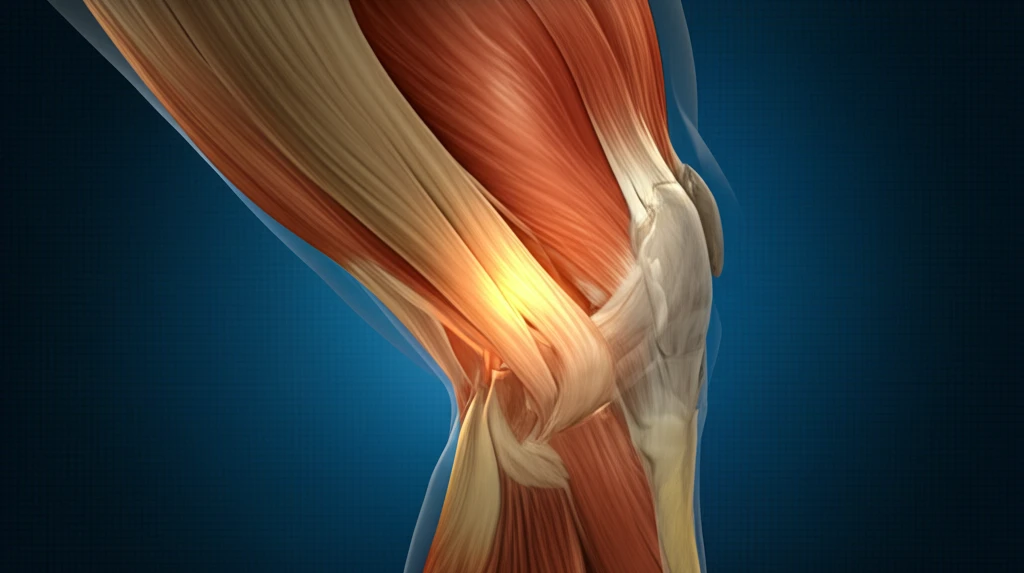
Imagine your knee joint as a carefully balanced seesaw. On one side, you have your quadriceps, the powerful muscles at the front of your thigh responsible for straightening your leg. On the other side, you have your hamstrings and gastrocnemius (calf muscles), working to bend your knee. When these muscle groups work in harmony, they create smooth, controlled movement. However, when opposing muscle groups contract simultaneously – a phenomenon known as co-contraction – the forces within the joint can spike dramatically.
- Muscle Weakness: When certain muscles are weak, your body may compensate by activating other muscles, leading to co-contraction.
- Pain: Pain itself can trigger protective muscle spasms, increasing co-contraction.
- Poor Movement Patterns: Habitual movement patterns that are not biomechanically efficient can also contribute to muscle imbalances and co-contraction.
- Nerve Damage: Conditions like peripheral neuropathy and stroke can impact normal movement.
Movement Retraining as an Emerging Fix
Recent practical content emphasizes correcting knee movement directly, with clinicians demonstrating specific exercises to fix knee movement for people who feel pain or weakness when climbing stairs. Broader coverage of knee pain and injuries continues to connect the topic to sports injuries and workout routines, framing knee health as something that can be improved through targeted movement practice. The direction of this material is toward identifying faulty movement patterns and practicing corrections rather than simply resting the joint. This reflects a shift from passive treatment toward active motor retraining.
Why Simple Fixes Often Fail at First
A recurring point of pushback is that re-training habits is genuinely difficult: working on unlocking the knees when standing can be hard at first, even though the body eventually adapts once it gets used to the new position. Similar difficulties apply to engaging the core properly, where a common mistake is overworking the hip flexors rather than balancing them with the abdominal muscles. These failures suggest that instruction alone is insufficient and that coordination between muscle groups must be deliberately trained. The implication is that well-meaning advice fails when it ignores the imbalance between opposing muscle groups.
Exercises, Posture Fixes, and Integrative Care Compared
Approaches to knee pain range from movement-specific exercises that target stair climbing mechanics to integrative therapies such as acupuncture offered for both acute and chronic knee pain relief. Between these sit lifestyle-level programs that address overall wellness in a set of simple daily steps, and daily routines designed to restore joint mobility and confidence in as little as ten minutes a day. Each approach addresses a different layer: exercise targets the muscle pattern, posture work targets standing and gait habits, and integrative care targets pain relief alongside whole-body wellness. The comparative picture is that no single method covers both the mechanical and the experiential side of knee pain alone.
Take Control of Your Knee Health
The good news is that understanding the role of muscle co-contraction opens up new avenues for treating and preventing knee pain. Instead of solely focusing on static alignment, healthcare professionals can now consider the dynamic interplay of muscles and develop targeted interventions to restore balance and reduce stress on the knee joint. This might involve strengthening weak muscles, releasing tight ones, and retraining movement patterns to promote more efficient and balanced muscle activation. Addressing muscle co-contraction is emerging as a promising strategy for improving joint function, enhancing patient mobility, and preventing future joint problems. Talk to your doctor or physical therapist about how you can incorporate these principles into your own knee health plan.
Balance Between Muscle Groups Is the Unifying Theme
Across the sources, a consistent theme emerges: knees suffer when opposing muscle groups fall out of balance, such as strong hip flexors overwhelming the abdominal muscles or habitual knee locking distorting whole-body posture. Expert-informed content connects the mechanics of muscle contraction to practical habits, from unlocking the knees when standing to fixing movement during stair climbing. The synthesis is that protecting the knees is less about isolated strength and more about restoring balanced coordination across the hip, core, and leg. Getting the body used to new, unlocked positions is presented as a learnable skill rather than a permanent limitation.
Short Daily Routines as the Next Frontier
A forward-looking direction is the emergence of short, repeatable routines, such as ten-minute daily joint health practices aimed at people feeling creaks, stiffness, and worries about losing balance. This format treats joint health as a daily maintenance habit rather than a one-time rehabilitation event, which aligns with the idea that movement retraining only takes hold once the body gets used to it. Educational content is also becoming more accessible, with biology explainers walking viewers from brain signal to strength step by step. The next frontier appears to be making muscle balance instruction simple enough to sustain every day.
Stiffness, Worry, and Access to Care
Systemic challenges include the emotional side of joint trouble, as many people carry a nagging worry about losing their balance, alongside the physical symptoms of creaking and stiffness. Clinicians note that knee pain can limit daily activities, while many cases stem simply from overuse or injury, making prevention and self-management central to reducing the burden. There are also real barriers to consistent care, since self-treatment guidance must be paired with knowing when to get medical help. Broader healthy-lifestyle programs attempt to address these challenges through simple everyday steps rather than complex regimens.
Everyday Stairs and Restored Confidence
At the human level, knee problems show up in ordinary moments: people avoid stairs because every step feels difficult or painful, and some lock their knees out of a habit that leaves the rest of the body stiff. Practitioners respond to this by teaching specific exercises for climbing stairs, with the goal of restoring confidence and mobility. The real-world impact is measured in regaining the ability to move without fear, which sources describe as a return to confidence as well as comfort. Small corrections to movement can transform these everyday experiences.