
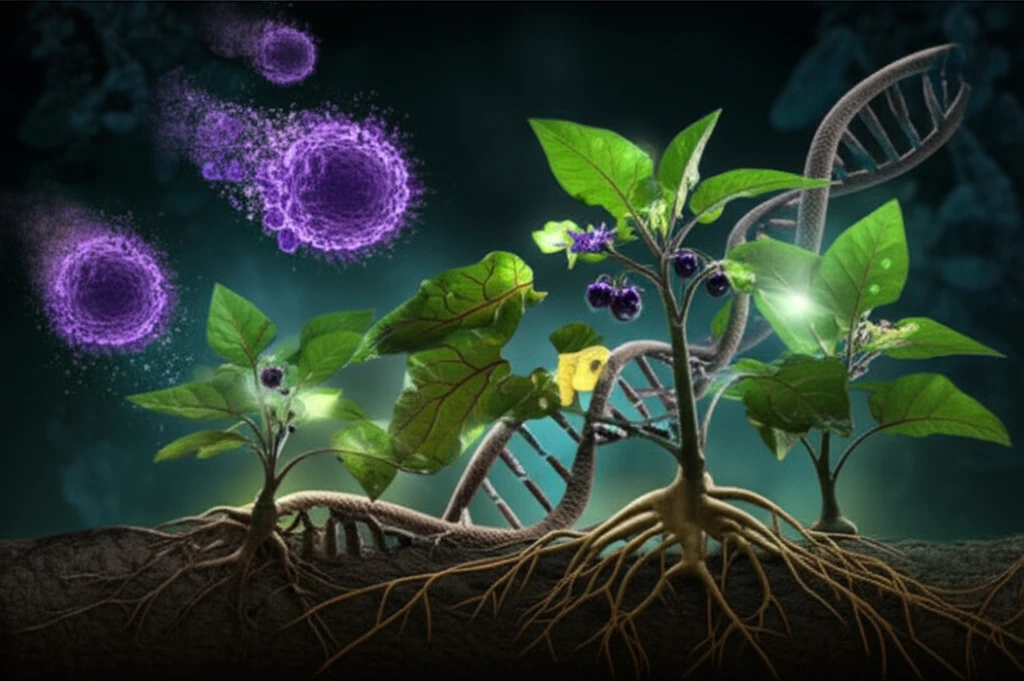
Solanum nigrum (black nightshade) plants with glowing leaves, symbolizing cancer-fighting and antioxidant properties.

Unlock Nature's Pharmacy: How Black Nightshade Extracts Fight Cancer and Boost Antioxidants

"Discover the dual power of Solanum nigrum (black nightshade) extracts in combating cancer cells and enhancing antioxidant activity, paving the way for natural health solutions."


For centuries, traditional medicine has harnessed the power of plants to treat a myriad of ailments. Among these, Solanum nigrum, commonly known as black nightshade, stands out as a versatile remedy used across cultures. From South America to Europe and North America, this unassuming plant has been a staple in folk medicine, celebrated for its diverse therapeutic properties.

Modern science is now beginning to validate these age-old claims, with emerging research highlighting the potential of Solanum nigrum extracts in combating serious health conditions. Recent studies have focused on its cytotoxic (cell-killing) and antioxidant activities, suggesting that specific compounds within the plant could offer significant health benefits. These findings open exciting new avenues for natural health solutions, drawing on the wisdom of traditional practices and the rigor of scientific investigation.

This article delves into the groundbreaking research exploring the cytotoxic and antioxidant effects of Solanum nigrum extracts. We will unpack how scientists are isolating and testing these extracts, revealing the potential of this medicinal plant to revolutionize cancer treatment and enhance overall well-being. Join us as we explore nature's pharmacy and uncover the secrets of black nightshade.

The Science Behind Solanum Nigrum: How Extracts Target Cancer Cells

Solanum nigrum (black nightshade) plants with glowing leaves, symbolizing cancer-fighting and antioxidant properties.

Researchers in Malaysia have conducted a detailed study on Solanum nigrum to understand its potential in fighting cancer. The study focused on how different extracts from the plant could inhibit the growth of cancer cells, using a method called bioassay-guided fractionation. This process involves separating the plant's compounds and testing each fraction for its activity against cancer cells.

The scientists extracted compounds from both the leaves and fruits of Solanum nigrum using methanol and ethanol, respectively. These extracts were then carefully separated into smaller fractions using column chromatography. Each fraction was tested against various cancer cell lines, including leukemia (K-562 and HL-60), liver cancer (HepG2), and cervical cancer (HeLa) cells. The cytotoxic effect was measured using the MTT assay, which determines the viability of cells after exposure to the extracts.

  • Methanol Leaf Extracts: Fractions 1, 2, and 4 showed the highest cytotoxic effect against cancer cells, with an IC50 of 13.0 µg/mL after 48 hours.
  • Ethanol Fruit Extracts: Fractions 14 and 15 were most effective against K-562 cells, with an IC50 of 12.0 µg/mL. Fractions 13, 14, and 17 showed similar efficacy against HeLa cells, with an IC50 of 13.0 µg/mL.
  • Control Comparison: Standard drugs like doxorubicin hydrochloride and vinblastine sulfate inhibited cancer cells with IC50 values ranging from 1.3 to 17.0 µg/mL, providing a benchmark for the plant extracts' effectiveness.
These results indicate that specific fractions from Solanum nigrum extracts possess significant cytotoxic activity, meaning they can effectively kill or inhibit the growth of cancer cells. The fact that certain fractions showed comparable effectiveness to standard cancer drugs highlights the plant's potential as a source of novel anticancer agents. Further research is needed to isolate and identify the specific compounds responsible for this activity, paving the way for new, natural cancer treatments.

Boosting Your Health Naturally: The Antioxidant Power of Black Nightshade

Beyond its cancer-fighting potential, Solanum nigrum also exhibits significant antioxidant properties. Antioxidants are crucial for protecting our cells from damage caused by free radicals, unstable molecules that can lead to aging and various diseases. The Malaysian study also investigated the antioxidant activity of Solanum nigrum extracts, revealing promising results.

About this Article -

This article was crafted using a human-AI hybrid and collaborative approach. AI assisted our team with initial drafting, research insights, identifying key questions, and image generation. Our human editors guided topic selection, defined the angle, structured the content, ensured factual accuracy and relevance, refined the tone, and conducted thorough editing to deliver helpful, high-quality information.See our About page for more information.

This article is based on research published under:

DOI-LINK: 10.4314/tjpr.v14i7.11, Alternate LINK

Title: Cytotoxic Effect And Antioxidant Activity Of Bioassay-Guided Fractions From ≪I≫Solanum Nigrum≪/I≫ Extracts

Subject: Pharmacology (medical)

Journal: Tropical Journal of Pharmaceutical Research

Publisher: African Journals Online (AJOL)

Authors: S Arullappan, P Rajamanickam, N Thevar, D Narayanasamy, Hy Yee, P Kaur, M Mahandan

Published: 2015-08-06

Everything You Need To Know

1

What is Solanum nigrum and what is its significance?

Solanum nigrum, commonly known as black nightshade, is a plant that has been used in traditional medicine for centuries across various cultures. It's celebrated for its diverse therapeutic properties. Modern science is now validating these claims. Research highlights the potential of Solanum nigrum extracts in combating serious health conditions by validating traditional uses with scientific evidence. It's a natural remedy drawing on the wisdom of traditional practices and scientific investigation.

2

What are the cytotoxic effects of Solanum nigrum extracts, and why are they important?

The cytotoxic effects of Solanum nigrum extracts refer to their ability to kill or inhibit the growth of cancer cells. The study in Malaysia used extracts from the leaves and fruits of Solanum nigrum. These were tested against various cancer cell lines, including leukemia, liver cancer, and cervical cancer cells. Specific fractions from both the methanol leaf extracts and ethanol fruit extracts showed significant cytotoxic activity. This is determined through the MTT assay. This is important because it suggests that Solanum nigrum contains compounds that can potentially be used in cancer treatments, offering a natural alternative to standard cancer drugs.

3

How was the study conducted to analyze Solanum nigrum?

The study used a method called bioassay-guided fractionation. This process involves separating the plant's compounds and testing each fraction for its activity against cancer cells. Scientists extracted compounds using methanol and ethanol. The extracts were then carefully separated into smaller fractions using column chromatography, each fraction was tested against various cancer cell lines. This method is crucial because it allows researchers to identify which specific compounds within Solanum nigrum are responsible for the cytotoxic and antioxidant effects. This focused approach helps in developing targeted treatments.

4

Why are the antioxidant properties of Solanum nigrum important?

The antioxidant properties of Solanum nigrum are significant because antioxidants protect our cells from damage caused by free radicals. The study showed promising antioxidant activity. Free radicals can lead to aging and diseases. The presence of antioxidants in Solanum nigrum extracts suggests that the plant can help protect against cellular damage. Antioxidants are essential for overall well-being, as they neutralize unstable molecules. Therefore, the antioxidant potential of Solanum nigrum highlights its ability to contribute to health and wellness.

5

What does IC50 mean in the context of the study?

IC50, or half maximal inhibitory concentration, is a measure used to assess the effectiveness of a substance, such as a plant extract, in inhibiting a biological process. In the context of the study, IC50 values were used to determine the cytotoxic effect of Solanum nigrum extracts on cancer cells. The lower the IC50 value, the more effective the extract is at killing or inhibiting cancer cells. For example, certain fractions from Solanum nigrum extracts showed IC50 values comparable to those of standard cancer drugs. This data provides a quantitative measure of how potent the extracts are in fighting cancer, helping to compare their effectiveness and potential as therapeutic agents.

Newsletter Subscribe

Subscribe to get the latest articles and insights directly in your inbox.