
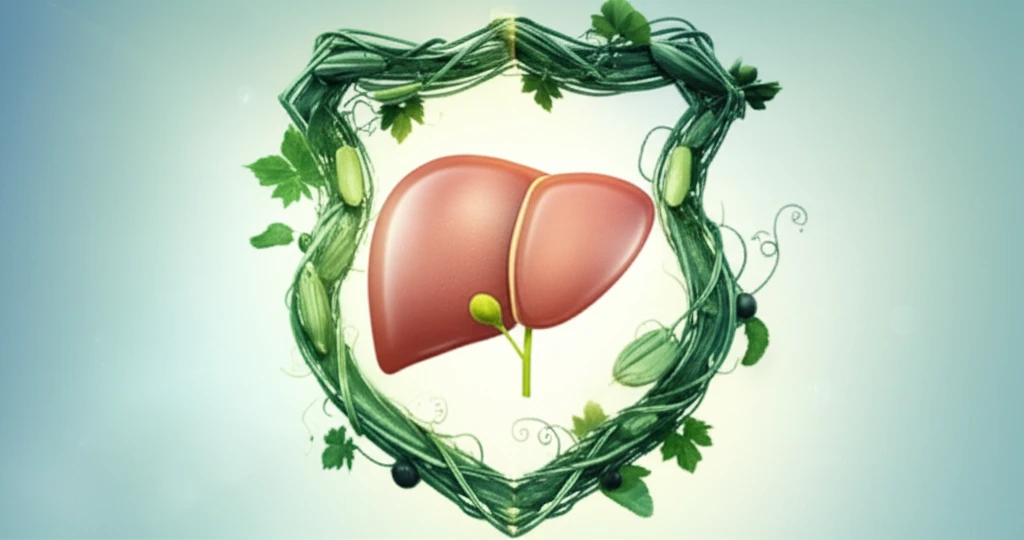
Solena amplexicaulis shields the liver, promoting detoxification and health

Unlock Nature's Liver Shield: How This Fruit Can Protect Your Health

"Discover the powerful hepatoprotective benefits of Solena amplexicaulis and how it can combat liver damage caused by toxins, offering a natural approach to liver health."


The liver is the body's metabolic center, essential for everything from glycogen storage and red blood cell decomposition to plasma protein synthesis and detoxification. When the liver is compromised, the entire body feels the impact. Liver diseases, often stemming from toxic chemicals, alcohol, infections, or autoimmune disorders, disrupt these vital functions. Many hepatotoxic substances damage liver cells by inducing lipid peroxidation and other oxidative damages.

While the liver possesses a remarkable capacity for self-regeneration, the absence of effective drugs that stimulate liver function in modern medicine has led to increased interest in alternative treatments. Traditional medicine, particularly Ayurveda, offers a range of preparations recommended for liver disorders. These remedies have been used for centuries and are frequently reported to provide significant relief.

Among these, Solena amplexicaulis, a plant widely distributed in India, Sri Lanka, China, and Taiwan, has garnered attention. Traditionally, its tubers, leaves, and seeds have been used to treat various ailments, including hepatosplenomegaly and as a cardiotonic and diuretic. Despite its traditional use, scientific studies on the hepatoprotective activity of its fruits remain limited. This article explores the hepatoprotective potential of Solena amplexicaulis fruits, focusing on their effects against carbon tetrachloride-induced liver injury in rats.

What are the benefits of Solena amplexicaulis?

Solena amplexicaulis shields the liver, promoting detoxification and health

A study published in the S. J. Pharm. Sci. journal investigated the protective effects of a methanolic extract from Solena amplexicaulis fruits on rats with carbon tetrachloride-induced hepatotoxicity. Carbon tetrachloride is a toxic chemical known to cause significant liver damage, making it a useful model for studying hepatoprotective agents.

The study's methodology involved several groups of rats: a control group, a toxic group (administered carbon tetrachloride), a standard treatment group (administered silymarin, a known hepatoprotective drug), and two treatment groups receiving different doses of the Solena amplexicaulis extract (250 mg/kg and 500 mg/kg). The researchers evaluated liver function by measuring serum levels of specific enzymes and conducting histological examinations.

  • Reduced Liver Enzymes: The Solena amplexicaulis extract significantly lowered serum levels of alanine amino transferase (ALT), aspartate amino transferase (AST), alkaline phosphatase (ALP), and total bilirubin—all indicators of liver damage.
  • Improved Protein Levels: The extract also increased total protein and albumin levels, which are typically reduced in liver damage.
  • Comparable Efficacy: The effects observed in the extract-treated groups were comparable to those of the silymarin-treated group, suggesting a similar level of hepatoprotective activity.
  • Histological Improvements: Microscopic examination of liver tissues revealed that animals pretreated with the extract had decreased necrotic zones and hepatocellular degeneration compared to those exposed to carbon tetrachloride alone.
These findings suggest that the methanolic extract of Solena amplexicaulis possesses significant liver-protective properties, making it a potential natural remedy against toxic liver damage.

Takeaway

Solena amplexicaulis shows promise as a natural agent for protecting the liver against damage caused by toxins. Its ability to reduce liver enzyme levels, improve protein synthesis, and decrease liver tissue damage highlights its potential as a supportive treatment for liver health. As always, consult with a healthcare professional before starting any new treatment.

About this Article -

This article was crafted using a human-AI hybrid and collaborative approach. AI assisted our team with initial drafting, research insights, identifying key questions, and image generation. Our human editors guided topic selection, defined the angle, structured the content, ensured factual accuracy and relevance, refined the tone, and conducted thorough editing to deliver helpful, high-quality information.See our About page for more information.

Everything You Need To Know

1

What is Solena amplexicaulis and how is it used?

Solena amplexicaulis is a plant found in various regions of Asia, including India, Sri Lanka, China, and Taiwan. Traditionally, the tubers, leaves, and seeds of Solena amplexicaulis have been used to treat various ailments, including hepatosplenomegaly, and as a cardiotonic and diuretic. Recent studies have focused on the fruits of Solena amplexicaulis for their potential hepatoprotective properties, specifically against liver damage caused by toxins.

2

How does Solena amplexicaulis protect the liver?

Studies indicate that Solena amplexicaulis protects the liver through several mechanisms. A methanolic extract from Solena amplexicaulis fruits was tested against carbon tetrachloride-induced liver damage in rats. The extract significantly lowered serum levels of liver enzymes like ALT, AST, ALP, and total bilirubin, which are indicators of liver damage. It also improved protein levels, which are often reduced in damaged livers. Furthermore, histological examinations showed decreased liver tissue damage in extract-treated animals, similar to the effects of silymarin, a known hepatoprotective drug.

3

What are the key findings regarding Solena amplexicaulis and liver health from the study?

The study highlighted several key findings. Firstly, the extract reduced levels of liver enzymes (ALT, AST, ALP, and total bilirubin) that are elevated in liver damage. Secondly, it improved protein and albumin levels, which are often diminished when the liver is compromised. Thirdly, the effects of Solena amplexicaulis were comparable to those of silymarin, suggesting a similar level of protection. Finally, microscopic examination of liver tissues showed decreased necrotic zones and hepatocellular degeneration in the groups treated with Solena amplexicaulis.

4

Can Solena amplexicaulis treat all types of liver damage?

While research demonstrates the hepatoprotective potential of Solena amplexicaulis, particularly against damage caused by toxins like carbon tetrachloride, it's important to understand the scope of the current research. The study specifically addresses liver damage induced by a specific chemical. The effectiveness of Solena amplexicaulis against other causes of liver disease, such as viral infections or autoimmune disorders, has not been sufficiently studied. Therefore, it is not a universal treatment and should be considered as a potential supportive treatment for toxin-induced liver damage.

5

What are the implications of the study's findings for liver health?

The findings suggest that Solena amplexicaulis could be a valuable natural remedy for supporting liver health, especially in cases of toxic liver damage. The observed benefits, including reduced liver enzymes, improved protein synthesis, and decreased liver tissue damage, indicate its potential as a supportive treatment. The study underscores the importance of exploring natural compounds like Solena amplexicaulis to identify alternative treatments for liver disorders. Further research is required to understand the full scope of its benefits, optimal dosages, and potential interactions before it can be widely recommended.

Newsletter Subscribe

Subscribe to get the latest articles and insights directly in your inbox.