
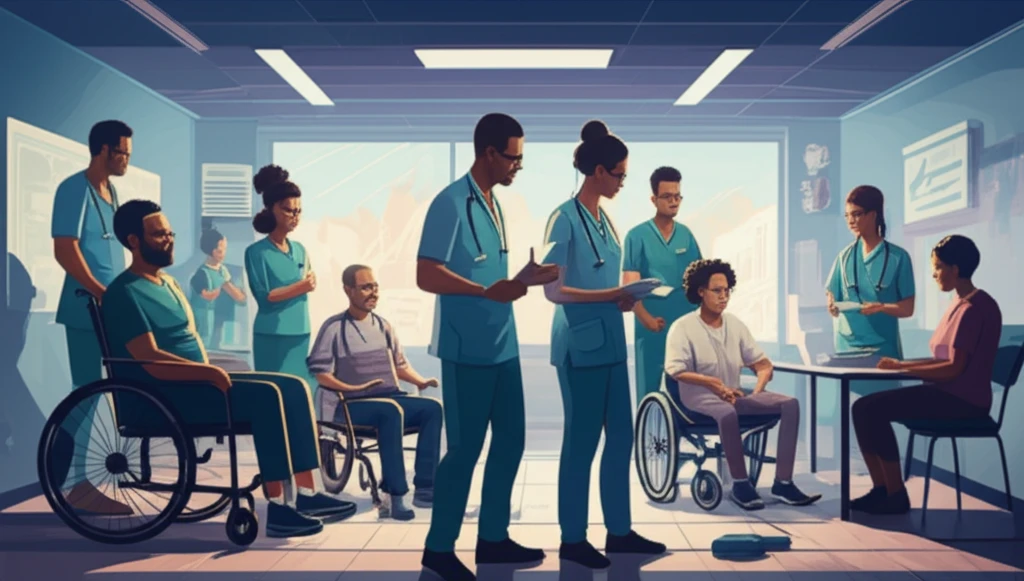
Unlock Movement: Training Healthcare Pros for Neurorehabilitation Success

"Empowering Physical Activity Through Behavior Change Strategies"
Boosting physical activity is key for folks, especially those dealing with neurological challenges. Think of it as exercise superheroes influencing neurotrophic, neuroprotective, and disease-modifying effects, not to mention the usual health perks. However, the path to get moving isn't always a walk in the park, due to things like physical limitations (balance and mental (cognitive) challenges. So, finding the extra sauce to get people hooked on long-term physical activity is an important mission.
Educating clients about exercise? That's just the start. To make a real splash, combine workout plans with effective behavior change strategies (BCS). A behavior change strategy is a carefully designed technique to tackle the mental and emotional aspects of behavior, such as tailored counseling with goal setting, planning, and progress check ins. These active components are like secret ingredients for behavior change interventions, ensuring more effective routes to get people moving.
A recent study shines a light on training healthcare professionals (HCPs) to confidently use these BCS techniques. We’re diving deep to uncover the methods used to train HCPs, with a focus on boosting their know-how, confidence, and implementation of BCS to promote physical activity for people with neurological conditions. We're exploring the 'who, how, what, and when' of HCP interventionist training, aiming to supercharge future physical activity programs for neurological populations.
Decoding the Training Puzzle: Who, How, What, and When?
Researchers dug through eight databases, hunting for studies that detailed how HCPs were trained on BCS, zeroing in on physical activity and exercise for those with neurological conditions. After sifting through thousands of articles, 13 stood out. Although no studies specifically targeted HCP training in BCS for neurological populations, these articles provided valuable insights into training HCP interventionists.
- Who Was Trained? The studies featured a mix of healthcare pros, including physical therapists, occupational therapists, rehabilitation assistants, exercise specialists, and even graduate students in exercise psychology.
- How Were They Trained? Common training elements included multiple resources, training sessions, expert input, and ongoing support. Manuals describing theoretical knowledge and instructions for behavioral coaching sessions were particularly common. Training methods included in-person sessions with researchers or BCS experts, group activities, and rehearsal with peers.
- What Techniques Did They Learn? The interventions were based on five different behavior change theories and frameworks. Social Cognitive Theory was the most popular, often combined with the Health Action Process Approach.
- When Did Training Happen? Details on timing were scarce, but when reported, training ranged from single-day sessions to 18 hours of instruction over several months.
Empowering Professionals, Enhancing Lives
To successfully implement BCS strategies in clinical practice and improve long-term results, there's a need for future studies, highlighting strategies, better implementation, and customized approaches. Let's equip professionals with the training and skills they need to promote physical activity effectively, revolutionizing neurorehabilitation.