
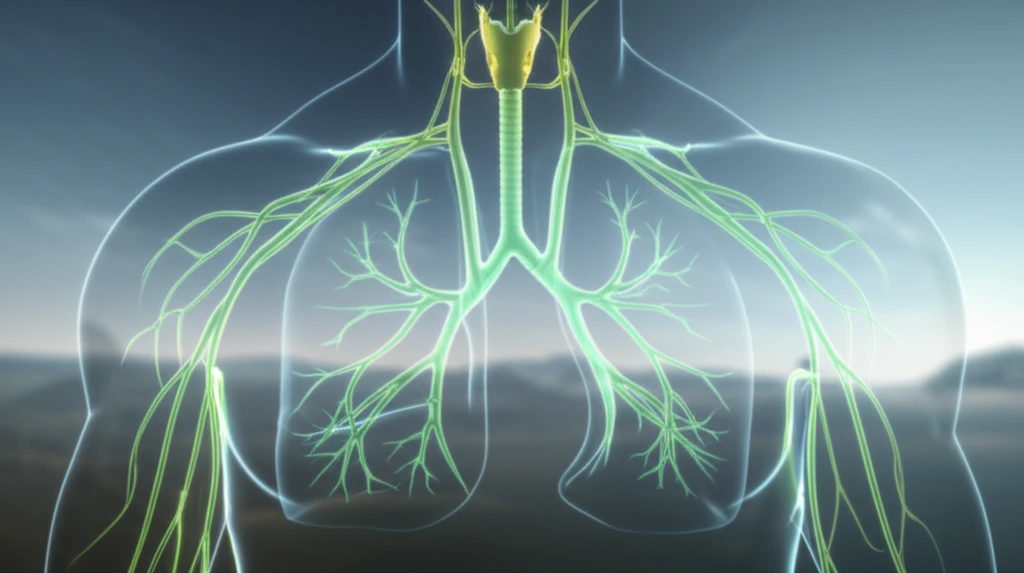
Glowing lungs and vagus nerve

Unlock Inner Peace: How Breathing Exercises Tap Into Your Vagus Nerve

"Discover the ancient secret to stress reduction and enhanced well-being through the power of respiratory vagal nerve stimulation."


In today's fast-paced world, finding moments of calm can feel like an impossible task. Stress, anxiety, and a constant barrage of information often leave us feeling frazzled and disconnected. Yet, amidst all the chaos, there exists a powerful, natural tool that can help us regain control of our well-being: our breath.

For centuries, contemplative practices such as meditation, yoga, and tai chi have emphasized the importance of mindful breathing. These traditions, rooted in ancient wisdom, have long recognized the profound connection between our breath and our overall state of being. Now, modern science is beginning to uncover the mechanisms behind these practices, revealing how specific breathing techniques can trigger remarkable changes in our bodies and minds.

This article delves into the fascinating world of respiratory vagal nerve stimulation (rVNS), exploring how simple breathing exercises can tap into the power of the vagus nerve – a key component of our parasympathetic nervous system – to promote relaxation, reduce stress, and enhance cognitive function. We'll explore the science behind this mind-body connection and provide you with practical techniques to incorporate into your daily life.

The Vagus Nerve: Your Body's Natural Stress Reliever

Glowing lungs and vagus nerve

To understand how breathing exercises can impact our well-being, it's crucial to first grasp the role of the vagus nerve. As the longest cranial nerve in the body, the vagus nerve acts as a crucial communication pathway between the brain and major organs, including the heart, lungs, and gut. It's a primary component of the parasympathetic nervous system (PNS), often referred to as the 'rest and digest' system.

When the vagus nerve is stimulated, it triggers a cascade of beneficial effects, helping to:

  • Slow heart rate and lower blood pressure
  • Promote relaxation and reduce anxiety
  • Improve digestion and gut health
  • Reduce inflammation throughout the body
  • Enhance cognitive function and memory
In essence, the vagus nerve acts as a natural brake on the sympathetic nervous system (SNS), the 'fight or flight' system, helping to restore balance and promote a state of calm and well-being.

Integrating rVNS into Your Daily Routine

The beauty of respiratory vagal nerve stimulation lies in its simplicity and accessibility. By incorporating specific breathing techniques into your daily routine, you can harness the power of your vagus nerve to promote relaxation, reduce stress, and enhance your overall well-being. Remember to consult with a healthcare professional before starting any new exercise regimen, especially if you have underlying health conditions. As research continues to unveil the full potential of rVNS, one thing remains clear: our breath is a powerful tool for cultivating inner peace and resilience in the face of life's challenges.

About this Article -

This article was crafted using a human-AI hybrid and collaborative approach. AI assisted our team with initial drafting, research insights, identifying key questions, and image generation. Our human editors guided topic selection, defined the angle, structured the content, ensured factual accuracy and relevance, refined the tone, and conducted thorough editing to deliver helpful, high-quality information.See our About page for more information.

This article is based on research published under:

DOI-LINK: 10.3389/fnhum.2018.00397, Alternate LINK

Title: Breath Of Life: The Respiratory Vagal Stimulation Model Of Contemplative Activity

Subject: Behavioral Neuroscience

Journal: Frontiers in Human Neuroscience

Publisher: Frontiers Media SA

Authors: Roderik J. S. Gerritsen, Guido P. H. Band

Published: 2018-10-09

Everything You Need To Know

1

What is the vagus nerve and what does it do?

The vagus nerve, the longest cranial nerve, is a crucial communication pathway between the brain and major organs like the heart, lungs, and gut. It is a key part of the parasympathetic nervous system (PNS), often referred to as the 'rest and digest' system. This system is responsible for calming the body, promoting relaxation, and counteracting the effects of the 'fight or flight' response. Stimulating the vagus nerve can lead to a slower heart rate, reduced blood pressure, and improved digestion, among other benefits, contributing to overall well-being.

2

What is respiratory vagal nerve stimulation (rVNS)?

Respiratory vagal nerve stimulation (rVNS) involves using specific breathing techniques to activate the vagus nerve. This can be achieved through various breathing exercises that stimulate the vagus nerve, leading to the benefits of its activation. This process helps to promote relaxation, reduce stress, and enhance cognitive function. The process is accessible and can be incorporated into daily routines. The article highlights its simplicity and potential to improve overall health.

3

How does the vagus nerve relate to the 'fight or flight' response?

The 'fight or flight' system is also known as the sympathetic nervous system (SNS). It is activated in response to perceived threats or stressful situations, preparing the body for action by increasing heart rate, blood pressure, and releasing stress hormones. The vagus nerve acts as a counterbalance, stimulating the parasympathetic nervous system (PNS), which promotes relaxation and helps the body recover after a stressful event. This balance is essential for maintaining overall health and well-being.

4

What are the benefits of stimulating the vagus nerve?

Stimulating the vagus nerve through rVNS offers numerous benefits. It helps slow down heart rate and lower blood pressure, reduces anxiety, improves digestion, reduces inflammation throughout the body, and enhances cognitive function and memory. These effects collectively contribute to a state of calm, relaxation, and improved overall health. The activation of the vagus nerve helps the body to return to a state of balance, counteracting the negative effects of stress.

5

How can I start using breathing exercises to stimulate my vagus nerve?

You can incorporate rVNS into your daily routine by practicing specific breathing techniques. While the article does not go into great detail about specific techniques, it recommends exploring practices like meditation, yoga, and tai chi. These practices are rooted in ancient wisdom and have long recognized the profound connection between our breath and our overall state of being. Before starting any new exercise regimen, especially if you have underlying health conditions, it's recommended to consult with a healthcare professional.

Newsletter Subscribe

Subscribe to get the latest articles and insights directly in your inbox.