
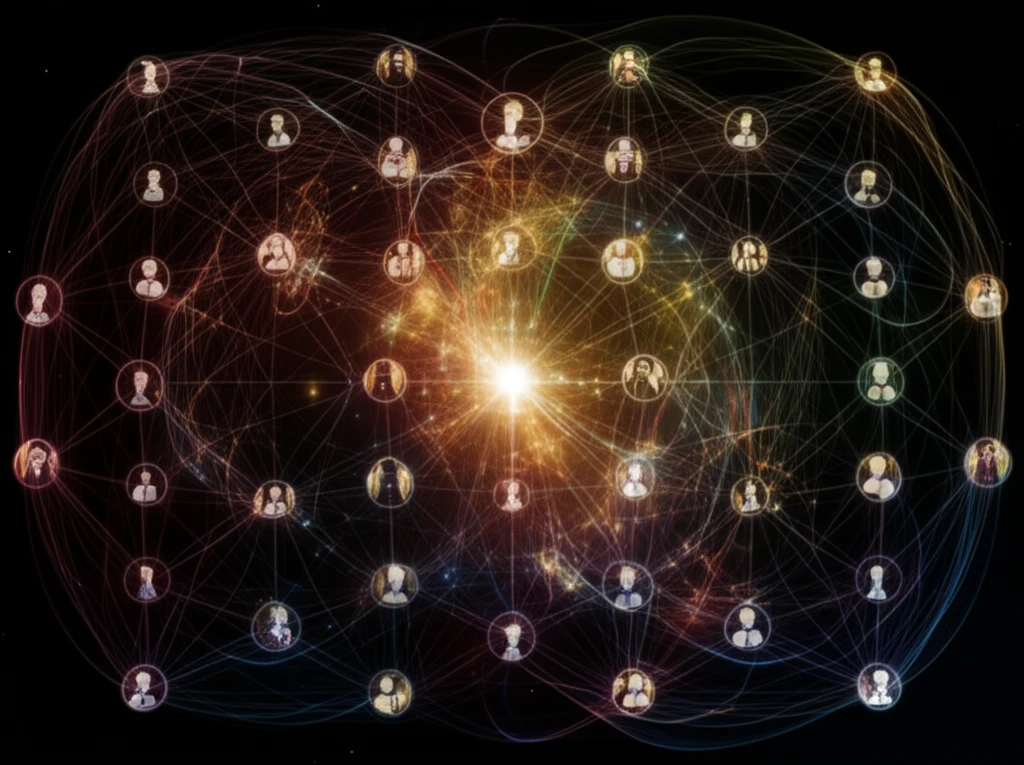
Interconnected network of knowledge exchange.

Unlock Hidden Value: How to Harness Dispersed Knowledge in Your Organization

"Discover strategies to effectively capture, manage, and leverage fragmented knowledge for improved decision-making and innovation."


In the modern knowledge economy, a company's success hinges on its ability to effectively manage and utilize the information it possesses. According to studies, 'knowledge' is increasingly vital for organizations operating in today's interconnected society. Tasks requiring specialized knowledge are increasingly performed by teams spread across different locations and even different companies.

While dispersed teams offer the advantage of diverse expertise, effectively collaborating and managing knowledge across these teams presents a significant challenge. Despite the growing reliance on dispersed teams, understanding how to facilitate cooperation and manage various types of knowledge-based tasks remains limited. Research in this area is still evolving, and the implications of managing dispersed knowledge are not yet fully understood.

In an era defined by globalization and constantly evolving markets, knowledge is inevitably fragmented. Each individual within a market possesses a piece of the puzzle, yet their understanding is often incomplete. Prices act as signals, conveying information about what is known in the market, yet much of this knowledge remains unspoken. People are often unaware of the knowledge they possess or its potential value to others. Effective transfer of this unspoken, implicit knowledge requires significant personal interaction and trust.

The Problem of Dispersed Knowledge: Why It Matters

Interconnected network of knowledge exchange.

When a consumer interacts with a market, the prices they encounter are the result of a complex interplay of implicit knowledge held by various actors within that market. This idea, championed by economists like Friedrich Hayek, highlights that information isn't centralized; it's distributed. Hayek emphasized that the business world operates through decentralized decisions and dispersed information.

Globalization and virtualization have further exacerbated the issue of dispersed knowledge. As companies expand and markets evolve, teams become increasingly geographically diverse. While each team possesses valuable knowledge, that knowledge is rarely complete, leading to what is known as dispersed knowledge. This fragmentation can lead to significant organizational challenges.

  • Inconsistent Decision-Making: Different teams may make conflicting decisions due to a lack of shared information.
  • Duplication of Effort: Teams may unknowingly work on the same problem, wasting resources.
  • Missed Opportunities: Valuable insights may remain siloed within specific teams, preventing the organization from capitalizing on them.
  • Slower Innovation: The inability to combine dispersed knowledge can hinder the development of new ideas and solutions.
To address these challenges, organizations must establish mechanisms to control and integrate dispersed knowledge. Centralized coordination is crucial, requiring the collection of data from various areas of the organization and consolidating it into a central database. Enterprise Resource Planning (ERP) systems are often used to gather informational resources in one location, providing consistent access for all users.

Turning Dispersed Knowledge into a Strategic Advantage

Effectively managing dispersed knowledge isn't just about gathering information; it's about fostering understanding and effective communication. By integrating cognitive structures and developing shared understanding, organizations can transform fragmented information into a powerful strategic asset. This requires not only accessing dispersed knowledge but also understanding and applying it effectively to drive better decisions, foster innovation, and achieve organizational goals.

About this Article -

This article was crafted using a human-AI hybrid and collaborative approach. AI assisted our team with initial drafting, research insights, identifying key questions, and image generation. Our human editors guided topic selection, defined the angle, structured the content, ensured factual accuracy and relevance, refined the tone, and conducted thorough editing to deliver helpful, high-quality information.See our About page for more information.

Everything You Need To Know

1

What is dispersed knowledge and why is it a problem in modern organizations?

Dispersed knowledge refers to information that is scattered across various teams, locations, and even different companies within an organization. This fragmentation is a significant challenge because it can lead to inconsistent decision-making, duplication of effort, missed opportunities, and slower innovation. The problem arises because, as companies grow and markets evolve, teams become geographically diverse, and each team possesses valuable knowledge, but that knowledge is rarely complete. This incomplete nature of knowledge hinders the organization's ability to operate efficiently and capitalize on its collective expertise.

2

How does globalization impact the issue of dispersed knowledge within organizations?

Globalization exacerbates the issue of dispersed knowledge because it leads to increased geographical diversity within teams. As companies expand their operations globally, teams become more spread out across different locations and even different companies. This geographical dispersion makes it harder to share and integrate knowledge effectively. The challenge lies in ensuring that valuable insights from different teams are not siloed, and that everyone has access to the information they need to make informed decisions, leading to the need for more advanced strategies to manage dispersed knowledge.

3

What role do economists like Friedrich Hayek play in understanding the importance of managing dispersed knowledge?

Economists like Friedrich Hayek highlight the importance of understanding that information isn't centralized; it's distributed. Hayek emphasized that the business world operates through decentralized decisions and dispersed information. His insights underscore the idea that prices act as signals, conveying information about what is known in the market. However, much of this knowledge remains unspoken and implicit. Therefore, managing dispersed knowledge is crucial to ensure that all available information, including that which is unspoken, is considered when making decisions.

4

What are some strategies organizations can use to address the challenges of dispersed knowledge?

Organizations can establish mechanisms to control and integrate dispersed knowledge. Centralized coordination is crucial, involving collecting data from various areas of the organization and consolidating it into a central database. Enterprise Resource Planning (ERP) systems are often used to gather informational resources in one location, providing consistent access for all users. Furthermore, effectively managing dispersed knowledge isn't just about gathering information; it's about fostering understanding and effective communication. Integrating cognitive structures and developing shared understanding can transform fragmented information into a powerful strategic asset.

5

How can organizations turn dispersed knowledge into a strategic advantage?

Organizations can turn dispersed knowledge into a strategic advantage by effectively managing it. This requires going beyond simply gathering information to fostering understanding and effective communication. By integrating cognitive structures and developing a shared understanding across teams, organizations can transform fragmented information into a powerful asset. This involves not only accessing dispersed knowledge but also understanding and applying it effectively to drive better decisions, foster innovation, and achieve organizational goals. The goal is to create an environment where diverse expertise can be combined to create solutions and accelerate growth.

Newsletter Subscribe

Subscribe to get the latest articles and insights directly in your inbox.