
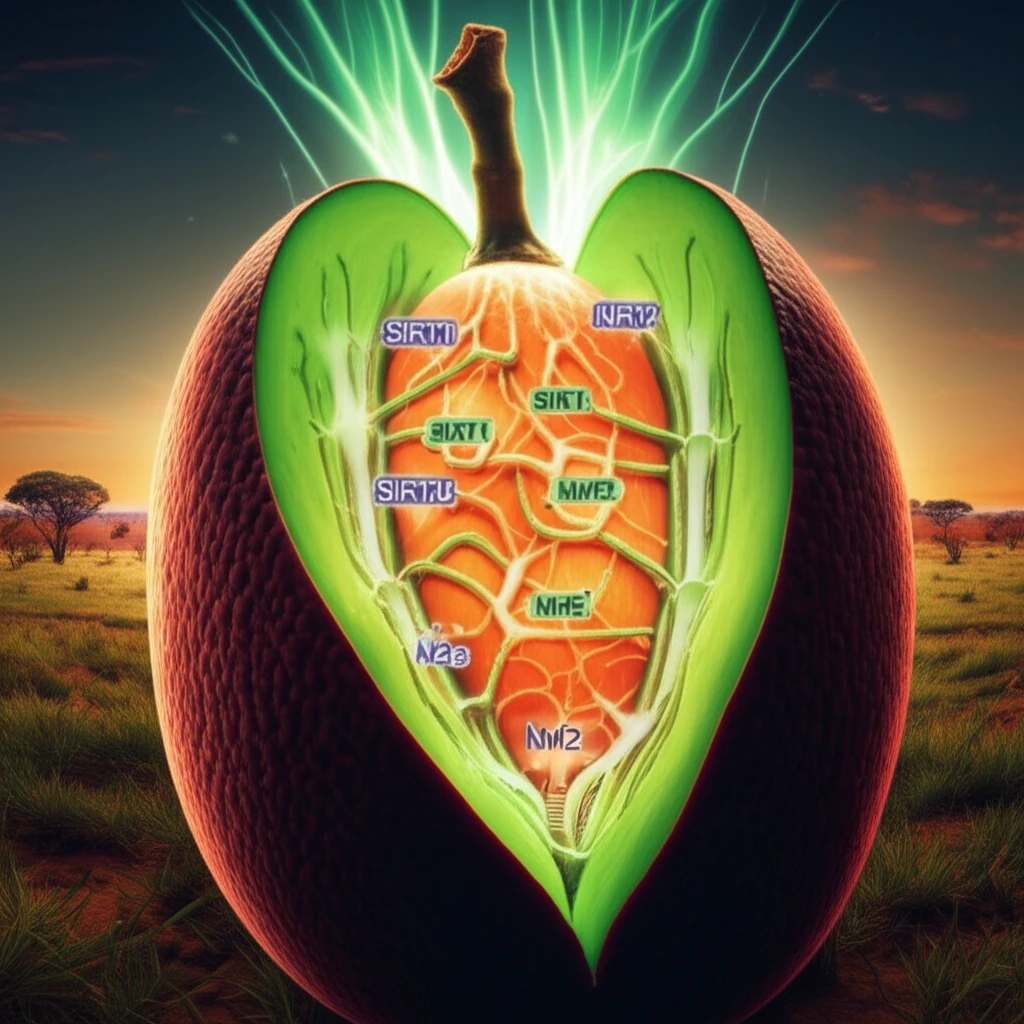
Tucum-do-Cerrado fruit with cellular pathways

Unlock Cellular Longevity: Can a Brazilian Fruit Hold the Key to Anti-Aging?

"Discover how Tucum-do-Cerrado, a unique fruit from the Brazilian savanna, could revolutionize anti-aging strategies by boosting SIRT1 and Nrf2 pathways."


As the global population ages, the quest for effective anti-aging strategies intensifies. Scientists are increasingly focused on understanding and combating the underlying processes that drive aging, including oxidative damage and inflammation, which leads to age related diseases.

Among the exciting new avenues of research is the exploration of natural compounds, particularly those found in certain foods. Phytochemicals, naturally occurring compounds in plants, have shown promise in modulating gene expression and activating proteins that protect against age-related decline. One such area of focus is the potential of these compounds to influence pathways related to sirtuins (SIRT1 and SIRT3) and the Nrf2 pathway, both vital for cellular health and longevity.

Now, a recent study shines light on Tucum-do-Cerrado (Bactris setosa Mart.), a fruit native to the Brazilian savanna, as a potential source of anti-aging compounds. This article will deep dive into this research to explore how Tucum-do-Cerrado may combat aging at a cellular level, potentially offering a natural path to longevity.

Tucum-do-Cerrado: A Natural Defender Against Aging?

Tucum-do-Cerrado fruit with cellular pathways

The study, published in the journal Nutrients, investigated the effects of Tucum-do-Cerrado consumption on the expression of sirtuins (SIRT1 and SIRT3), senescence marker protein-30 (SMP30), and redox and inflammatory responses in adult rats. Researchers supplemented the diets of male Wistar rats with either a control diet, an iron-enriched diet, a control diet with 15% Tucum-do-Cerrado, or an iron-enriched diet with 15% Tucum-do-Cerrado over a 12-week period.

The findings revealed several intriguing effects of Tucum-do-Cerrado consumption, particularly in relation to iron levels and oxidative stress. The results indicated that the consumption of Tucum-do-Cerrado was particularly beneficial when combined with an iron-enriched diet, helping to:

  • Increase iron levels in tissues.
  • Reduce hepatic carbonyl and renal malondialdehyde levels, markers of oxidative damage.
  • Marginally reduce serum IL-6 levels, an inflammatory cytokine.
  • Increase hepatic SIRT1 protein content, along with renal Sirt1 and hepatic Nrf2 mRNA levels.
These results suggest that Tucum-do-Cerrado consumption might promote an anti-aging effect by increasing SIRT1 expression, which in turn could enhance Nrf2 mRNA and protein levels. This activation of the Nrf2 pathway may then lead to decreased oxidative damage to proteins and reduced levels of inflammatory cytokines, effectively counteracting the harmful effects of iron excess.

A Promising Path Forward

While further research is needed to fully elucidate the mechanisms of action and long-term effects of Tucum-do-Cerrado, these initial findings offer a promising glimpse into its potential as a natural anti-aging agent. By targeting key cellular pathways involved in oxidative stress, inflammation, and longevity, Tucum-do-Cerrado may pave the way for innovative strategies to promote healthier aging and reduce the risk of age-related diseases.

About this Article -

This article was crafted using a human-AI hybrid and collaborative approach. AI assisted our team with initial drafting, research insights, identifying key questions, and image generation. Our human editors guided topic selection, defined the angle, structured the content, ensured factual accuracy and relevance, refined the tone, and conducted thorough editing to deliver helpful, high-quality information.See our About page for more information.

Everything You Need To Know

1

What is Tucum-do-Cerrado and why is it being studied for anti-aging?

Tucum-do-Cerrado is a fruit from the Brazilian savanna that is being researched for its potential anti-aging properties. It contains compounds that may positively influence pathways related to sirtuins (SIRT1 and SIRT3) and the Nrf2 pathway, which are important for cellular health and longevity. This fruit has shown potential in combating oxidative stress and inflammation, both of which contribute to aging.

2

What are SIRT1 and SIRT3, and how might Tucum-do-Cerrado affect them?

SIRT1 and SIRT3 are sirtuins, which are proteins involved in cellular health and longevity. They influence various processes, including DNA repair, metabolism, and stress resistance. The study suggests that Tucum-do-Cerrado can increase SIRT1 protein content, potentially leading to beneficial effects such as enhanced cellular repair and reduced inflammation. These actions counteract age-related decline.

3

What is the Nrf2 pathway, and what role does it play in anti-aging according to the findings?

The Nrf2 pathway is crucial for protecting cells against oxidative stress. When activated, it leads to the production of antioxidant enzymes and proteins that neutralize harmful free radicals. The research indicates that Tucum-do-Cerrado consumption may enhance Nrf2 mRNA levels, which could result in decreased oxidative damage to proteins and reduced inflammation. Activation of the Nrf2 pathway is a key mechanism in promoting cellular resilience and longevity.

4

What is oxidative stress, and how does Tucum-do-Cerrado help in reducing it?

Oxidative stress is an imbalance between the production of free radicals and the body's ability to neutralize them with antioxidants. This imbalance can damage cells, proteins, and DNA, contributing to aging and age-related diseases. Tucum-do-Cerrado has shown potential in reducing markers of oxidative damage, such as hepatic carbonyl and renal malondialdehyde levels, particularly when combined with an iron-enriched diet. By mitigating oxidative stress, Tucum-do-Cerrado may help slow down the aging process.

5

How was the study on Tucum-do-Cerrado conducted, and what were the main things the researchers were looking at?

The study involved supplementing the diets of adult male Wistar rats with Tucum-do-Cerrado over a 12-week period. The researchers monitored various parameters, including iron levels in tissues, markers of oxidative damage (hepatic carbonyl and renal malondialdehyde levels), inflammatory cytokine levels (serum IL-6), and the expression of SIRT1 and Nrf2. The findings indicated that Tucum-do-Cerrado consumption, especially when combined with an iron-enriched diet, had beneficial effects on these parameters, suggesting an anti-aging potential.

Newsletter Subscribe

Subscribe to get the latest articles and insights directly in your inbox.