
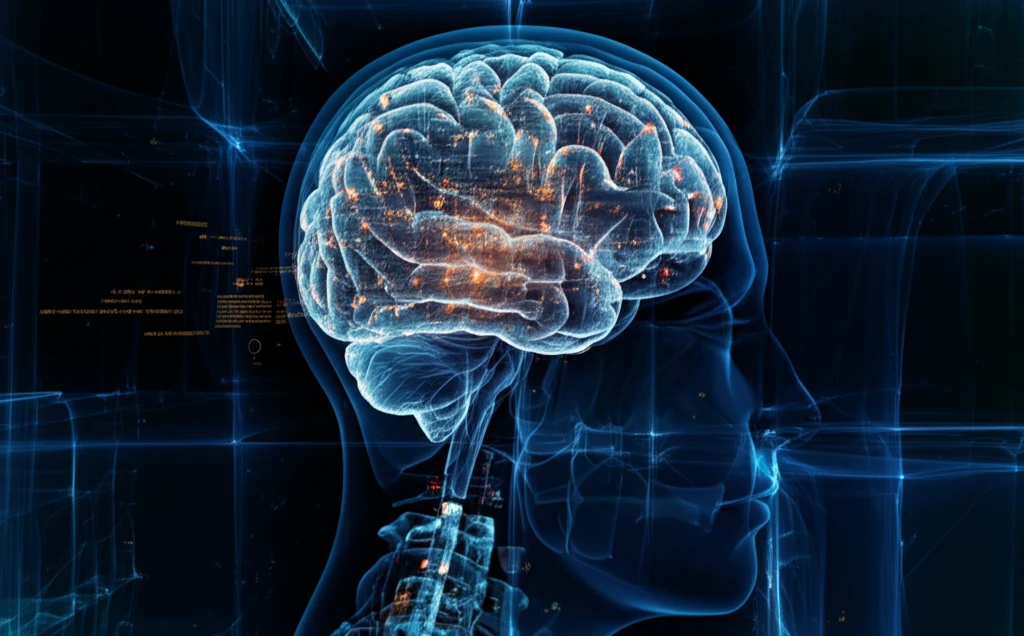
Surreal brain intertwined with machine learning code representing hyperparameter tuning.

Unlock Causal Inference: How Hyperparameter Tuning Can Revolutionize Machine Learning

"Dive into the world of causal machine learning and discover how optimizing hyperparameters can lead to more accurate and reliable insights."


In the rapidly evolving landscape of modern machine learning, achieving optimal performance hinges on one crucial element: proper hyperparameter tuning. While extensive research guides the tuning of machine learning models for predictive tasks, a significant gap exists when it comes to causal machine learning. This is a problem, because selecting the right hyperparameters can be the difference between an unreliable model and accurate inference.

Double Machine Learning (DML), introduced by Chernozhukov et al. (2018), has emerged as a powerful framework for causal parameter estimation. DML leverages machine learning to estimate nuisance parameters, treating them as supervised learning problems to solve for causal effects. But here’s the catch: the effectiveness of DML heavily relies on how well these nuisance parameters are tuned. This article will explore how hyperparameter tuning directly influences the reliability of causal estimates derived from DML, bridging the gap between predictive power and causal accuracy.

This article unpacks an extensive simulation study, drawing on data from the 2019 Atlantic Causal Inference Conference Data Challenge, to provide empirical insights into hyperparameter tuning and practical decisions within DML. We'll explore the importance of data splitting, the impact of different ML methods and AutoML frameworks, and how predictive performance metrics can inform the selection of causal models. This article will show you how to leverage these techniques to enhance your machine learning workflows.

Decoding Double Machine Learning: How Learners and Sample Splitting Work

Surreal brain intertwined with machine learning code representing hyperparameter tuning.

At its core, DML seeks to estimate a target parameter, often a causal effect, amidst high-dimensional nuisance parameters. A key component is the orthogonal moment condition, represented by a score function ψ(W; θ, η), where W denotes the data, θ is the causal parameter, and η represents the nuisance function. The goal? To satisfy the condition E[ψ(W; θo, ηo)] = 0, where θo and ηo are the true values.

In practice, this means using machine learning methods to estimate nuisance parameters and plugging them into the score function to solve for the target parameter. A critical aspect of this process is Neyman-orthogonality, which ensures the moment condition is insensitive to small perturbations in the nuisance function. It eliminates bias from regularization by guaranteeing that any bias from machine learning estimation vanishes in the limit.

  • Learner Selection: Choosing the right ML learners is paramount. Theoretical frameworks guide this selection based on assumptions like sparsity, where L1-penalized estimators like LASSO are appropriate.
  • Combined Loss: Theoretical learner criterion refers to the error in the composed nuisance term, encapsulating multiple prediction problems into a combined loss function.
  • Data Splitting: DML employs sample-splitting to avoid overfitting biases. This involves dividing data into partitions, using one for training nuisance functions and another for solving the orthogonal score. Cross-fitting, an efficient form of data splitting, swaps training and holdout data in a cross-validated manner.
Combining the DML cross-fitting procedure with ML tuning involves several strategies. These include applying cross-validated tuning on the full sample, splitting the sample into tuning and inference folds, or performing cross-validated hyperparameter tuning within each cross-fitting fold. Each strategy balances computational cost with the potential for overfitting, influencing the accuracy of the final causal estimate.

Moving Forward: The Future of Causal Inference

Hyperparameter tuning, ML estimator selection, and choice of DML parameters are crucial for accurate causal estimates. In practice, tuning on the full data or on folds is preferable to sample splitting, particularly in smaller samples. Selecting the appropriate causal model can be aided by monitoring the predictive performance of nuisance learners. Future research could explore neural networks, advanced stacking algorithms, and conditional average treatment effects to refine these methods further.

About this Article -

This article was crafted using a human-AI hybrid and collaborative approach. AI assisted our team with initial drafting, research insights, identifying key questions, and image generation. Our human editors guided topic selection, defined the angle, structured the content, ensured factual accuracy and relevance, refined the tone, and conducted thorough editing to deliver helpful, high-quality information.See our About page for more information.

This article is based on research published under:

DOI-LINK: https://doi.org/10.48550/arXiv.2402.04674,

Title: Hyperparameter Tuning For Causal Inference With Double Machine Learning: A Simulation Study

Subject: econ.em stat.ml

Authors: Philipp Bach, Oliver Schacht, Victor Chernozhukov, Sven Klaassen, Martin Spindler

Published: 07-02-2024

Everything You Need To Know

1

What is Double Machine Learning (DML) and why is it significant in causal inference?

Double Machine Learning (DML), introduced by Chernozhukov et al. (2018), is a framework designed to estimate causal parameters. It employs machine learning to estimate nuisance parameters within a causal model. The significance of DML lies in its ability to provide accurate causal parameter estimates, which are crucial for understanding cause-and-effect relationships. DML's effectiveness, however, depends heavily on the correct tuning of the nuisance parameters, making hyperparameter tuning a critical aspect of its application.

2

How does hyperparameter tuning affect the accuracy of causal estimates in DML?

Hyperparameter tuning is critical in DML because the performance of the nuisance parameters directly impacts the reliability of the final causal estimates. The choice of hyperparameters influences how well the machine learning models estimate the nuisance parameters. Poorly tuned hyperparameters can lead to inaccurate nuisance parameter estimates, which in turn, can bias the causal effect estimates. Therefore, selecting the right hyperparameters is the difference between unreliable and accurate inference.

3

Explain the role of Neyman-orthogonality in the context of Double Machine Learning.

Neyman-orthogonality is a key principle in DML that ensures the moment condition is insensitive to small perturbations in the nuisance function. This property eliminates bias from regularization, guaranteeing that any bias from machine learning estimation vanishes in the limit. By satisfying Neyman-orthogonality, DML can provide more reliable causal estimates because the method is less susceptible to errors in the estimation of nuisance parameters.

4

What are the key components of DML and how do they contribute to estimating causal effects?

DML consists of several critical components. Firstly, Learner Selection involves choosing the right ML learners. Theoretical frameworks guide this selection based on assumptions like sparsity, where L1-penalized estimators like LASSO are appropriate. Secondly, the Combined Loss refers to the error in the composed nuisance term, encapsulating multiple prediction problems into a combined loss function. Finally, Data Splitting, crucial for avoiding overfitting, employs sample-splitting to divide data into partitions, using one for training nuisance functions and another for solving the orthogonal score. Cross-fitting is a more efficient version, swapping training and holdout data in a cross-validated manner. Together, these components enable DML to estimate causal effects accurately.

5

What strategies are recommended for combining Double Machine Learning cross-fitting with machine learning tuning to enhance causal inference?

Several strategies can be used to combine DML cross-fitting with ML tuning. One approach is to apply cross-validated tuning on the full sample. Another method involves splitting the sample into tuning and inference folds. A third strategy is performing cross-validated hyperparameter tuning within each cross-fitting fold. Each approach balances computational cost with the potential for overfitting, which directly influences the accuracy of the final causal estimate. Tuning on the full data or on folds is generally preferable to sample splitting, particularly in smaller samples.

Newsletter Subscribe

Subscribe to get the latest articles and insights directly in your inbox.